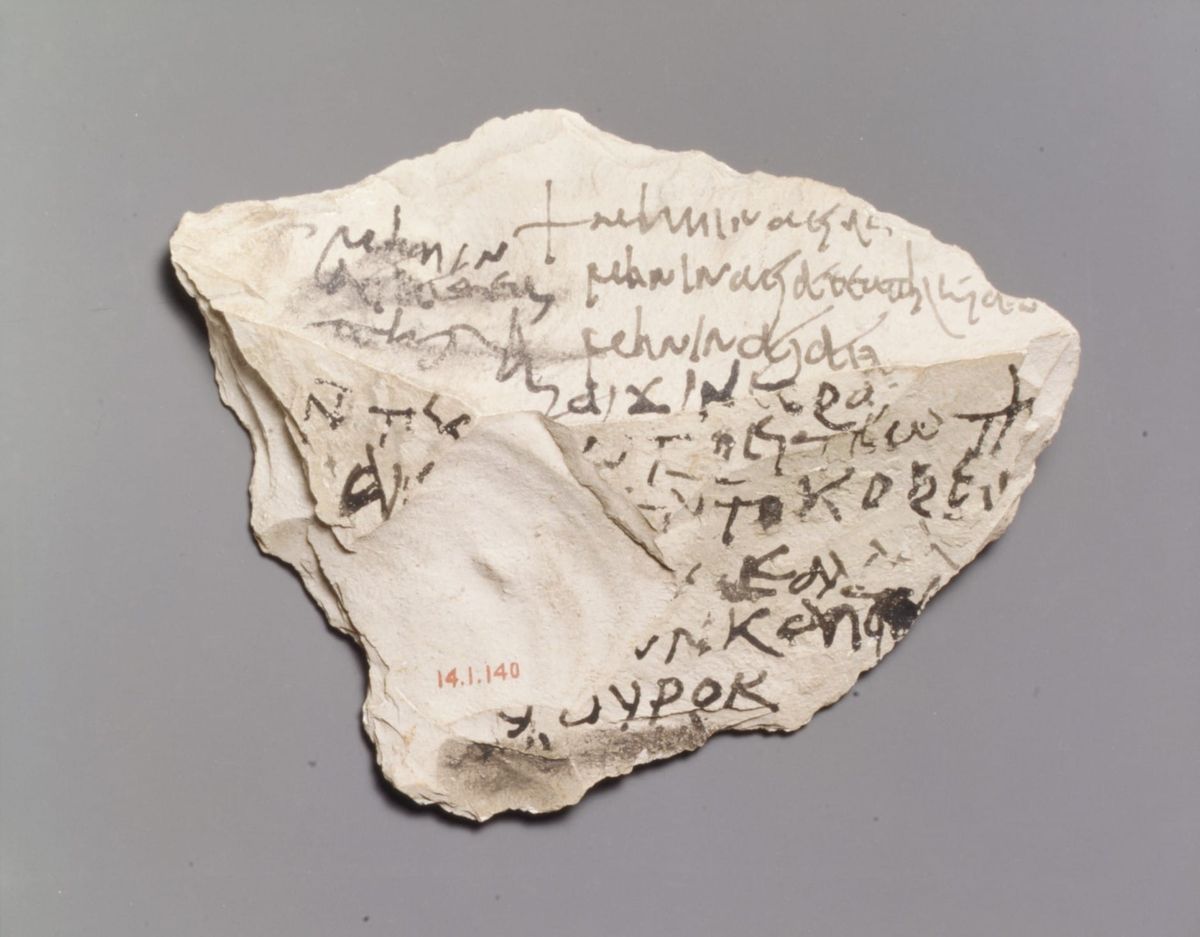
"Archaeologists excavating at the Ancient Egyptian city of Oxyrhynchus, near modern El-Bahnasa, announced the discovery of a papyrus containing lines from Homer's Iliad on the abdomen of a Roman-era mummy. The papyrus dates to the late Roman period, around the fifth century CE, about 1600 years ago. Over 1,500 papyri quoting Homer's works survive today, but only an extremely small number were placed in burials. Why would a Romano-Egyptian want to take Homer with them to the afterlife?"
"In November and December, the Spanish Archeological Mission of the University of Barcelona and the Institute of Ancient Near East Studies (IPOA), headed by Maite Mascort and Esther Ponce Milado, uncovered several Greek and Roman-era tombs at the site. The Ptolemaic era (305-30 BCE) tombs contained statuettes, paintings, nails, and 52 mummified remains, 13 of which had gold tongues. The gold tongues, totaling 16 at the site as of January, were likely believed to help the deceased speak with Osiris, the Egyptian god of the dead, afterlife, and resurrection."
"Finds from the Roman-era tombs began to be further analyzed in January and February. A team led by conservator Margalida Munar, papyrologist Leah Mascia, and classical philologist Ignasi-Xavier Adiego, director of the Oxyrhynchus project, identified the text. Mascia's reading determined that the papyrus transmitted the catalog of ships in the second book of Homer's Iliad. Although likely recited in the 8th century BCE and later written down, both the Iliad and the Odyssey remained popular until the end of the Roman Empire in the sixth century CE and beyond."
Archaeologists excavating Oxyrhynchus near modern El-Bahnasa discovered a papyrus containing lines from Homer’s Iliad on the abdomen of a Roman-era mummy. The papyrus dates to the late Roman period, around the fifth century CE. More than 1,500 papyri quoting Homer’s works survive, but only a very small number were placed in burials. Greek and Roman-era tombs at the site included Ptolemaic remains, statuettes, paintings, nails, and mummified bodies, some with gold tongues believed to help the deceased speak to Osiris. Analysis identified the papyrus as transmitting the catalog of ships from Iliad Book 2. Homeric texts remained popular from early composition through the end of the Roman Empire and beyond.
Read at Hyperallergic
Unable to calculate read time
Collection
[
|
...
]