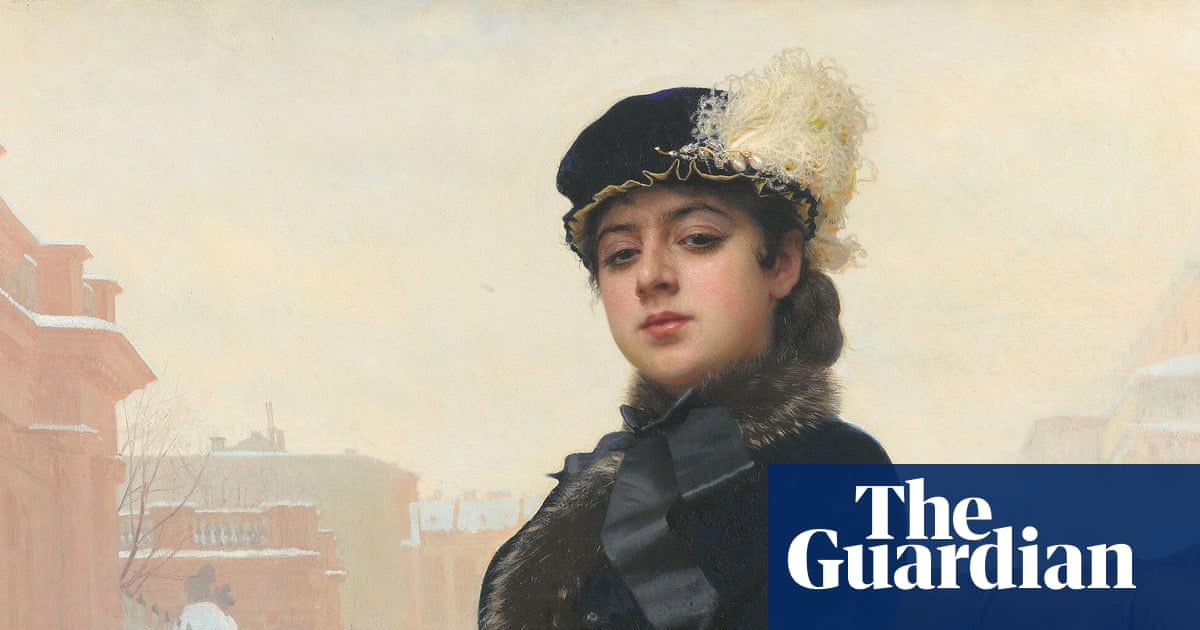
Sentimental Value embeds hidden stories in closeups, half-tones and peripheral objects, with some details remaining obscure even to the filmmakers. A brief corridor shot reveals a portrait instantly familiar to people who grew up in the Soviet Union and later Russia between the 1950s and 2000s. The portrait has been widely reproduced as prints, embroideries, medallions and on consumer goods, and appears on a 2012 Russian postage stamp. Portrait of an Unknown Woman is by Ivan Kramskoy, who rose from provincial retoucher to Imperial Academy student, led the Revolt of the Fourteen and helped found the peredvizhniki travelling exhibitions. In 1883 Kramskoy painted Neizvestnaya, hoping Pavel Tretyakov would acquire it, but it did not end up with him. The woman in the painting is seated alone in an open carriage against a misty backdrop.
"In the Norwegian director Joachim Trier's latest work, which swept the board at the European film awards and is nominated for eight Baftas and nine Oscars, stories are hidden in closeups, half-tones and peripheral objects. Some of these stories are so well hidden, in fact, that they aren't even apparent to the people who made the film. In one scene, roughly an hour in, the camera glides down a corridor, and suddenly there she is: a woman's portrait on the wall."
"Anyone who grew up in the Soviet Union and later Russia between the 1950s and 2000s, like me, would recognise her instantly. She has been endlessly reproduced: as prints, embroideries, portrait medallions, even on boxes of chocolates. In Britain, people may have encountered her on the covers of various editions of Anna Karenina. In wide circulation a Russian postage stamp from 2012 shows Portrait of an Unknown Woman. Photograph: Alexander Mitrofanov/Alamy Portrait of an Unknown Woman is a painting by Ivan Kramskoy, a celebrated Russian portraitist."
Read at www.theguardian.com
Unable to calculate read time
Collection
[
|
...
]