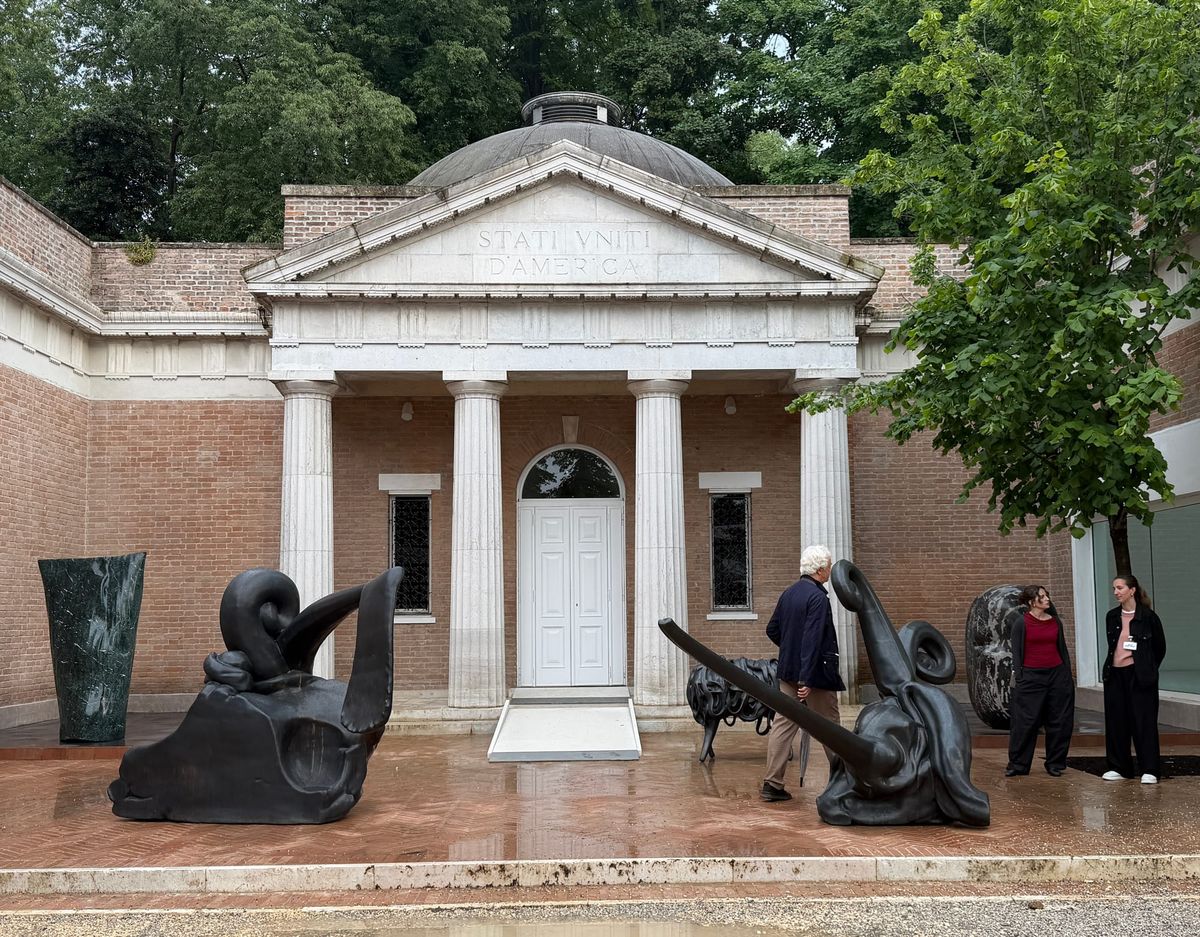
"Alma Allen's United States pavilion at the Venice Biennale says nothing, does nothing, means nothing, and goes nowhere. The pavilion features a series of amorphous, nature-inspired sculptures - all untitled - made of bronze, wood, and stone. A breeze is something refreshing, nourishing, mood-altering. However, I left Allen's pavilion feeling the same as I did before. Nothing."
"A young gallery attendant was kind enough to give me one piece of insight into Allen's process: He tinkers with materials with his fingers without looking, letting a form take shape. If he ends up liking what's in his hands, he blows it up into a large-scale sculpture. Ultimately, his is the kind of art favored by some high-end collectors: inoffensive, expensive-looking, and great next to the obligatory collection of African masks."
"After monumental presentations by Jeffrey Gibson and Simone Leigh in the last two biennales searched the soul and history of this nation, how did we end up with this art from the land of the bland? If there's any essence to the show, it's in the choice of specific materials. For example, Allen uses Colorado Yule marble, a brilliant white stone from which the Lincoln Memorial in Washington, DC, was made."
Alma Allen's United States pavilion at the Venice Biennale, curated by Jeffrey Uslip, presents a collection of untitled sculptures made from bronze, wood, and stone. The exhibition, titled Call Me the Breeze after a Lynyrd Skynyrd song, features amorphous forms inspired by nature, including pieces resembling worms, cacti, and ambiguous shapes. Allen's creative process involves manipulating materials without looking, then enlarging favored forms into large-scale works. The pavilion uses materials like Colorado Yule marble, historically significant for the Lincoln Memorial. Despite these elements, the exhibition fails to convey meaningful artistic expression or emotional resonance, representing a departure from previous U.S. pavilion presentations that explored deeper cultural and historical themes.
Read at Hyperallergic
Unable to calculate read time
Collection
[
|
...
]