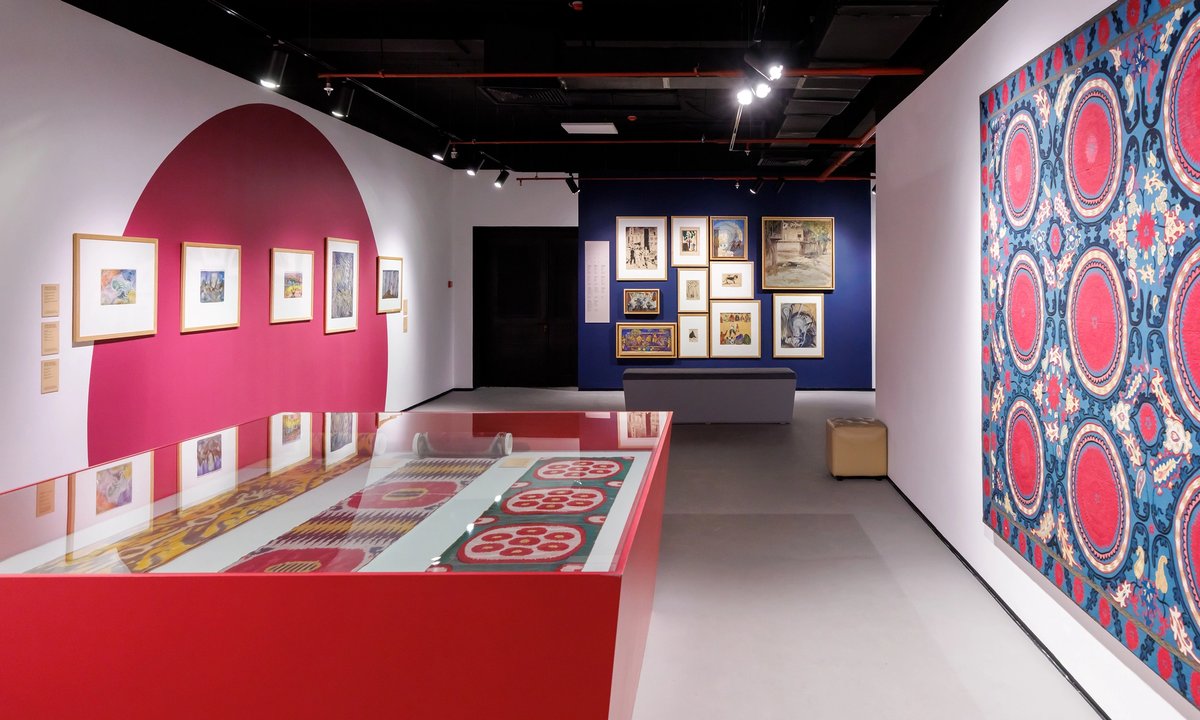
"The I.V. Savitsky State Art Museum of the Republic of Karakalpakstan (as the museum is formally designated), in the city of Nukus, holds close to 100,000 works of art from the middle decades of the 20th century: canvases, etchings and naturalistic sketches of rural life alongside folk art and textiles from a region whose vast, unbounded expanses were crossed for a thousand years by the caravans, travellers and thieves of the ancient Silk Road."
"This year, Nukus Museum has received more attention than ever before, both at home and abroad. Following the exhibition of its collection in Florence and Venice in 2024, the museum has been completely overhauled by Italian academics and its new director, Gulbahar Izentaeva, who was appointed at the beginning of the year. It is now "central Asia's most important and up-to-date museum of 20th-century art", according to Silvia Burini, a professor of art history at the Ca' Foscari University of Venice,"
Nukus's I.V. Savitsky State Art Museum in Karakalpakstan holds nearly 100,000 mid-20th-century artworks including canvases, etchings, sketches, folk art and textiles reflecting Silk Road regional life. Italian academics and new director Gulbahar Izentaeva led a comprehensive renovation after exhibitions in Florence and Venice in 2024. The Art and Culture Development Foundation funded renovations and international programming, including the Bukhara Biennial and a partnership with Art Basel in Paris. The museum has drawn significant domestic and international attention and welcomed about 70,000 visitors this year, positioning it as a leading modern art institution in Central Asia.
Read at The Art Newspaper - International art news and events
Unable to calculate read time
Collection
[
|
...
]