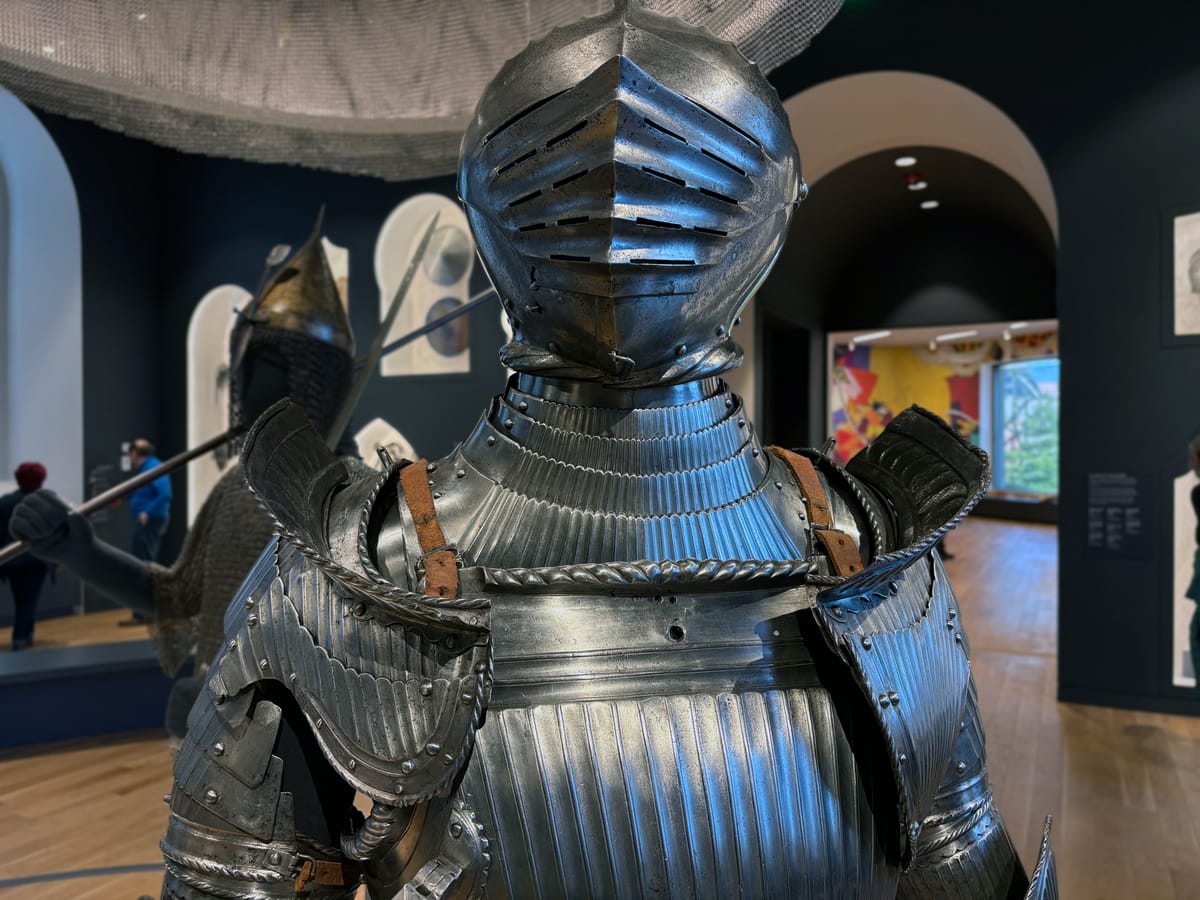
"After years of restoration and preparation, visitors to the Worcester Art Museum can now explore the armor galleries, reopened in November of last year. Although there is a fair bit of lore concerned with chivalry and round tables, this armor exhibition goes far beyond the problematic romantic notion of the white knights of medieval Europe. By collectively presenting armor donned by everyone from hoplites to samurai to Sudanese soldiers, the galleries make an important argument for the global appreciation of these wearable pieces of art."
"Why do certain museums in North America have so much armor in their collections? Armor collecting was quite the hobby of Gilded Age collectors and businessmen like William Randolph Hearst and Clarence H. Mackay. These wealthy men and their foundations donated much of their extensive collections to places like the Metropolitan Museum of Art in New York City or the Detroit Institute of Arts. The former, for instance, currently holds the largest collection of arms and armor in the nation, with a staggering 14,000 objects."
The Worcester Art Museum reopened its armor galleries in November after years of restoration and preparation. The exhibition presents armored objects from hoplites, samurai, and Sudanese soldiers alongside European pieces, challenging romanticized medieval notions of white knights. The galleries argue for global appreciation of armor as wearable art. North American museums accumulated large armor collections through Gilded Age collectors and businessmen such as William Randolph Hearst and Clarence H. Mackay, whose donations built institutional holdings. The Metropolitan Museum of Art holds about 14,000 arms-and-armor objects. The Worcester Art Museum's second-largest national collection originated largely from collector John Woodman Higgins, a Worcester steel magnate.
Read at Hyperallergic
Unable to calculate read time
Collection
[
|
...
]