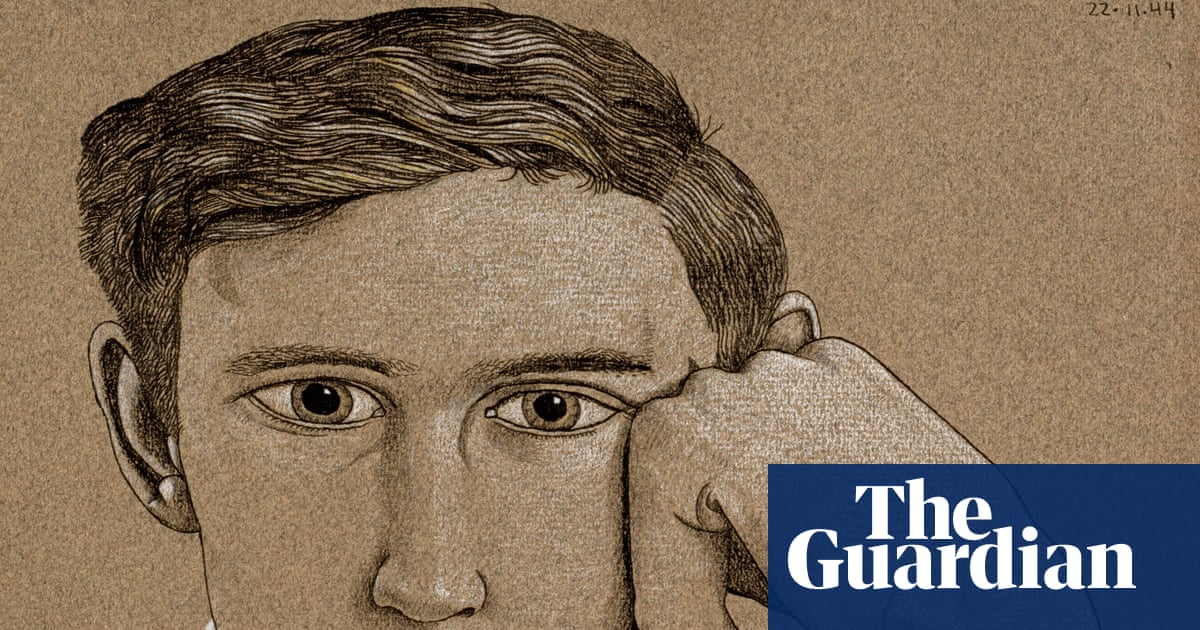
"Bacon had stood up, undone the buttons on his trousers, rolled up his sleeves and wiggled his hips a little, saying: I think you ought to do this, because I think that's rather important. By Freud's own admission, the older painter was provocative in more ways than just this pose: I got very impatient with the way I was working. It was limited and a limited vehicle for me."
"He felt his drawing stopped him from freeing himself, he said, and I think my admiration for Francis came into this. I realised that by working in the way I did I couldn't really evolve. The change wasn't perhaps more than one of focus, but it did make it possible for me to approach the whole thing in another way. Trace with your eye the curves and precision of those three line drawings and limited is the very last adjective that springs to mind."
In 1951 Lucian Freud produced three striking line drawings of Francis Bacon, prompted by a provocative pose. Freud felt growing impatience with his drawing method and believed it constrained his ability to evolve; admiration for Bacon helped shift his focus and open new approaches. The three drawings demonstrate precision, curve, and immediacy that belie any notion of limitation. Drawing functioned for Freud as letter-writing practice, a way to prime and test canvases, solve compositional problems, create etchings, and rework paintings after he had painted himself out. The National Portrait Gallery exhibition presents 175 paintings and works on paper exploring this process, with pen-and-ink and charcoal pieces linked to Large Interior, W11 (after Watteau).
Read at www.theguardian.com
Unable to calculate read time
Collection
[
|
...
]