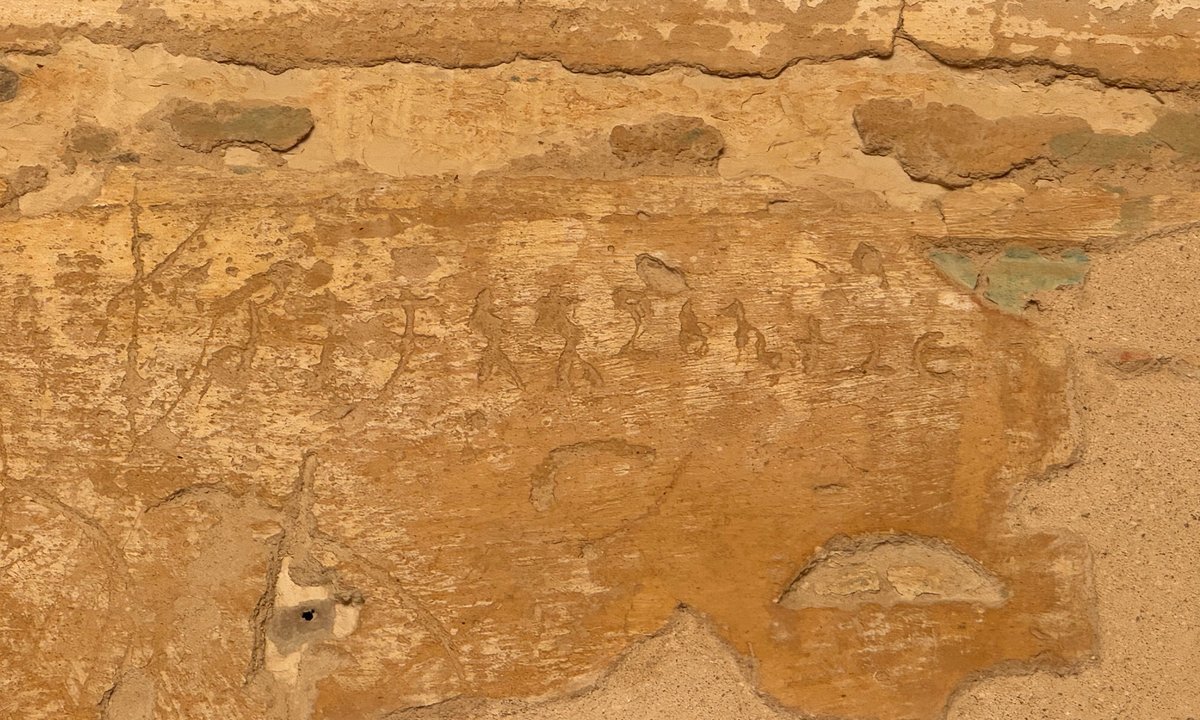
"It seems that the reason that the Tamil graffiti in tombs in the Valley of the Kings went unrecognised is essentially that no one with adequate knowledge noticed them before. Very few scholars who focus on languages of India tend to study graffiti in Egypt-whereas Greek and Aramaic graffiti have been recognised and studied for a very long time."
"The discoveries significantly expand understanding of Indo-Egyptian connections in the Roman period. They add to existing evidence in Socotra, an island off the coast of Yemen, and Berenike, an ancient city on the Red Sea coast-where longer texts and material remains attest to a sustained Indian religious and commercial presence."
"until this discovery we never had any solid proof of visitors from India to the Nile Valley"
Researchers Charlotte Schmid and Ingo Strauch identified nearly 30 inscriptions in ancient Indian languages across six tombs in Egypt's Valley of the Kings, dating to the first through third centuries AD. The majority of inscriptions are in Tamil-Brahmi, an ancient language connected to modern Tamil, with texts originating from several regions of the Indian subcontinent. These discoveries significantly expand understanding of Indo-Egyptian connections during the Roman period, complementing existing evidence from Socotra and Berenike on the Red Sea coast. The inscriptions went unrecognized because scholars specializing in Indian languages rarely studied Egyptian graffiti, unlike Greek and Aramaic inscriptions which received long-standing scholarly attention. This finding provides the first solid archaeological proof of Indian visitors to the Nile Valley.
#ancient-indian-inscriptions #indo-egyptian-trade-connections #tamil-brahmi-language #valley-of-the-kings-archaeology #roman-period-commerce
Read at The Art Newspaper - International art news and events
Unable to calculate read time
Collection
[
|
...
]