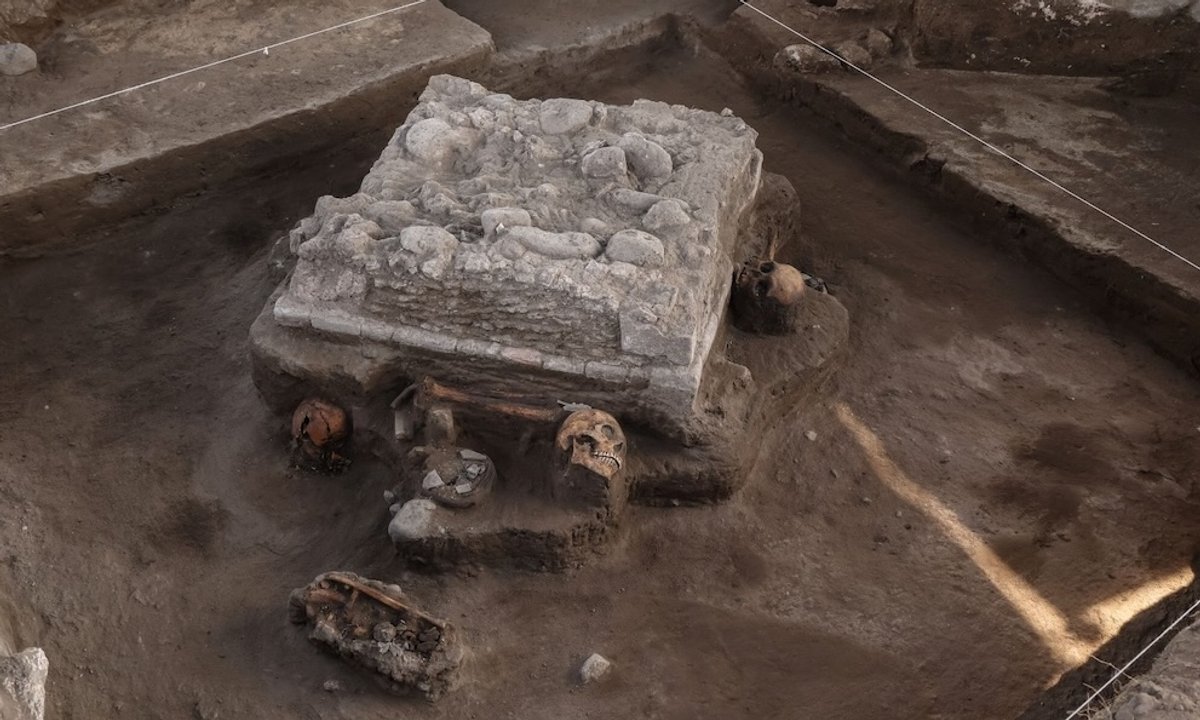
A well-preserved pre-Hispanic stone altar was discovered near Tula Chico in Hidalgo, Mexico, during archaeological salvage work for a new rail line. The altar, measuring one meter square, features human remains, ceramic objects, and obsidian, indicating ritual use. Four skulls and leg bones were found around the altar. The discovery is part of ongoing explorations along the rail route, which has identified 12 areas of archaeological interest. Additionally, petroglyphs prompted a rerouting of the rail line to preserve their significance.
"The newly discovered, three-level, one-metre-square momoztli (or altar) was built from various types of stone and contains human remains, ceramic objects and obsidian. Four human skulls and what appear to be leg bones were found arranged around the base of the altar, indicating its ritual or sacrificial use."
"In preliminary fieldwork, we have identified 12 areas of archaeological interest, including objects and monuments of varying scales, says Víctor Francisco Heredia Guillén, INAH's salvage project coordinator."
"Due to the petroglyphs' significance, the route was adjusted to preserve them. Although the site was known since the 1970s, the petroglyphs-some believed to be prehistoric-were recently identified on a steep cliff."
Read at The Art Newspaper - International art news and events
Unable to calculate read time
Collection
[
|
...
]