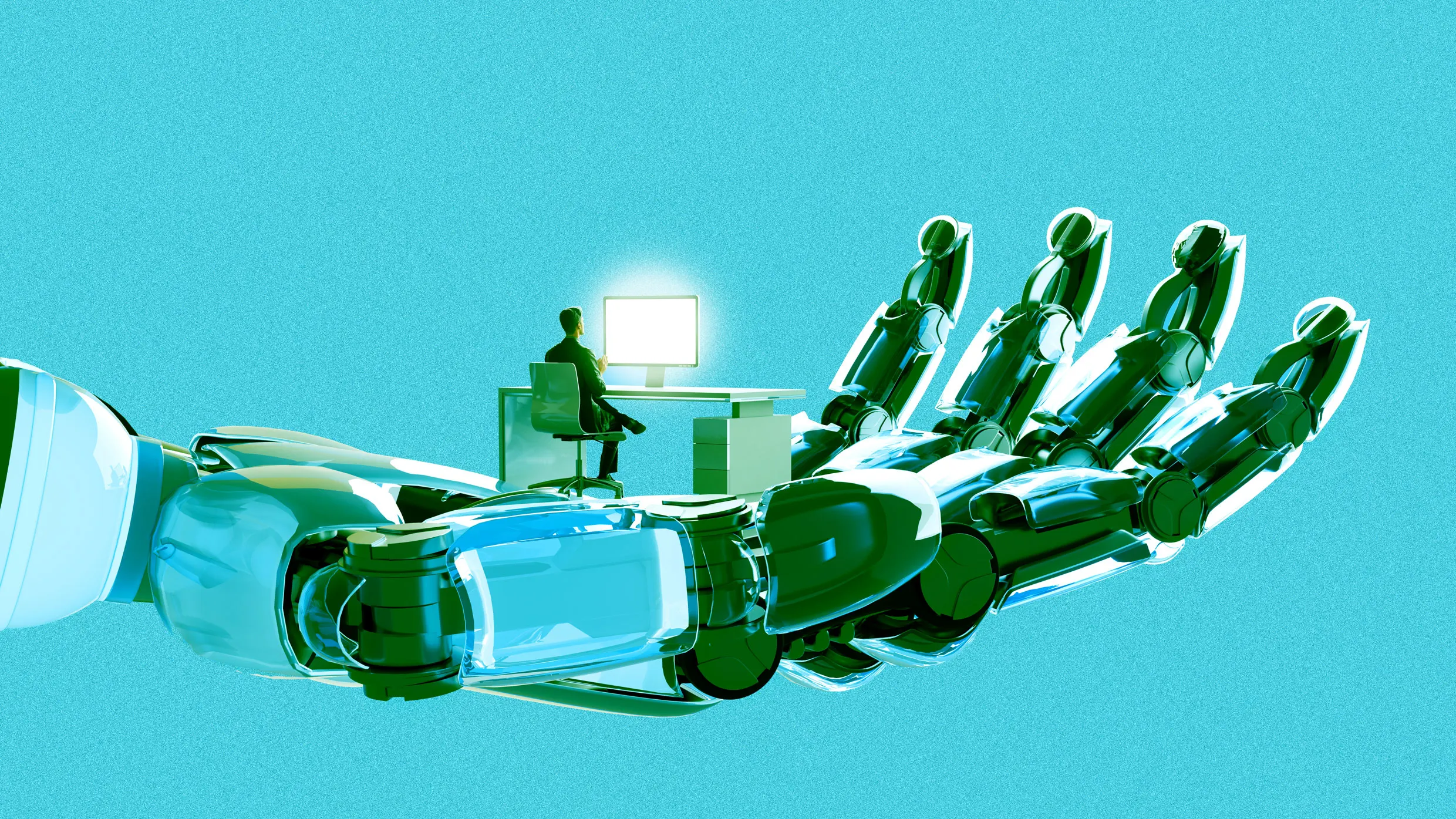
AI industry executives, including Anthropic's Dario Amodei and Microsoft's Mustafa Suleyman, have shifted from reassuring messaging about AI augmenting workers to acknowledging substantial job displacement threats. Amodei expresses concern that AI's rapid pace and scope will overwhelm adaptive mechanisms, with over half of entry-level white-collar jobs at risk. Suleyman stated most white-collar work will be fully automated within 12-18 months. This represents a departure from post-ChatGPT narratives portraying AI as a cognitive tool enhancing human capability. The contradiction lies in these executives' dual roles as architects of job-displacing technology while publicly expressing concern about the consequences, positioning themselves as worried observers rather than active agents of disruption.
"His concern "is that the normal adaptive mechanisms will be overwhelmed" and that more than half of entry-level white-collar jobs are at risk. As he speaks, Amodei sounds like a physician delivering a difficult prognosis: sober and compassionate, very concerned about the patient's well-being, but ultimately helpless in the face of death's inevitable arrival."
"In the years following the launch of ChatGPT in 2022, the AI industry's messaging tended toward the reassuring: AI is not coming to take your jobs; instead, it will be a cognitive exoskeleton that augments workers, making humans more capable and more productive, both in the workplace and beyond. That reassurance is now being abandoned."
"Amodei is far from alone in this stance. He is the chief executive of one of the companies that is doing the most to bring about this jobless future. He is more architect than bystander, but you would never know it from the tone of his public utterances."
#ai-job-displacement #ai-industry-messaging #white-collar-automation #corporate-responsibility-contradiction
Read at Fast Company
Unable to calculate read time
Collection
[
|
...
]