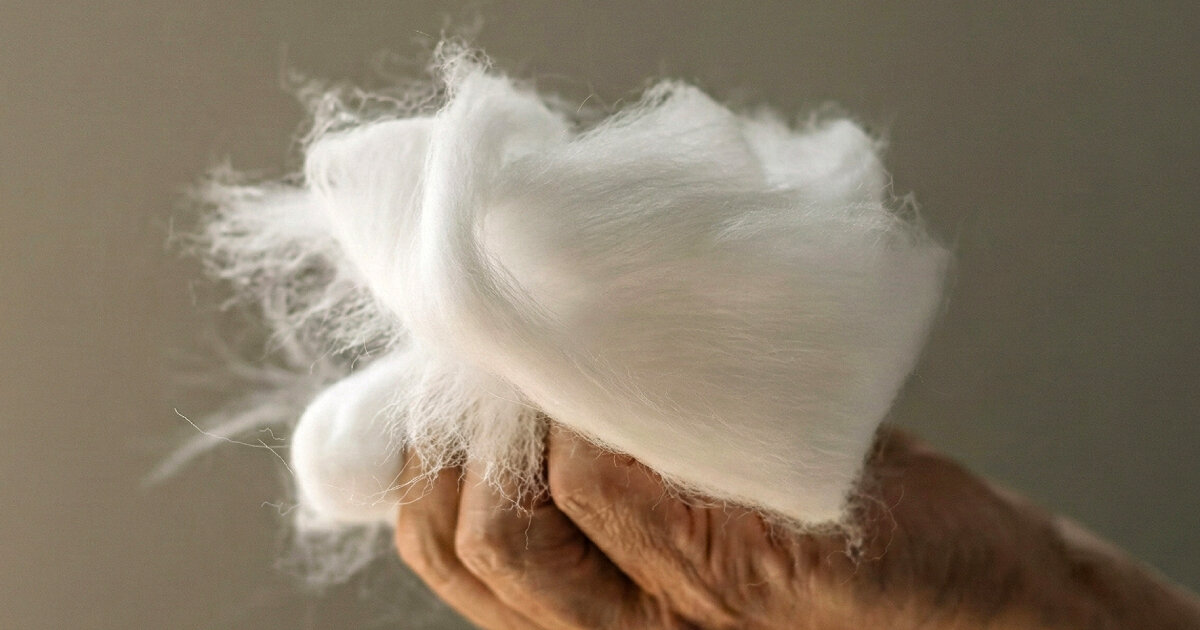
"Everbloom turns organic waste such as discarded down, wool, and cashmere into usable garment fibers braided by AI. The startup describes the textile as softer than merino, more indulgent than cashmere, and stronger than silk. The production process starts with throwaways that already exist and collects these protein-based materials from textile waste and agriculture. Instead of binning them, the team treats them as raw input, sorted by type and cleaned by the in-house developed AI system named Braid."
"The model analyzes how proteins behave under changes in temperature, moisture, and molecular weight, and from this data, it predicts the properties of the final fiber before production starts, including how it will respond to tension, dye, and wear. Based on these predictions, Braid AI suggests adjustments, and they're translated into settings for the melt-spinning machines. The model also allows different waste streams to be combined into one system, so instead of treating each input as a problem, it treats them as variables to scale."
Everbloom converts discarded protein-based materials such as down, wool, and cashmere into usable garment fibers braided by an AI system called Braid. The process collects existing textile and agricultural protein waste, sorts and cleans inputs, and extracts proteins for molecular-level modification through protein engineering and molecular biology. Braid analyzes protein behavior under temperature, moisture, and molecular weight variations to predict final fiber properties and recommends melt-spinning settings. The system enables combining different waste streams, reduces trial-and-error testing, shortens development timelines from months to weeks, and lowers production costs while producing fibers softer than merino and stronger than silk.
Read at designboom | architecture & design magazine
Unable to calculate read time
Collection
[
|
...
]