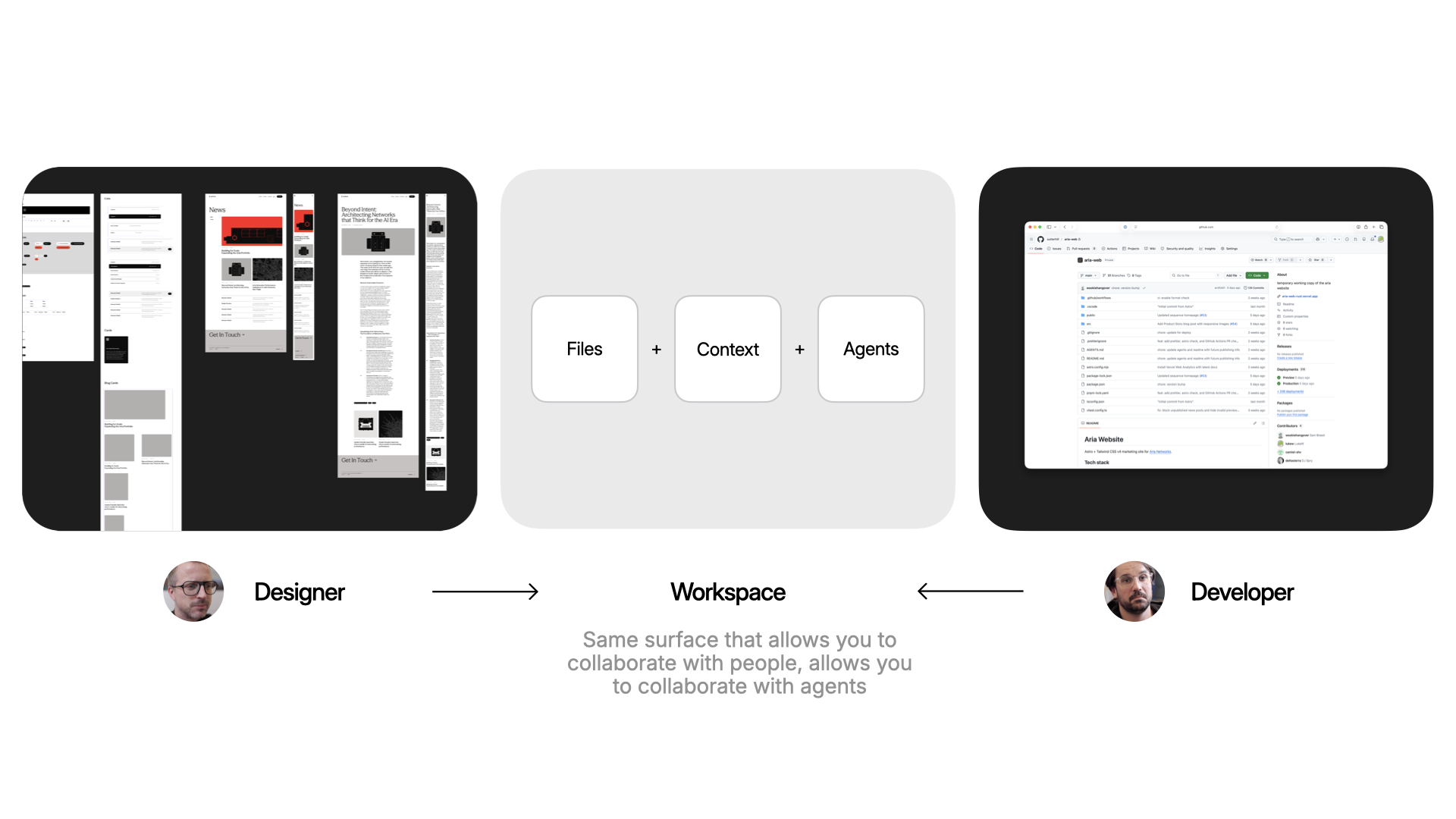
AI productivity tools have shifted from chat-based answers to agentic systems that guide work toward outcomes. When each team member runs their own agents, agents are steered toward individual preferences, causing perspectives to drift and producing fragmented product outputs. Different guidance methods—such as markdown files, skills definitions, system and agent prompts, memory, and MCP servers—combine to shape agent behavior, making alignment difficult. Across a team, these influences are scattered across personal computers, codebases, and servers, so agents optimize for separate perspectives rather than a shared one. A collaborative steering approach is proposed to simplify context management for individuals and groups by enabling teams to collaboratively create, edit, and maintain shared guidance.
"Many AI-driven productivity tools have evolved from chatting with an AI model to guiding the work of agents capable of a lot more than just answers. But when everyone on a team runs their own agents they guide them towards the outcomes they want, towards their version of things. So in a agentic world, it becomes even easier for perspectives to drift apart. As one design leader recently put it at the Design Futures Assembly: when anybody can build what they want, you feel it in the product because you ship fifteen different ideas instead of one unified point of view."
"One of the reasons this happens is that people use different ways to guide agents. Agent markdown files, skills markdown files, system prompts, agent prompts, memory, MCP servers, and so on. The combination all of these disparate elements influences the outcomes AI agents produce. That's complicated enough for an individual but multiply it across a team and it becomes really difficult to work on the same thing together."
"Everyone's agents are optimized for their own perspective, not a shared one. And the elements influencing them are scattered across people's computers, codebases, and servers. We need a different approach for simplifying context management not only for individuals but for groups as well. Think of it as collaborative steering: a mechanism for guiding agents that's collaboratively created, edited, and maintained by teams."
"Why collaborative steering? Because, even with all-knowing AI, people have specific expertise and experiences that when brought together make products better. Designers versed in interaction design principles, brand voice, visual design integrity. Engineers focused on performance optimization, easy to maintain code structures, infrastructure choices."
Read at Lukew
Unable to calculate read time
Collection
[
|
...
]