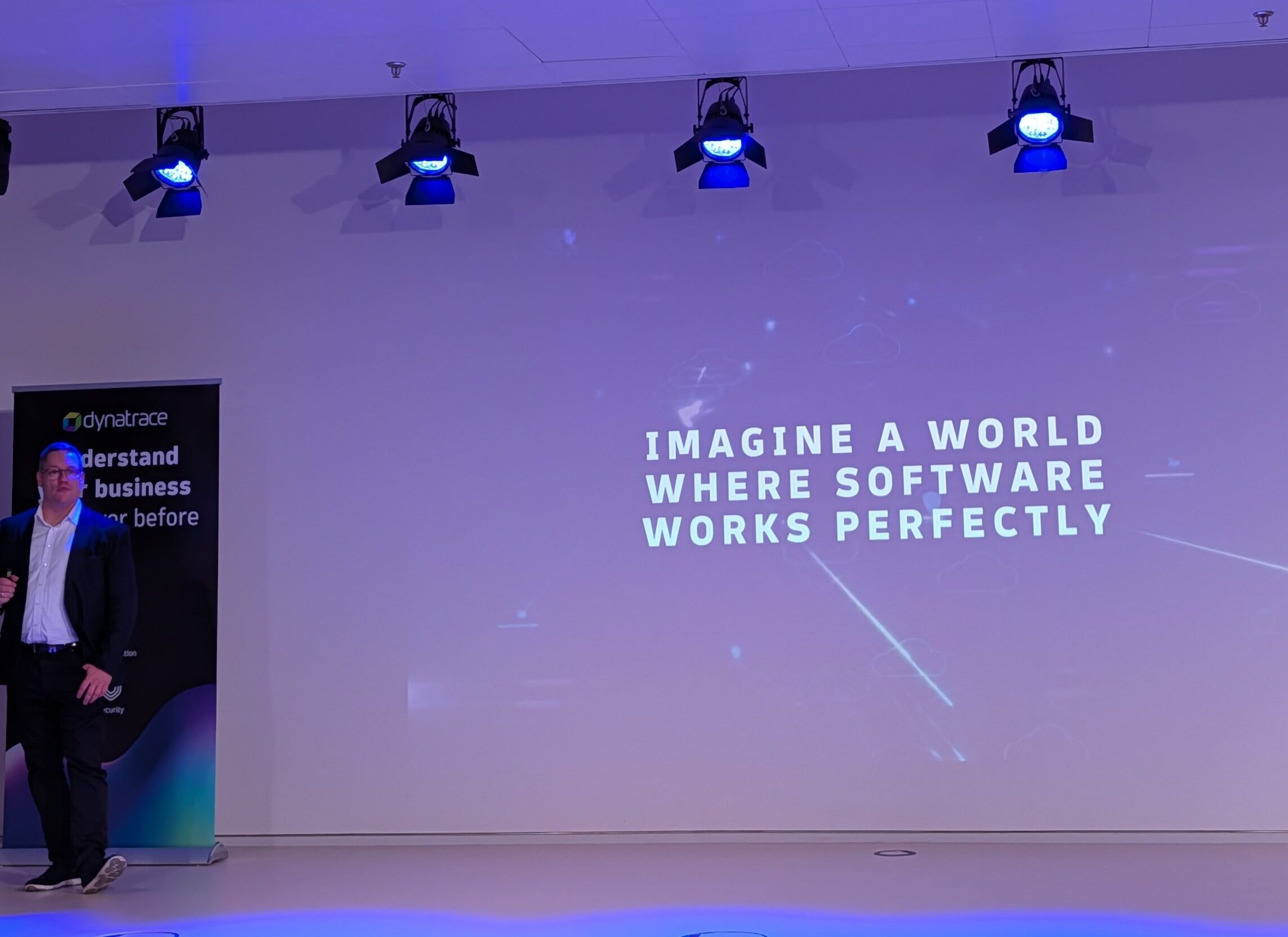
"Dynatrace started collecting trace data from applications in 2005. Organizations wanted to know why an application was slow and what was happening exactly. That first generation was mainly manual and technical. "It was about collecting data and understanding what was going on," explains Spitzbart. APM has remained the company's foundation for a long time and remains a core component today."
"The third generation, which dominates today, is all about automation. Observability data now drives actions. The platform not only solves problems, but anticipates them. This is also known as autonomous intelligence. It should function as a real-time control system for every organization. Data is converted into insights (Knowledge), AI then understands the business and technical context (Reasoning), and automatic decisions follow based on the goals defined by employees (Actioning)."
"Dynatrace celebrates its 20th anniversary this year. The company started with traditional application performance monitoring (APM), but has evolved into a platform that combines AI and automation to manage complex IT environments. The latest version of the platform is designed to predict problems and resolve them automatically. This is also known as the Dynatrace 3rd-generation platform."
Dynatrace began in 2005 by collecting application trace data to diagnose slowness and internal behavior, establishing APM as its foundation. In 2014 the platform evolved to use AI for pattern recognition and problem identification, shifting focus from data display to delivering answers. The current third-generation platform emphasizes automation and autonomous intelligence, converting observability data into Knowledge, applying AI to understand business and technical context (Reasoning), and executing automatic, goal-driven decisions (Actioning). The platform aims to predict and resolve problems automatically, operating as a real-time control system for complex, interconnected IT environments while addressing contextual complexity.
Read at Techzine Global
Unable to calculate read time
Collection
[
|
...
]