"There's vastness far closer to us that transcends even the stars. It may seem impossible but there are, in fact, more possible chemical compounds in our world than stars across the sky. And it's not close: A conservative estimate suggests the number of small, drug-like molecules out there is somewhere around 10^60, while the number of stars in the observable universe lingers around 10^22 (perhaps 10^24 by some estimates)."
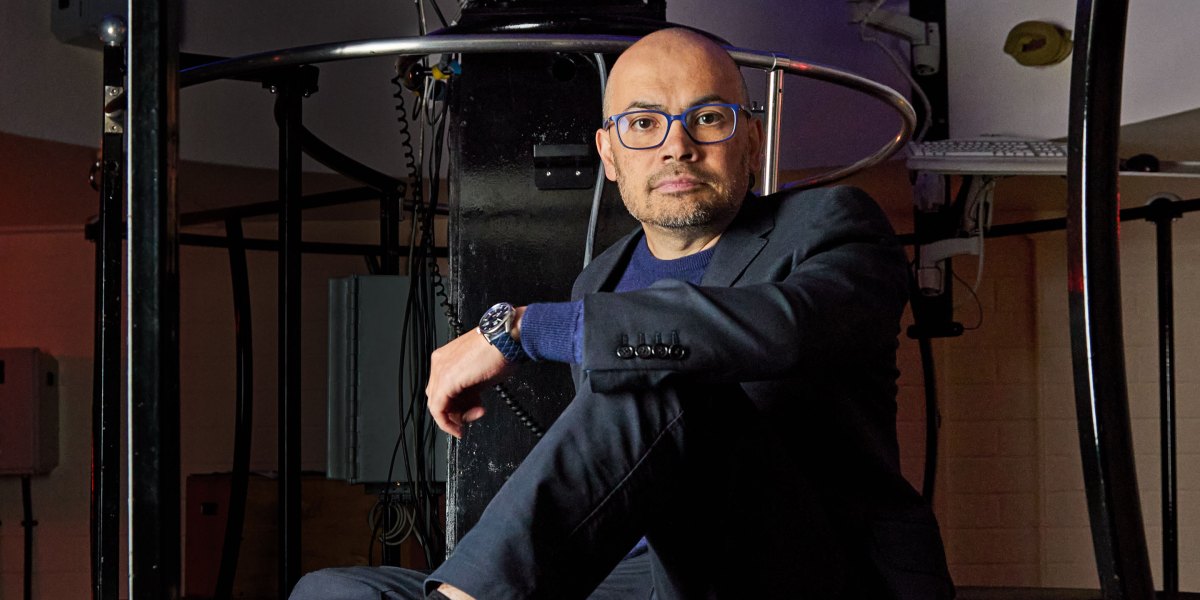
"It was a brisk October night as Demis Hassabis and I talked about the stars. There was good reason. For one, place: We were sitting in a London observatory opened in 1929. For another, metaphor: Talking about stars and constellations is a great way to talk about vastness, the wonders and limitations of what the human brain can process. There's vastness far closer to us that transcends even the stars."
Demis Hassabis and a visitor met in a London observatory and used stars as metaphor to convey human cognitive limits versus vast chemical space. A conservative estimate places small, drug-like molecules near 10^60, vastly exceeding the roughly 10^22–10^24 stars in the observable universe. That scale renders traditional drug discovery extraordinarily improbable, making each approved drug seem like a rare outcome. Hassabis founded Isomorphic Labs in 2021 to apply advanced AI and technology platforms to explore chemical space. The aim is to develop systematic, repeatable, scalable processes for discovering, designing, and optimizing drugs or treatments as medical needs arise.
Read at Fortune
Unable to calculate read time
Collection
[
|
...
]