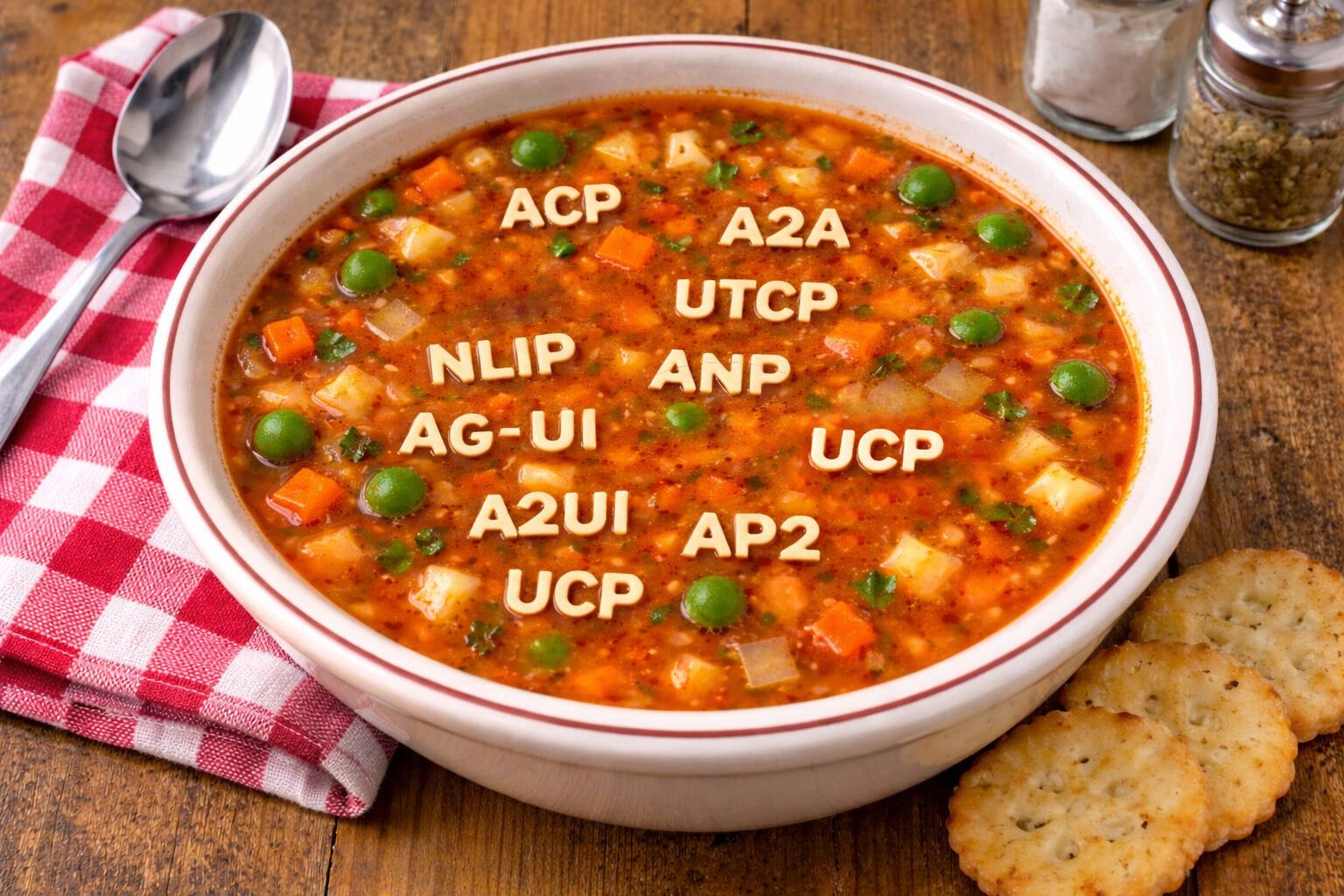
"On the surface, all the protocols serve a similar purpose. They are all trying to standardize how AI agents communicate, with the main distinction often being what exactly they're trying to talk to. While by no means a comprehensive accounting of all the agentic protocols competing for industry adoption, most can be divided into four or five buckets: agent-to-tool, agent-to-agent, agent-to-user, domain-specific agent protocols, and all the frameworks that glue them together."
"Of these, the open source Model Context Protocol (MCP) has emerged as the de facto standard. Originally developed by OpenAI rival Anthropic in late 2024, MCP is billed as the USB-C of agentic systems. The protocol uses the classic client-server architecture. Tools and data sources either run inside or are connected via API to the MCP server, which advertises its capabilities via stdio, HTTP, or server-sent events (SSE) to an MCP client."
"While MCP has won the popularity contest, it's far from perfect. As we recently reported, security vulnerabilities continue to dog the protocol. Part of the problem is MCP servers are often little more than wrappers around code interpreters, which can lead to remote code execution attacks if not properly locked down."
Multiple agentic protocols aim to standardize how AI agents communicate, differing primarily by what they connect to: tools, other agents, users, or domain-specific systems. Tool-calling protocols have drawn the most attention, with the Model Context Protocol (MCP) emerging as a widely adopted option that uses a client-server model and advertises tool capabilities via stdio, HTTP, or SSE. MCP saw rapid adoption among major vendors after its late-2024 introduction. Security remains a major concern because many MCP servers act as wrappers around code interpreters, creating risks of remote code execution. Simpler alternatives like UTCP were proposed in response.
Read at Theregister
Unable to calculate read time
Collection
[
|
...
]