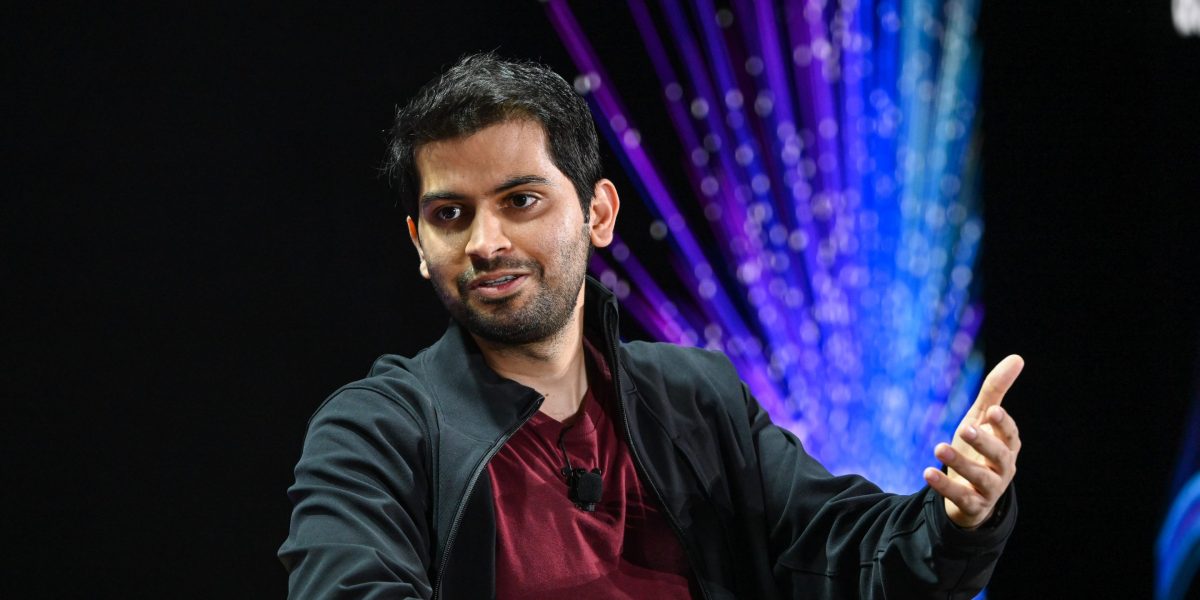
""What looks hard is easy, but what looks easy is really hard," Stephanie Zhan, a partner at Sequoia Capital, explained, paraphrasing an observation from computer scientist Hans Moravec. In the late Eighties, Moravec and other computer scientists noted that it was easier for computers to perform well on tests of intelligence, yet failed at tasks that even young children could do."
"Deepak Pathak, CEO of robotics startup Skild AI, explained that robots, and computers in general, were good at doing complex tasks when operating in a controlled environment. Showing a video of a Skild robot skipping down a sidewalk, Pathak noted that "apart from the ground, the robot is not interacting with anything." Yet for tasks like picking up a bottle or walking up stairs, a person is using vision to "continuously correct" what he or she is doing, Pathak explains."
Humanoid robots increasingly demonstrate impressive acrobatics, but many struggle with everyday, interactive tasks that require continuous perception and adaptation. Machines excel at complex behaviors in controlled settings where interactions are limited, yet fail at tasks such as climbing stairs, picking up a glass, or correcting for environmental variation. Historical observations note that tasks that appear hard to humans can be easy for machines, while tasks appearing simple for humans remain difficult to automate. Viral videos frequently omit training details and environmental constraints, complicating assessment of real-world capability. Progress in general intelligence and perception-driven control is expected to yield more flexible, robust robots.
Read at Fortune
Unable to calculate read time
Collection
[
|
...
]