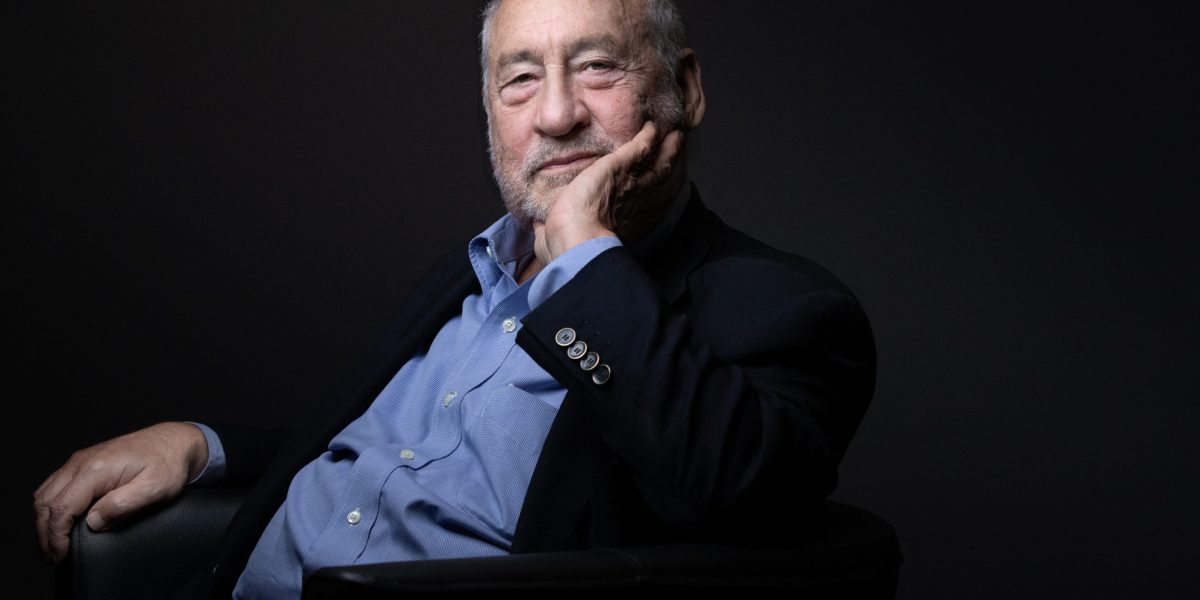
"Our economy is right now being supported by AI investment-the AI bubble. Like a third of the growth, or the non-growth, that we had last year was based on AI. So this AI bubble is having positive macroeconomic effects in the short run. I believe that it is a bubble in two ways."
"The market believes that there are going to be high returns to these investments that is predicated on two assumptions: that AI will be technologically successful and that there will be limited competition. Because if it's technologically successful, but there's a lot of competition, profits will be driven down to zero, and they will not get the returns that they expect."
"If I'm right and there is this bubble, then the breaking of any bubble is really bad in the short term for the macroeconomy."
Joseph Stiglitz identifies a fundamental contradiction in the current AI economy. While AI investment artificially supports macroeconomic growth—accounting for roughly one-third of recent growth—this boom rests on flawed assumptions. The market expects high returns based on technological success and limited competition, but intense global competition from U.S. and Chinese firms will likely drive profits toward zero. When investors recognize these unrealistic expectations, the bubble will burst with severe short-term macroeconomic consequences. However, Stiglitz also acknowledges that surviving this transition could yield long-term benefits, as AI technology may ultimately become a valuable co-worker. The challenge lies in managing worker displacement through institutions currently unprepared for such disruption.
Read at Fortune
Unable to calculate read time
Collection
[
|
...
]