OpenAI announced that its chatbot software disproved Paul Erdős’s challenge on the unit-distance problem. Erdős had proposed an optimal arrangement of points on a plane to maximize the number of pairs at a fixed unit distance and claimed no better arrangement exists. OpenAI says its system achieved the result by selecting points whose coordinates solve specific equations, using techniques from algebraic number theory. Independent mathematicians verified the finding. Mathematicians expressed astonishment, noting it appears to be the first time AI autonomously produced an important research result in any field, and that the independently verified proof is especially notable.
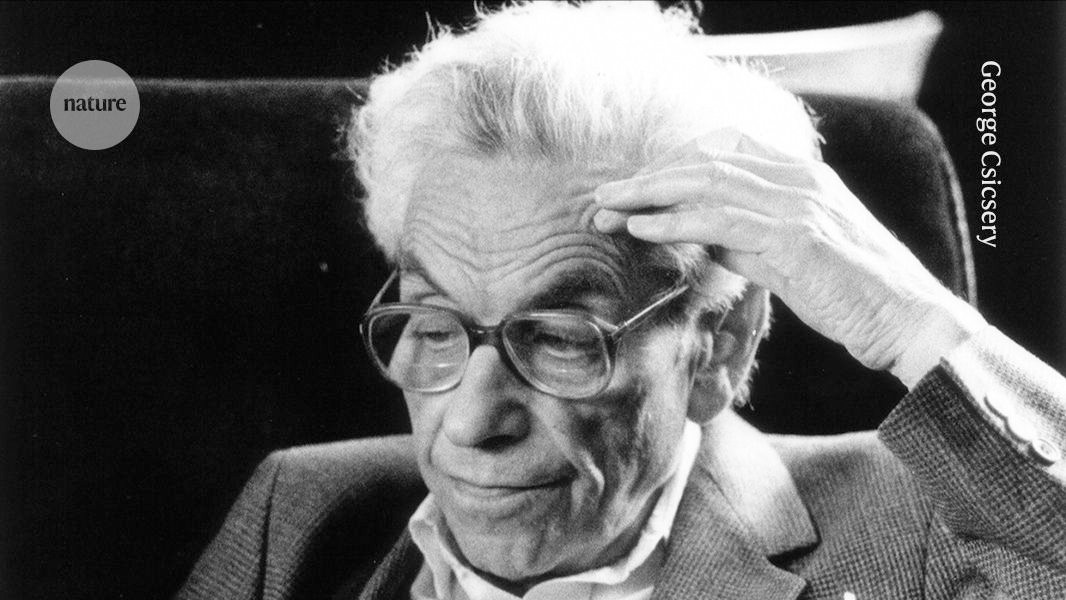
"OpenAI announced on 20 May that its chatbot software had disproved Paul Erdős (1913-1996) on what is called the unit-distance problem. In 1946, Erdős worked out what he suggested was the best arrangement of points on a plane so that as many pairs as possible are at a given distance from each other - and he put down a challenge: no one could do better. Now, OpenAI says that its system has done precisely that."
"It did so by using techniques in algebraic number theory, which enabled it to choose points with coordinates that were the solutions of particular equations. And the finding has astonished mathematicians. "If Erdős were alive, I am sure that he would just be raving about this advance," says Tom Trotter, a mathematician at the Georgia Institute of Technology in Atlanta who co-authored papers with the late Erdős."
"Sebastien Bubeck, a mathematician at OpenAI in San Francisco, California, says he believes this is the first time that AI has autonomously produced an important result in any field of research. And Tony Feng, a mathematician at the University of California at Berkeley, wrote on X: "I like to think that I have been a relatively measured voice on the impact of AI on mathematics, but this is incredible.""
"Daniel Litt, a mathematician at the University of Toronto in Canada and one of the independent researchers OpenAI called upon to verify the proof, says that this "the first result produced autonomously by an AI that I find interesting in itself". The company has not revealed all the precise details and steps of how it did this, nor the name of the AI system that achieved the result, which it has published on its website."
Read at Nature
Unable to calculate read time
Collection
[
|
...
]