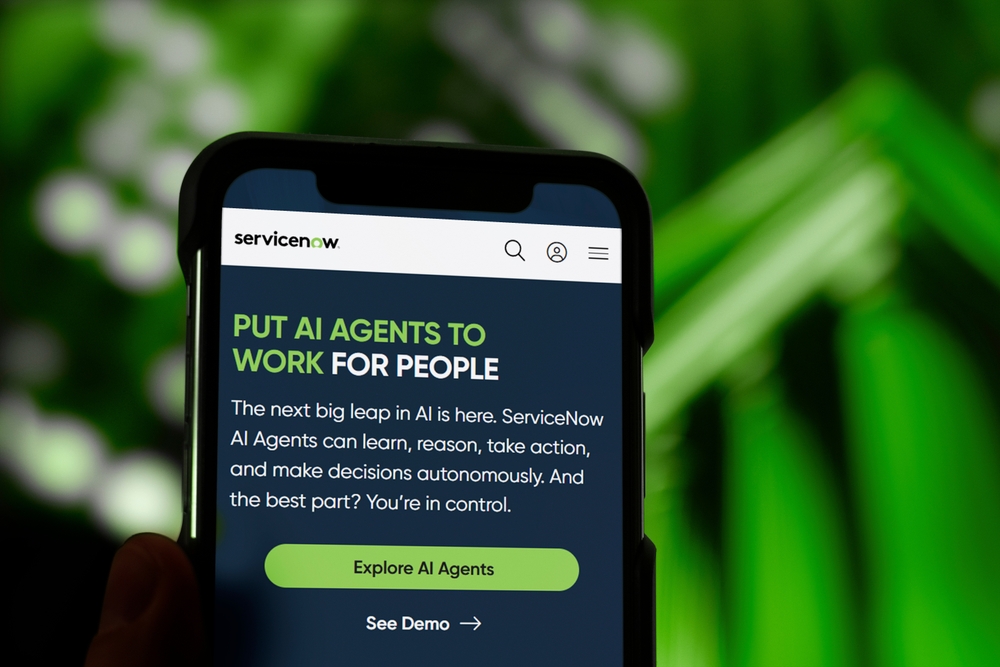
"We spoke with Chief Transformation Officer Hartmut Mueller about this shift, the challenges of platform adoption, and why speed is the most important success factor. Mueller's role at ServiceNow is twofold. On the one hand, he guides customers through their transformation journeys. On the other hand, he works internally with product teams to align roadmaps with specific industries. This dual role gives him insight into what is really going on at companies that want to implement AI."
"You have to turn your entire end-to-end business process architecture into a role-based architecture, explains Mueller. "You now look at the roles in your company," says ServiceNow's Chief Transformation Officer. One of Mueller's customers in Asia illustrated this with a striking example. That company started with an entirely human workforce. Through automation and support, they reduced the number of tasks by 40 to 60 percent. They then supplemented this with AI agents, so that ultimately 40 percent of the work was done by agents."
Companies are shifting from improving isolated tasks with AI to transforming entire roles and business architectures. Role transformation requires converting end-to-end process landscapes into role-based architectures and rethinking how responsibilities are allocated between humans and AI agents. Some organizations cut human task volumes by 40–60 percent through automation and then deployed AI agents to handle roughly 40 percent of work, counting agents alongside human workers. ServiceNow guides customers through these transformations while aligning product roadmaps with industry needs. Rapid platform adoption and execution speed are the most important determinants of success.
Read at Techzine Global
Unable to calculate read time
Collection
[
|
...
]