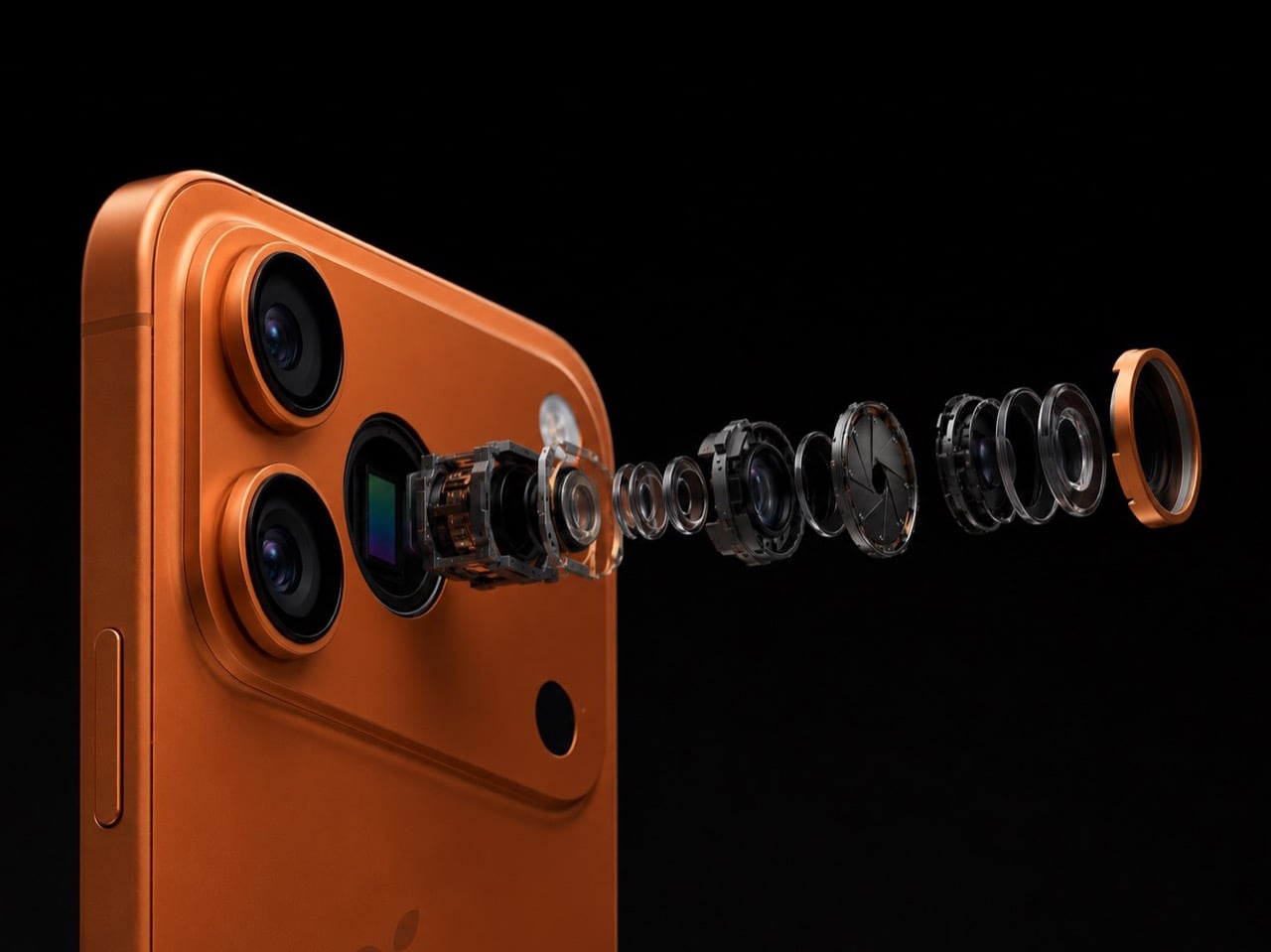
Premium smartphone camera performance has increasingly relied on software processing that compensates for sensor and lens limitations. Computational photography from major vendors has produced strong benchmark results, especially in low light and detail recovery. Apple’s Photonic Engine has enabled fast post-capture processing, but it functions as a workaround for hardware constraints. Leaked supply chain information indicates Apple may use a mechanical iris with physical aperture blades for the iPhone 18 Pro Max. Sunny Optical is reported to be producing the actuators, confirming earlier expectations. The approach reframes algorithms as support for physical light control rather than a substitute. Prior attempts by Samsung showed inconsistent results and usability issues, and mechanical aperture integration remains a difficult precision manufacturing task within millimeter-scale camera stacks.
"For the last several years, the premium smartphone camera has been a story about software eating hardware. Google's computational photography turned mediocre sensors into benchmark toppers. Samsung's AI processing chased detail out of dark scenes that the lens glass alone could never recover. Apple built the Photonic Engine specifically to run post-capture processing at speeds no competitor could match. The results have been genuinely impressive across the board. They have also been, at a fundamental level, a workaround."
"Leaked supply chain data from April points toward Apple choosing a different approach for the iPhone 18 Pro Max: a mechanical iris, physical aperture blades, the kind of variable light control that photographers have relied on since the nineteenth century. Chinese component supplier Sunny Optical has already entered production on the actuators that make the system work, turning what analyst Ming-Chi Kuo first flagged in December 2024 into a confirmed hardware reality."
"Designer: Apple Samsung attempted this exact feature with the Galaxy S9 and S9+ in 2018, building a diaphragm that toggled between f/1.4 and f/4.0 across eight discrete steps, then dropped it entirely from the Galaxy S10 the following year without explanation. First-hand testing at the time found inconsistent results, portrait artifacts, and a setting so buried in the menus that most users shooting in auto mode never engaged it deliberately."
"The engineering problem is formidable: fitting moving aperture blades, their actuators, and the mechanical tolerances those blades require into a camera stack measured in single-digit millimeters is a precision manufacturing challenge of a different category"
#smartphone-cameras #computational-photography #mechanical-iris #apple-iphone #camera-hardware-engineering
Read at Yanko Design - Modern Industrial Design News
Unable to calculate read time
Collection
[
|
...
]