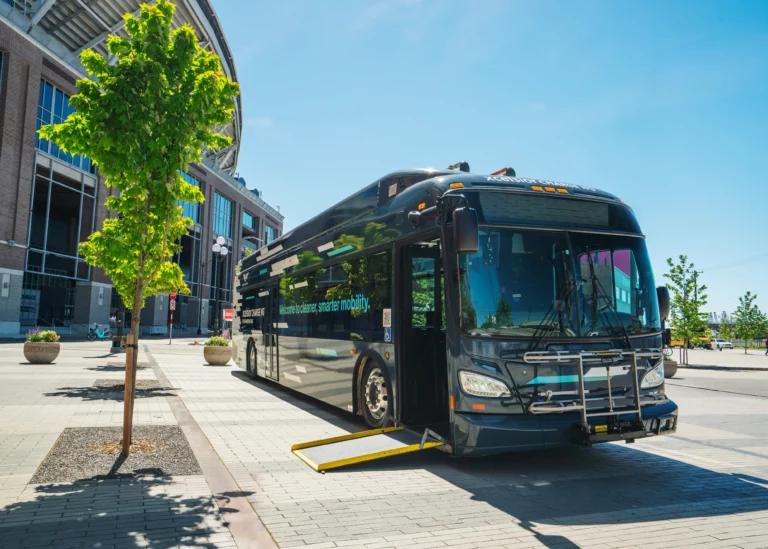
Zero-emission buses (ZEBs) continue expanding across the United States, growing 16% year-over-year to 8,116 units in 2025. This represents over 130% growth in five years, from 2,790 buses in 2020. CALSTART projects the fleet will exceed 15,000 buses by 2030, with anticipated deployments of 9,200 in 2026, 10,500 in 2027, 12,000 in 2028, 13,700 in 2029, and over 15,000 by decade's end. Despite strong momentum, ZEBs remain a small portion of the approximately 70,000 public transit buses nationwide. California leads with 2,623 ZEBs, followed by New York, Washington, and Massachusetts. Battery-electric buses dominate the technology mix with 7,261 full-size vehicles, while hydrogen fuel-cell buses show strong momentum with 49% growth.
"According to CALSTART's "Zeroing in on ZEBs" report, in 2025 the number of ZEBs increased by 16% compared to 2024, reaching 8,116 units, which means 1,088 additional vehicles compared with the 7,028 recorded the previous year."
"CALSTART estimates that more than 15,000 ZEBs will be deployed by 2030. The forecast indicates around 9,200 buses in 2026, 10,500 in 2027, 12,000 in 2028, 13,700 in 2029, and over 15,000 by the end of the decade."
"The growth of zero-emission buses in the United States is real and strong (more than +130% in about five years), but it does not yet represent a full transformation of the sector. ZEBs still account for only a small portion of the roughly 70,000 public transit buses in the U.S. fleet."
"California continues to lead the ranking, with 1,933 battery-electric buses and 690 hydrogen fuel-cell buses. So, more than 32% of new ZEBs in the United States are in California. The Golden State is followed by New York with 829, Washington with 521, and Massachusetts with 292."
#zero-emission-buses #electric-transit-vehicles #hydrogen-fuel-cell-buses #public-transportation-electrification #us-transit-fleet-growth
Read at Sustainable Bus
Unable to calculate read time
Collection
[
|
...
]