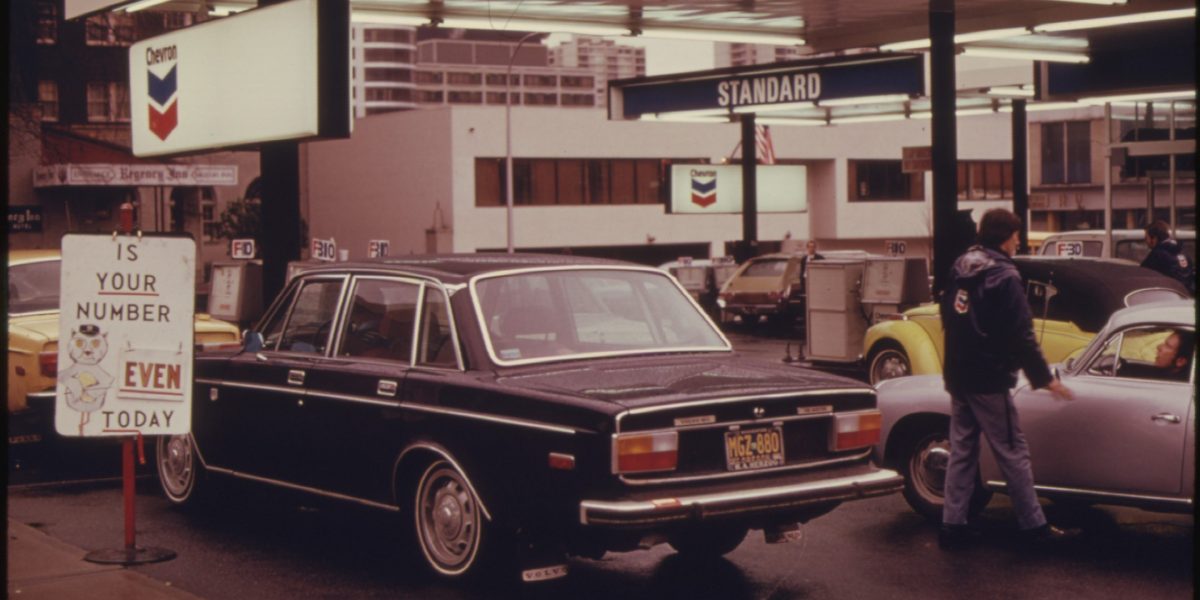
"In October 1973, Arab members of the Organization of the Petroleum Exporting Countries (OPEC) announced an embargo on the United States in retaliation for American military support of Israel during the Yom Kippur War. But they didn't just raise prices: they cut supply. Within weeks, gas prices at the pump surged 40% in a single month. By mid-1974, the effective price had tripled, and fuel availability had collapsed."
"The kind where your license plate number determined what days you were allowed to leave home. The kind where a green, yellow, or red flag hanging outside a gas station was the most important piece of information in your day. That America actually existed, and it may be closer than we think."
"Gas prices in the U.S. have jumped nearly 11% since this time last year. The conflict with Iran has pinched the Strait of Hormuz-the narrow waterway through which about 20% of the world's oil and liquefied natural gas travels every day-while Qatar, which produces 20% of global LNG, has halted production entirely."
The 1970s gas crisis fundamentally differed from modern price fluctuations by creating actual fuel scarcity rather than mere cost increases. In October 1973, OPEC's Arab members embargoed the United States in response to American military support for Israel during the Yom Kippur War, cutting oil supply rather than simply raising prices. Gas prices surged 40% within a month, and by mid-1974, prices tripled while fuel availability collapsed. The crisis forced rationing systems where license plate numbers determined permitted driving days, and gas stations displayed colored flags indicating availability. Current geopolitical tensions involving Iran and the Strait of Hormuz, through which 20% of global oil travels, combined with Qatar's halted LNG production, raise concerns that similar supply-driven crises could recur.
Read at Fortune
Unable to calculate read time
Collection
[
|
...
]