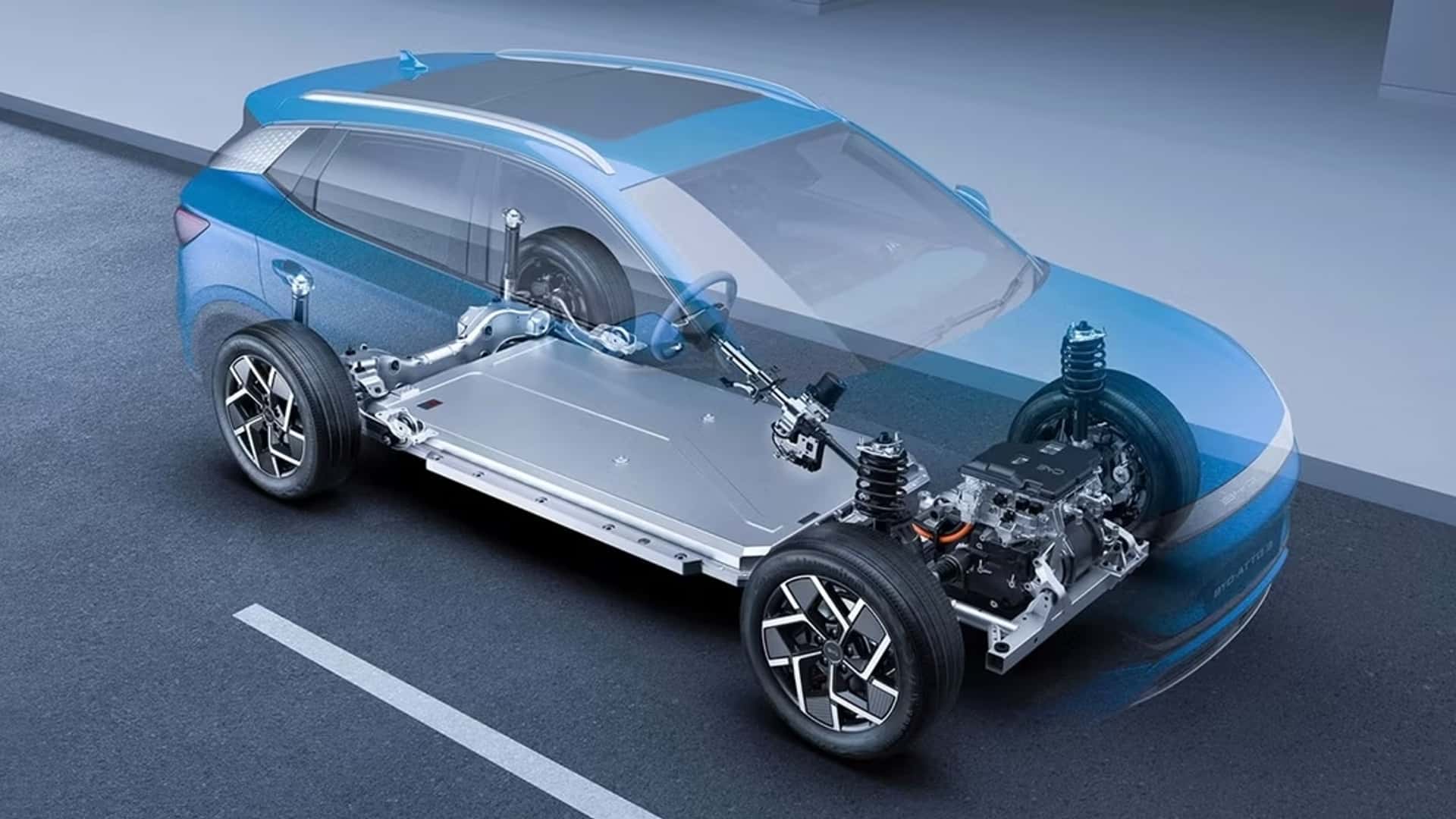
"The new Blade battery itself is a genuinely clever design. BYD uses long, narrow cells as structural elements with tight packing. This allows the automaker to achieve greater efficiency and pack density, which is a challenge in itself, let alone in a pack capable of megawatt charging speeds. The compact packaging solution is super useful on the surface, but like all complicated engineering projects, eventually someone has to decide where the trade-offs are."
"What they found is that 1,261-pound pack took a significant amount of time and effort to disassemblethat meant grinding, cutting, hammering, and even freezing the pack in order to tear it down to a serviceable state. Photo by: BYD The new Blade battery itself is a genuinely clever design. BYD uses long, narrow cells as structural elements with tight packing."
"BYD, like many automakers, treat its battery packs like giant integrated systems. Cellsall 170 of them inside of the Blade packbecome modules, modules become structural components, and structural components become part oft he vehicle itself. Other manufacturers are pursuing similar ideas today for good reasons (weight savings, rigidity, reducing manufacturing complexity), all of which help to squeeze every last mile out of an EV."
"One of the big hurdles during the 8-hour deconstruction was the amount of structural adhesive used to assemble the pack. These ad... They also raise concerns of repairability and recycling. One of the largest selling points of an EV is the total cost of ownership. Sure, an EV may have a heavy upfront cost and sharp depreciation, but fewer moving parts generally mean less maintenance."
A Blade battery pack teardown found that disassembly required extensive time and effort, including grinding, cutting, hammering, and a deep freeze cycle to reach a serviceable state. The pack’s design uses long, narrow cells arranged tightly as structural elements to improve efficiency and pack density, supporting high charging performance. The cells are integrated into modules, modules become structural components, and structural components become part of the vehicle. This approach can reduce weight, improve rigidity, and simplify manufacturing, but it creates trade-offs when failures occur. Structural adhesives used to assemble the pack were a major hurdle, and concerns were raised about repairability and recycling.
Read at insideevs.com
Unable to calculate read time
Collection
[
|
...
]