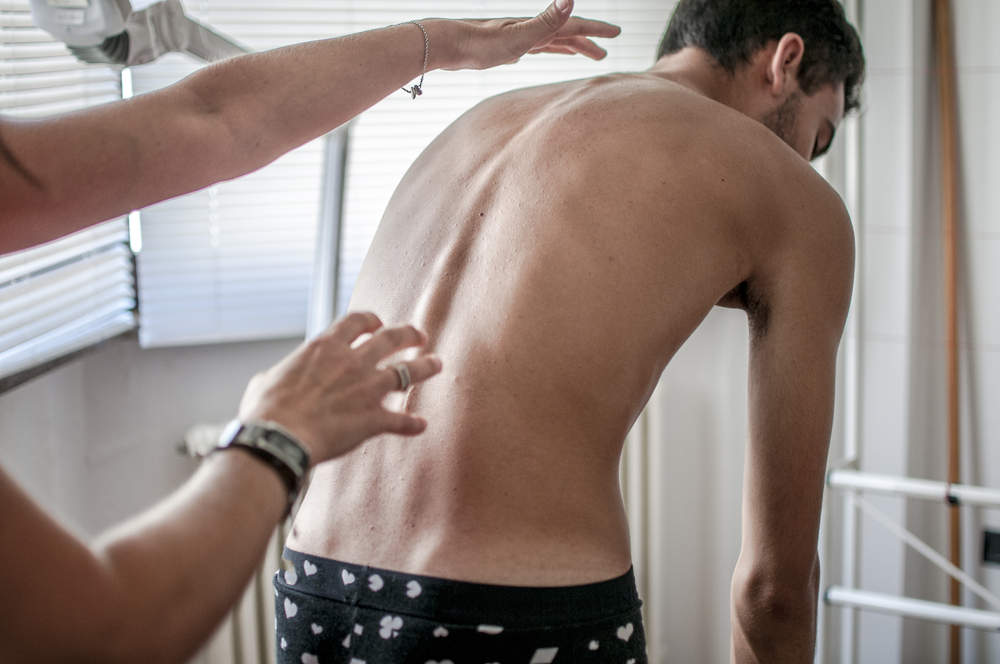
"While it appears there is a higher probability of scoliosis being passed down, there is no real solid evidence to point to the reason why. A parent or sibling of a person having been diagnosed with scoliosis has an increased risk, but there are several different environmental and genetic factors that must also be taken into consideration."
"The body's spine has areas where there are natural curves that happen in the lumbar, thoracic, and cervical regions. The reason for the curves being, of course, so that the body can move around and handle stresses that are put on it during routine activities."
"Idiopathic - when no other scoliosis type can be determined. About 80% of patients are diagnosed with idiopathic scoliosis. It's the most common and often found while a child is going through puberty."
Medical professionals routinely screen for scoliosis during annual examinations, particularly for individuals with family history. While scoliosis demonstrates increased risk among relatives of diagnosed patients, no conclusive evidence explains the inheritance mechanism. The condition involves complex interactions between environmental and genetic factors, classifying it as sporadic. The spine naturally curves in lumbar, thoracic, and cervical regions to facilitate movement and handle stress. Abnormal curvature in the coronal plane indicates scoliosis. Three classifications exist: idiopathic (80% of cases, typically appearing during puberty), congenital (present at birth from uneven spinal growth), and neuromuscular (rapid progression requiring surgery, secondary to muscular and neurological diseases).
#scoliosis-inheritance #genetic-factors #spinal-curvature-classification #medical-screening #idiopathic-scoliosis
Read at Alternative Medicine Magazine
Unable to calculate read time
Collection
[
|
...
]