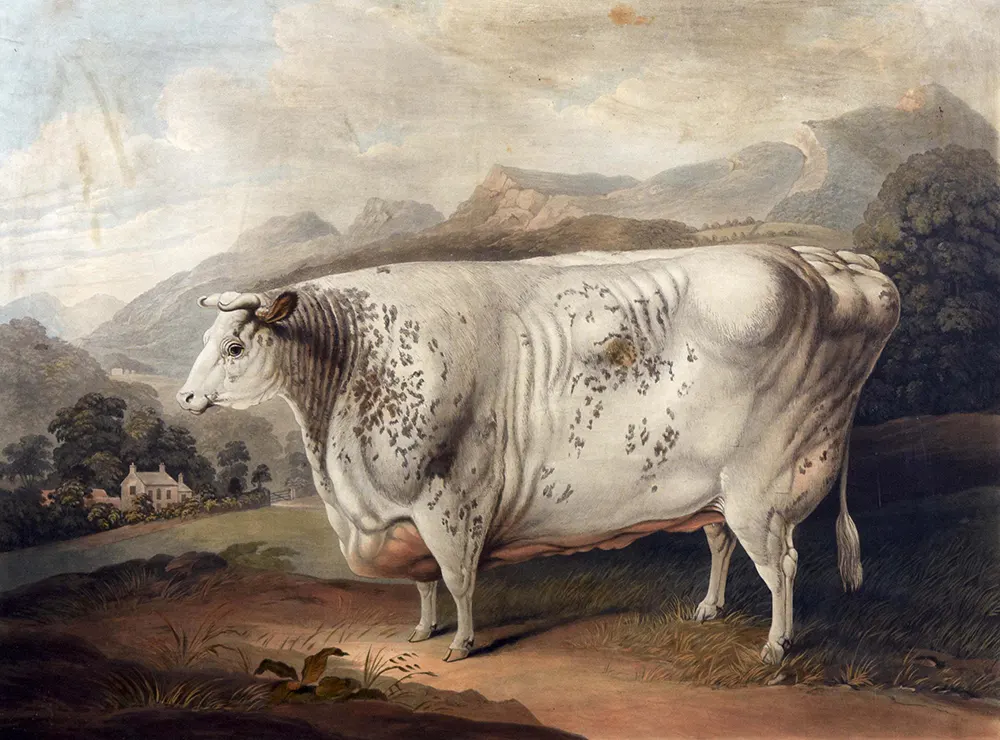
"In the 19th century, before modern photography and digital marketing, farmers turned to paintbrushes and canvases to display their finest livestock. But these weren't just ordinary portraits of pigs, cows, and sheep - they were grand, exaggerated, and sometimes almost comically oversized. This fascinating artistic trend reveals much about the agricultural economy, cultural values, and competitive nature of rural communities in the 1800s."
"During this time, agricultural fairs and livestock competitions became wildly popular across Britain and America. Winning these shows was a mark of pride, prestige, and financial success. Farmers commissioned artists to depict their prize-winning animals not only as documentation but as promotional tools. To catch the eye and elevate status, they often asked for a little "artistic enhancement." Without photography, paintings were one of the only ways to advertise a farm's best animals."
In the 19th century in Britain and America, farmers commissioned painted portraits to showcase prize livestock before photography existed. Agricultural fairs and competitions rewarded prize-winning animals with prestige and financial benefit, motivating owners to promote specimens. Paintings functioned as marketing tools when hung in farmhouses, exhibited at fairs, or reproduced in journals and newspapers. Artists exaggerated proportions—barrel-sized bellies, oversized coats, lowered horizon lines—to convey abundance and desirability. Painters such as Thomas Sidney Cooper and Edwin Henry Landseer specialized in detailed, idealized portrayals that emphasized the animal as the ultimate specimen. Enhanced images helped attract buyers, bolster reputations, and symbolize prosperity.
Read at Animals Around The Globe
Unable to calculate read time
Collection
[
|
...
]