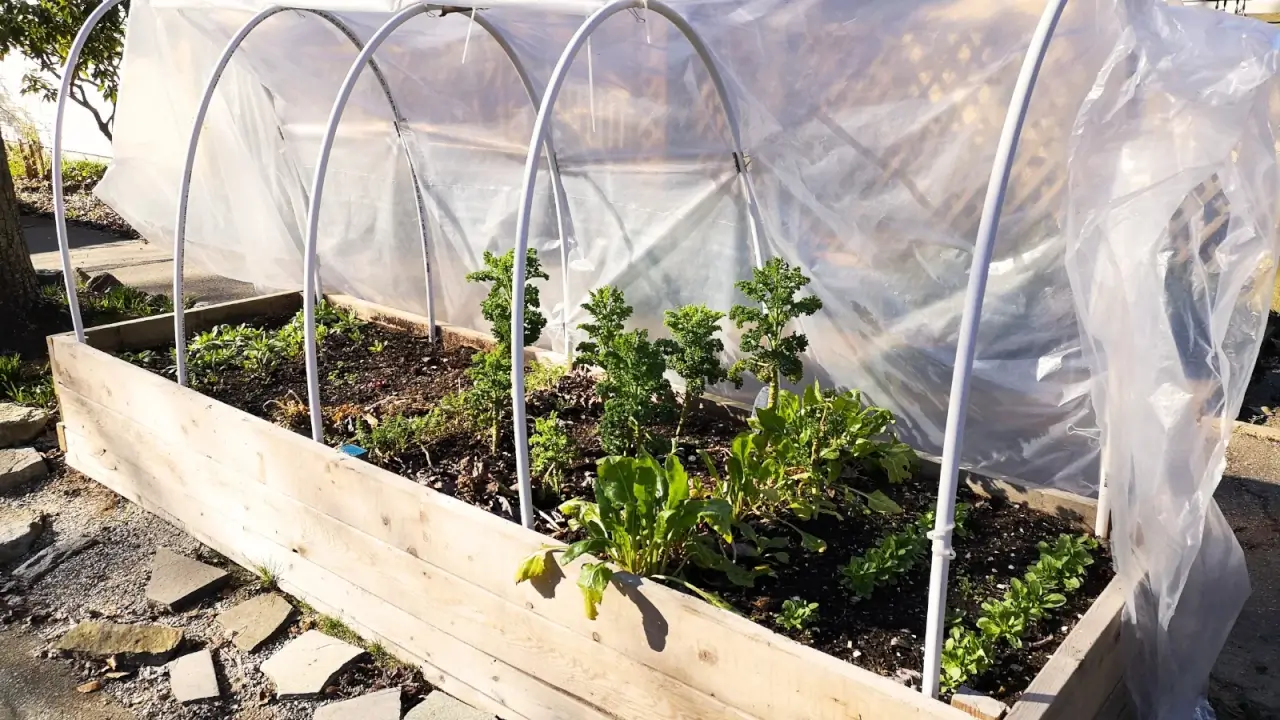
"Winter is a rough time for herbaceous plants. Most don't have the tolerance for the extreme cold in upper North America, and many die back in late winter in the South. But if you have time, you can build a December cold frame, hoop house, or covered row to grow even when it's frigid outdoors. The key is to ensure you've got a good setup for your climate, and to plant crops that enjoy a little cold."
"Cold frames are easy to build from repurposed materials. Hoop houses, on the other hand, are larger and need securing. Season extension with a good seal is best for climates with extremely cold winter weather. In milder areas, vent the cover when temperatures are above 50°F (10°C). The interior of the extender can reach 50 degrees warmer than the air outside in direct sunlight. Note this as you decide what to go with."
Seasonal extension structures such as cold frames, hoop houses, and covered rows enable growing during frigid winter conditions when built to match local climate and secured against wind. Cold frames can be built from repurposed materials while hoop houses are larger and require anchoring. Well-sealed extenders retain heat best in extremely cold areas, while venting is important above 50°F (10°C) in milder regions. Interiors can heat up to 50 degrees warmer in direct sun. Integrate extenders into existing growing spaces to reduce cost. Prioritize cool-weather crops and set up early in arctic zones to select the hardiest varieties.
Read at Modern Farmer
Unable to calculate read time
Collection
[
|
...
]