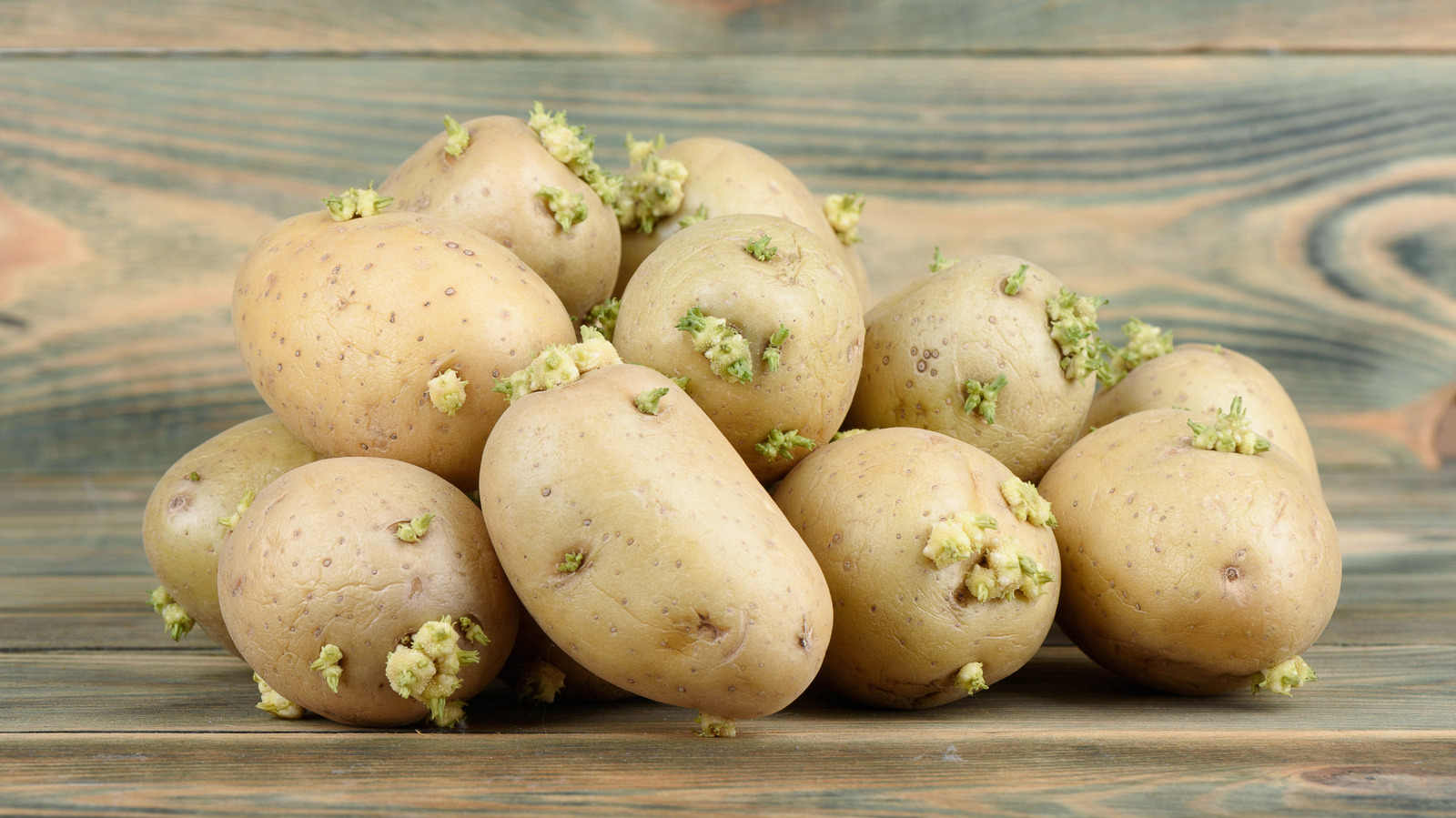
"Potato sprouts contain compounds (specifically glycoalkaloids like solanine and chaconine), which stick in the potatoes' skin and become toxic in the body when consumed in large quantities, leading to an upset stomach or indigestion. However, it's worth noting that potatoes already contain glycoalkaloids - the compound is just more concentrated in the sprouts."
"The reason why potatoes sprout in your pantry or long-storage in the first place is that the tuber thinks it's underground, and that springtime has arrived. The dark, moist, warm conditions spuds are accustomed to during their subterranean tenure prompt the formation of those sprouts, which are a crucial fixture in the natural propagation process."
"To help stave off sprouting from the jump, store your potatoes in a cool, dark space with adequate breathing room, like a milk crate in a walk-in pantry. However, once the proverbial 'worm has turned,' replanting them is more eco-friendly than throwing them away - and when sprouts emerge, the spuds are already well into the regrowth process."
Sprouted potatoes develop sprouts when stored in dark, moist, warm conditions that mimic underground environments, triggering natural propagation. While sprouted potatoes can technically be eaten after removing sprouts, this is risky because potato sprouts contain concentrated glycoalkaloids like solanine and chaconine, which cause digestive upset in large quantities. Replanting sprouted potatoes is the safer and more environmentally responsible option. Potatoes are hardy vegetables ideal for beginner gardeners. To prevent sprouting, store potatoes in cool, dark spaces with good ventilation. Once sprouting occurs, bury sprouted potatoes 6-8 inches deep with sprouts facing upward, spacing them 12-16 inches apart for optimal growth.
#sprouted-potatoes #potato-storage #glycoalkaloids-and-toxins #replanting-potatoes #beginner-gardening
Read at Tasting Table
Unable to calculate read time
Collection
[
|
...
]