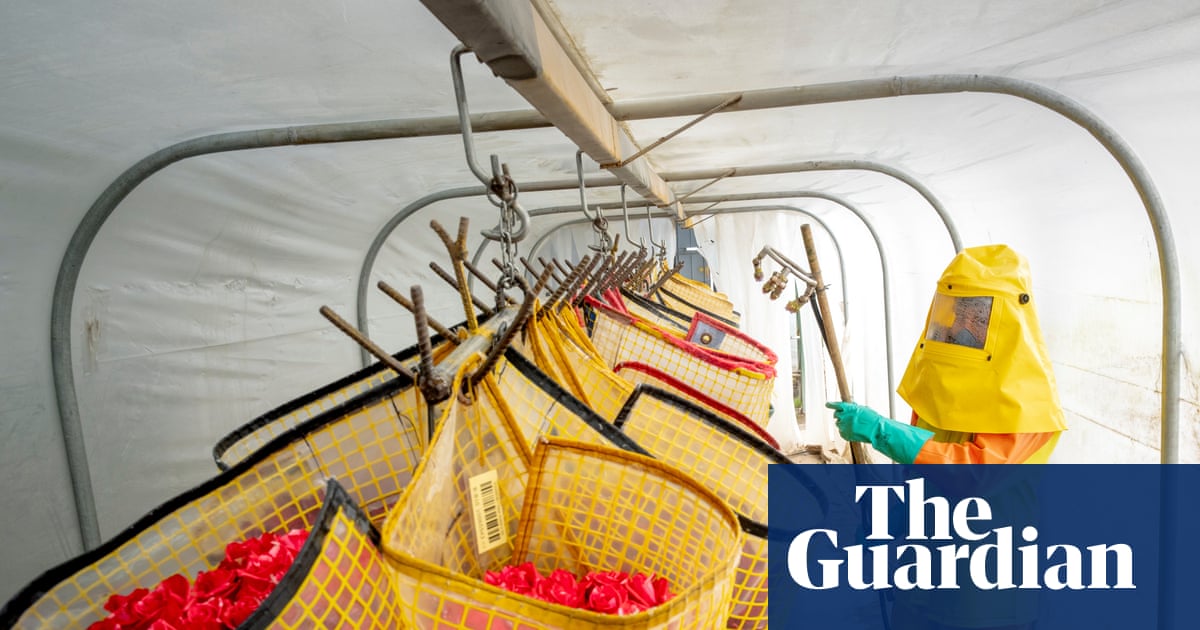
"The fertile high valley near La Chimba trembles with sounds. The rhythms of brass bands and cumbia music clash like weather fronts, each playing its own beats in the Andean rain. A rainbow spans the slopes and white plastic greenhouses, protecting the region's treasure: roses bred for beauty, shipped abroad, blooming far from home. Amid the drizzle, Patricia Catucuamba and her husband, Milton Navas, share a jug of chicha, a maize brew vital to their harvest celebrations."
"Like many in Cayambe, they started a new venture five years ago: a cut-flower business specialising in roses, which offer higher profits on less land. Diversification isn't just a strategy, it's survival here, says Catucuamba at her family's ranch, pointing to a 4,500 sq metre greenhouse with rows of five rose varieties built at an altitude of 3,300 metres, where the air is thin and sharp."
The fertile high valley near La Chimba combines rural life and intensive rose production, with greenhouses protecting high-value blooms destined for export. Many smallholders shifted from dairy to cut-flower cultivation to earn higher profits on limited land, building high-altitude greenhouses with multiple rose varieties. Cayambe concentrates three-quarters of the nation's rose production, and roses account for 66% of Ecuador's flower output, helping Ecuador become the world's third-largest exporter in 2024 with over two billion stems annually. Researchers and campaigners warn that economic gains may coexist with dependence on pesticides and precarious producer livelihoods.
Read at www.theguardian.com
Unable to calculate read time
Collection
[
|
...
]