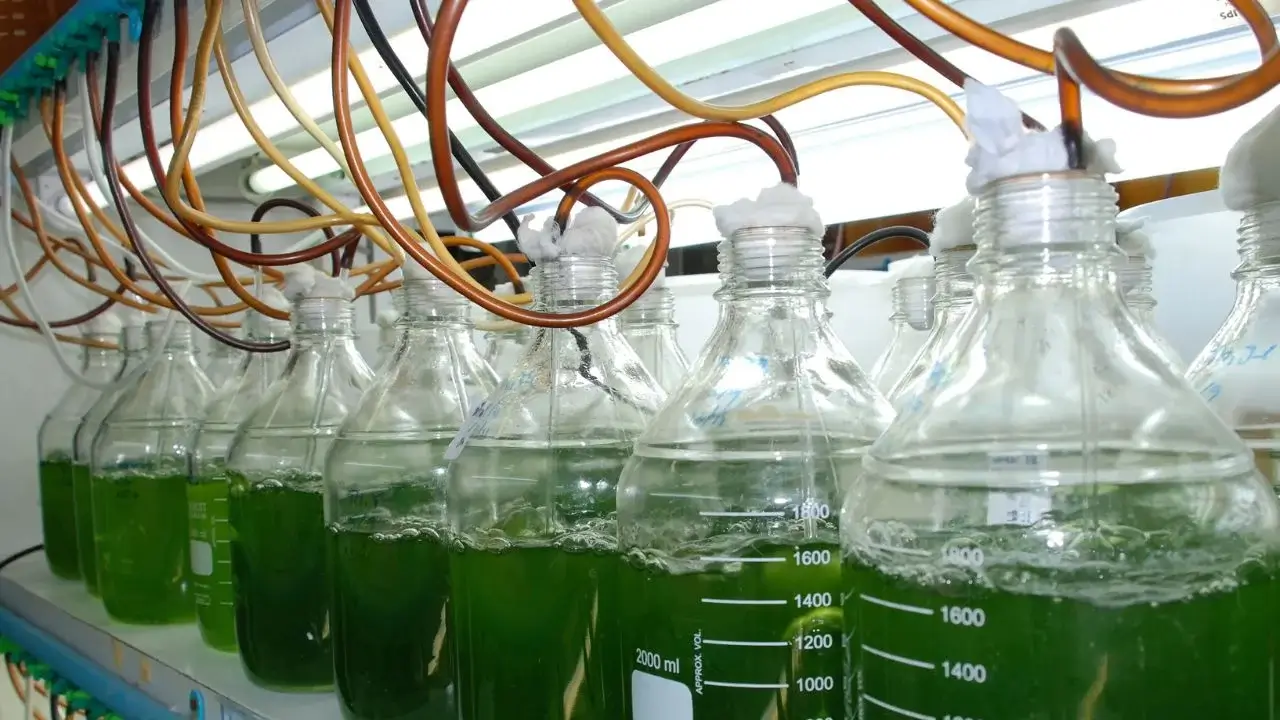
"Freshwater alga, Chlorella vulgaris, is a new superfood with a small environmental footprint. The rise in interest in this alga stems from its applications across multiple areas of farming. In Japan, where it is most commonly used, it is employed as a livestock feed, a renewable energy resource, and a protein-rich food source. While on the surface it appears to be a promising new food, there are several challenges in mass-producing this freshwater dweller."
"C. vulgaris is what is known as a microalga, or an alga that is invisible to the naked eye, and replicates easily in optimal conditions. Algae in general need light, warmth, and nutrients to replicate. Microalgae tend to replicate rapidly in the right levels of warmth and light. In the ocean, these organisms work together with cyanobacteria to form phytoplankton, which are the basis of the marine food web."
Chlorella vulgaris is a freshwater microalga with a small environmental footprint and multiple farming applications, including livestock feed, renewable energy, and a protein-rich food source in Japan. Mass production faces challenges despite decades of research since the 1990s into large-scale cultivation. Studies indicate nutrient content that may boost immune function, support detoxification, and provide antioxidant properties, and potential use as a biostimulant. Microalgae are autotrophic, using carbon dioxide and inorganic nitrogen for glucose production, and reproduce rapidly under adequate light, warmth, and nutrients. C. vulgaris tolerates a wide range of conditions and can self-replicate, offering sustainability benefits for food security.
Read at Modern Farmer
Unable to calculate read time
Collection
[
|
...
]