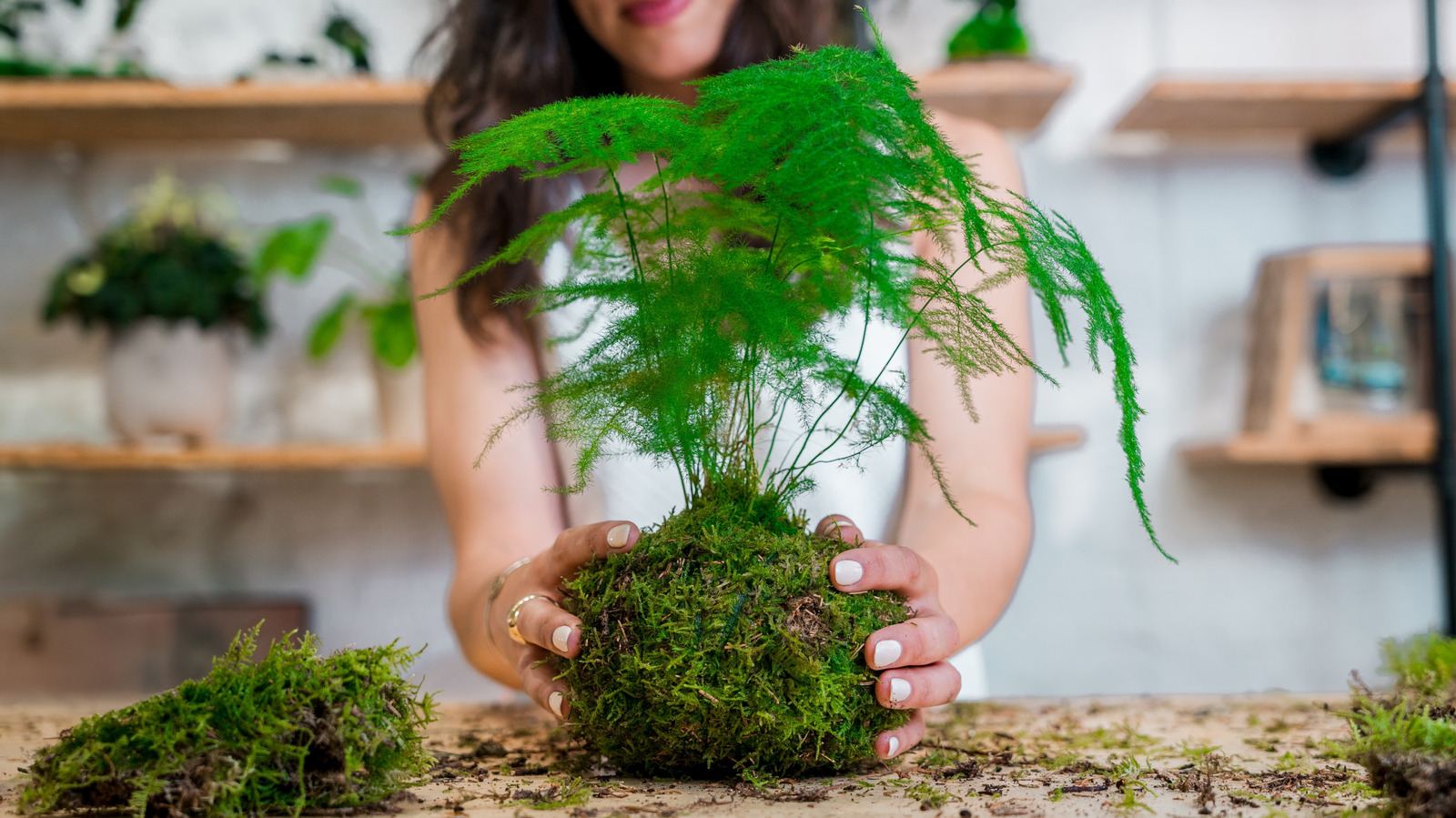
Kokedama, meaning 'moss ball' in Japanese, involves shaping root systems into moss-covered mounds secured with string. This technique blends bonsai and kusamono styles, emphasizing artistic display over traditional planting. Originating in the 1600s, Kokedama is cost-effective as it eliminates the need for pots. It is suitable for various plants, including herbs and orchids, and can help prevent issues like root rot. Compact herbs such as rosemary, thyme, and basil thrive in this format, although yields may be smaller compared to conventional planting.
"Kokedama blends the nearai bonsai and kusamono planting styles, emphasizing the practice of artfully displaying natural materials instead of burying them into the earth."
"The approachable format simply calls for soil, moss, and string to keep everything in place. Kokedama can be used to display and grow edible herb gardens and houseplants."
"Compact herbs that don't develop complex root systems are ideal candidates for Kokedama. Rosemary and thyme adapt well to the moss ball format, as do mint, chives, parsley, and basil."
Read at Tasting Table
Unable to calculate read time
Collection
[
|
...
]