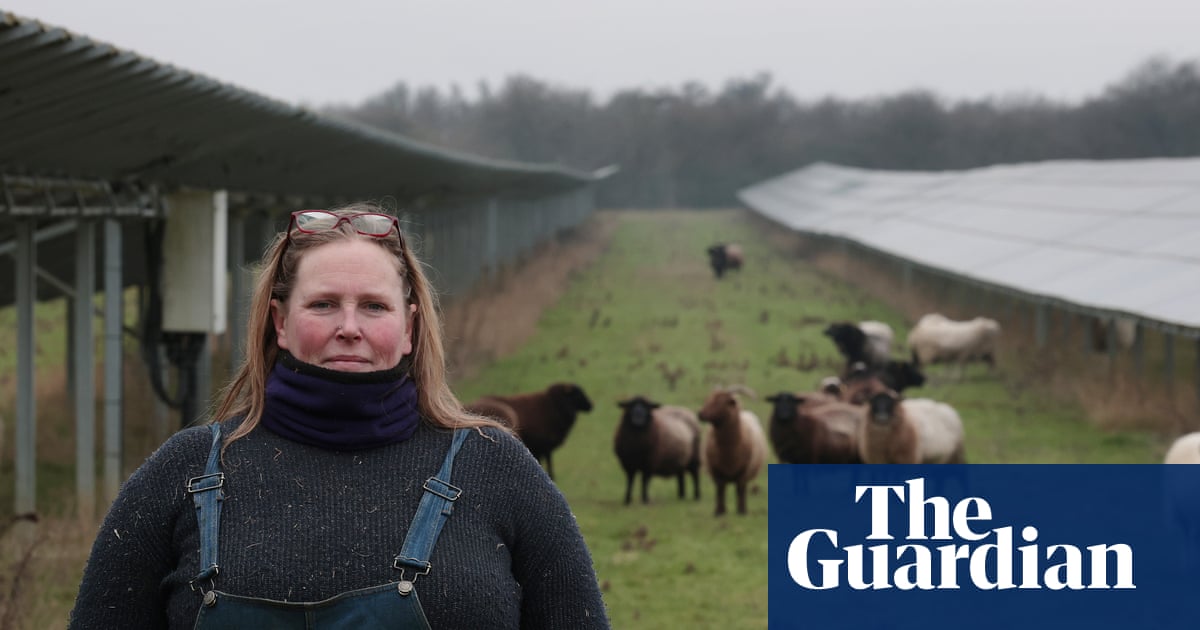
Farmers are using sheep to graze the grass beneath solar panels, allowing access to large areas of land without rental costs. Several farmers report dramatic flock expansion after gaining free grazing rights on solar sites. Typical solar sites require tens of acres of grass management that can cost up to 50,000 annually for mowing or spraying. Using sheep reduces those costs and avoids heavy machinery and diesel transport. The practice has accelerated over the past five years and offers particular benefits to new, younger, or smaller sheep farmers facing high land and production costs.
"On a blustery Lincolnshire morning, Hannah Thorogood paused between two ranks of solar panels. Her sheep nosedived into the grass under their shelter and began to graze. When I first started out, 18 acres and 20 sheep was as much as I could afford, said the first-generation farmer. Now, because I can graze this land for free, I have 250 acres and over 200 sheep. Solar grazing has given me a massive leg-up."
"Dr Liz Genever, a farmer in south-east Lincolnshire, has been able to triple her sheep numbers thanks to free solar grazing. If I could increase my flock to the full potential offered by the local solar site, I could potentially increase my income from sheep from 20,000 to 60,000, she said. There's been a massive acceleration in the last five years in solar grazing. It's a really important opportunity for sheep farmers."
"Solar grazing is the practice of using sheep to manage vegetation on solar farms. Panels need grassland beneath them. On a typical site, that means tens of acres of grass that needs mowing or spraying, costing up to 50,000 annually. By using sheep, however, those costs fall dramatically. Sheep do not require heavy mowing equipment to be hauled across the country on diesel lorries, or need tea breaks."
Read at www.theguardian.com
Unable to calculate read time
Collection
[
|
...
]