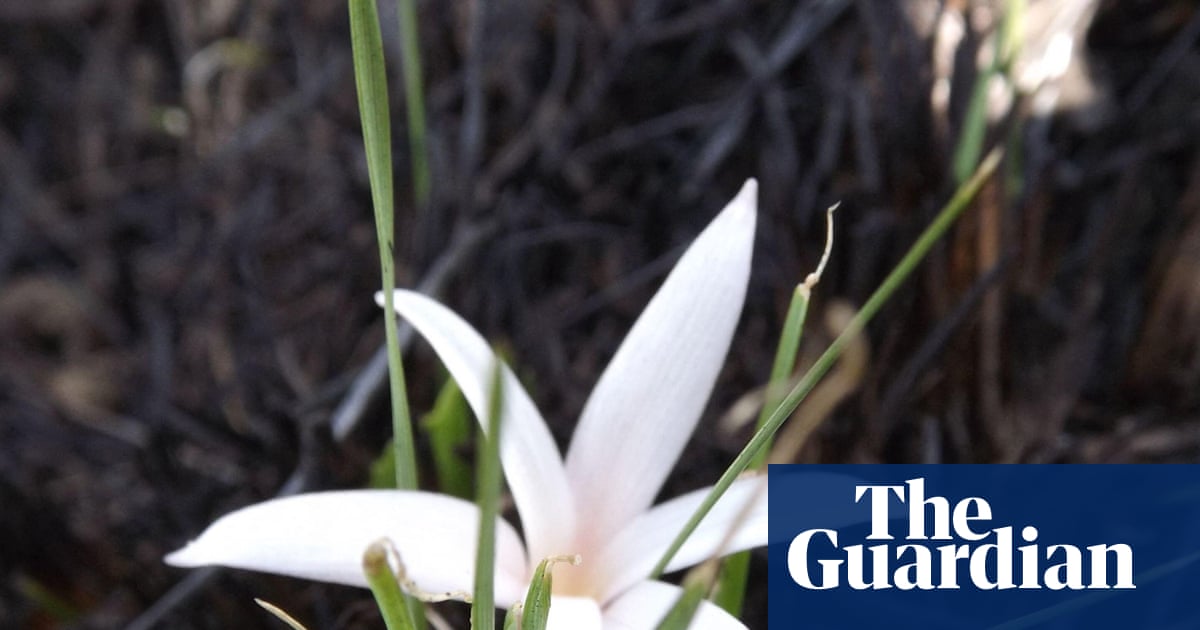
"The South African Natal crocus, Apodolirion buchananii, has a gloriously bright white flower that emerges from the ground before its leaves appear in early spring. But the flower only blooms shortly after fire breaks out naturally in its native grasslands, leaving it standing like a beacon among the blackened grass to help lure bee pollinators, with an irresistible sweet scent that wafts through the air."
"After the flower is pollinated, the developing fruits remain underground for six months until they are mature, protected until the seeds are ripe and ready to be dispersed by ants. But the biggest surprise was the discovery that the seeds attract ants by hoodwinking them with a scent that mimics ant larvae."
"The ants are fooled into collecting the seeds thinking they are rescuing their own offspring, carrying the seeds off to their nest where they look after them. Presumably the ants have something of a shock when the larvae eventually germinate into seedlings."
The South African Natal crocus employs a sophisticated multi-stage reproductive strategy involving three different organisms. Its bright white flowers bloom shortly after grassland fires, creating a striking visual beacon enhanced by sweet scent to attract bee pollinators. After pollination, fruits develop underground for six months until seeds mature. The seeds then employ chemical deception, releasing a scent that mimics ant larvae, fooling ants into believing they are rescuing offspring. The ants collect and transport seeds to their nests, where they provide protection and care. This remarkable system demonstrates how plants exploit multiple species' behaviors and sensory systems to ensure successful reproduction and seed dispersal.
#plant-reproduction-strategy #seed-dispersal-mechanisms #chemical-mimicry-and-deception #fire-dependent-flowering #mutualistic-relationships
Read at www.theguardian.com
Unable to calculate read time
Collection
[
|
...
]