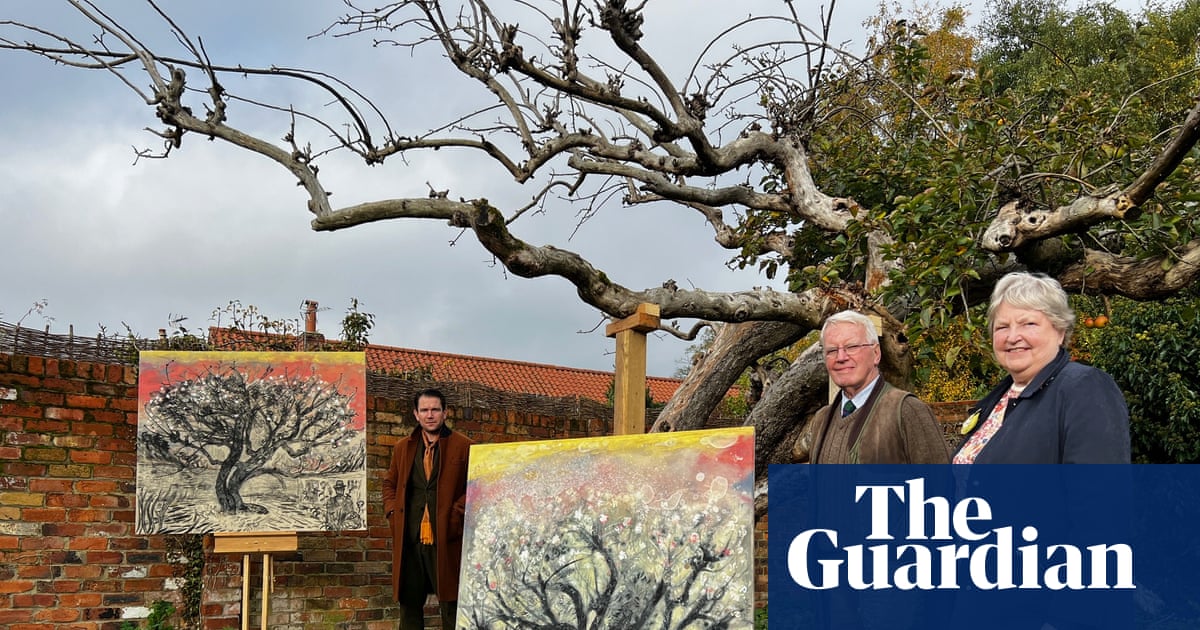
"The more than 220-year-old tree was grown from a pip planted by Mary Anne Brailsford between 1809 and 1815. Its apples were discovered nearly 50 years later by local gardener Henry Merryweather in a garden owned by Matthew Bramley. Merryweather was given permission to take cuttings from the Bramley seedling as long as the apples he sold bore Bramley's name. Steven said her great-grandfather, Merryweather, believed in that apple, he commercialised it, he marketed it, he promoted it he called it the King of Covent Garden'."
"Despite the historic nature of the tree, it has never been granted a tree preservation order which would protect it under law and prevent it from being chopped down. It has, however, been recognised by the royal family. In 2022, the queen's golden jubilee cited the Bramley as one of the 50 great British trees and, two decades later, it was recognised as part of a selection of 70 ancient trees dedicated to the queen for the platinum jubilee."
The original Bramley apple tree sits in the back garden of cottages in Southwell, Nottinghamshire, on land owned by Nottingham Trent University since 2018. The cottages have been used as student accommodation and the site is now for sale because the buildings are no longer suitable. The tree was grown from a pip planted between 1809 and 1815 and became the source of the Bramley cooking apple commercialised by Henry Merryweather. The tree is celebrated and recognised by royal jubilee selections but has never been granted a tree preservation order to protect it from removal.
Read at www.theguardian.com
Unable to calculate read time
Collection
[
|
...
]