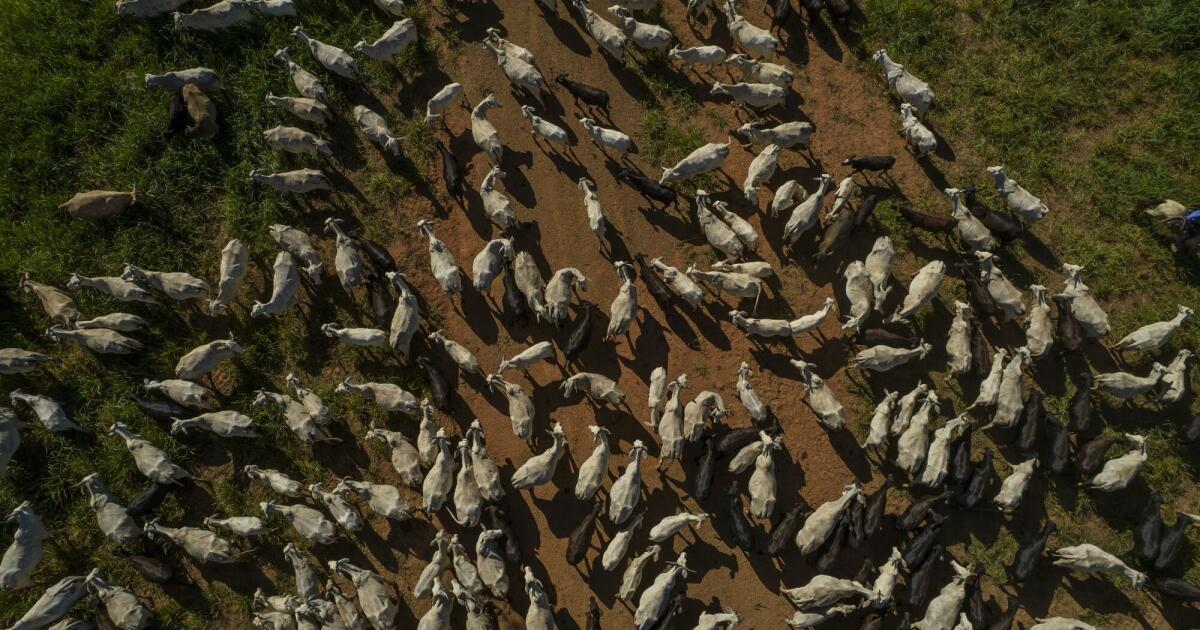
"For the past two years, a surge in Brazil's beef production has helped fuel a jump in exports. That's as ample herds drove cattle prices lower compared to other regions, and ranchers were encouraged to send more animals to slaughter. At the same time, countries such as the U.S. struggled with high food costs and sought out sources of cheaper beef."
"Climbing prices for calves in Brazil are signaling the start of a new phase, in which ranchers start holding back female cattle to rebuild herds. The practice, known as heifer retention, reduces the number of animals sent to slaughter and marks the beginning of a tightening supply cycle. "We are coming out of the phase of excess, and the phase of scarcity hasn't even begun," said César de Castro Alves, manager of agronomic consultancy at Itau BBA bank."
Brazil’s beef production surged for two years, lowering cattle prices and prompting ranchers to send more animals to slaughter. Countries including the U.S. bought cheaper Brazilian beef amid high local food costs. Climbing calf prices now signal ranchers will retain heifers to rebuild herds, reducing slaughter and initiating a multi-year supply-tightening cycle. That tightening will constrain exports and raise global beef prices, undermining efforts to lower U.S. retail beef costs. U.S. herds remain at multi-decade lows after drought and high feed costs, leaving consumers facing high beef prices as global supply advantages erode and slaughter rates slow.
Read at Los Angeles Times
Unable to calculate read time
Collection
[
|
...
]