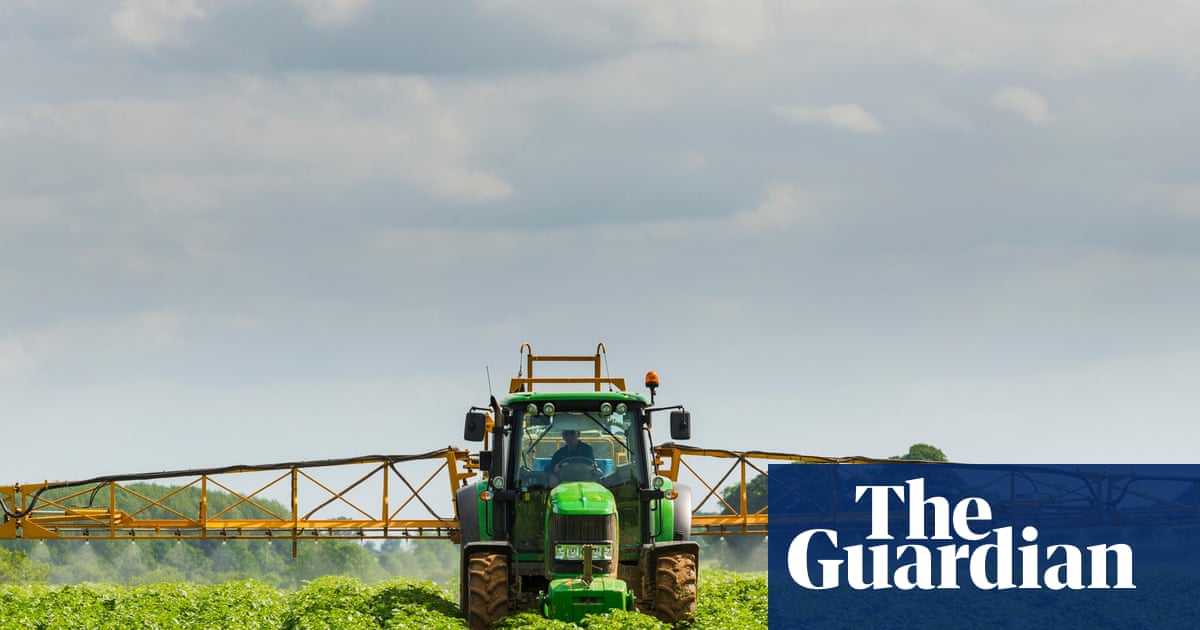
"British food sector representatives have urged the government to introduce a transition period if it agrees to realign post-Brexit agriculture rules with the EU. They warned that aligning regulations overnight would create a cliff edge that could cost UK businesses between 500m and 810m a year, because of the divergence in standards since Brexit. David Bench, chief executive of Croplife, a trade organisation that represents the agrichemical sector, said: If we do not have a transition period, it would have very damaging consequences."
"The warning comes days after the president of the National Farmers' Union (NFU) said that British oats used in cereals, snack bars, meatballs and veggie burgers could be rendered unsellable in the EU, because British farmers for the past five years have been allowed to use certain fungicides not yet approved by the EU. The point of the UK-EU reset is to remove the barriers that have led thousands of businesses to stop exporting to the EU, and to reduce supermarket prices."
"Concerns are being raised as the EU and the UK start technical talks on a new sanitary and phytosanitary (SPS) agreement, one of the targets laid out at the reset summit last May between Keir Starmer and the European Commission chief, Ursula von der Leyen. If an SPS deal entered into force on 1 January 2027, for example, crops grown in 2026 under British rules but still in grain stores in 2027 would be rendered unsellable in the EU, the NFU has said."
British food sector representatives urge a government transition period if agriculture rules are realigned with the EU, warning immediate alignment would create a cliff edge and could cost UK businesses £500m–£810m annually due to post-Brexit divergence in standards. Croplife warned of very damaging consequences without a transition. The NFU warned British oats could become unsellable in the EU because farmers used fungicides not yet approved by the EU. The UK-EU reset aims to remove trade barriers and reduce supermarket prices. The parliamentary trade select committee estimates extra red tape costs £8.4bn, with goods trade down 18% and food and drink down 24%.
Read at www.theguardian.com
Unable to calculate read time
Collection
[
|
...
]