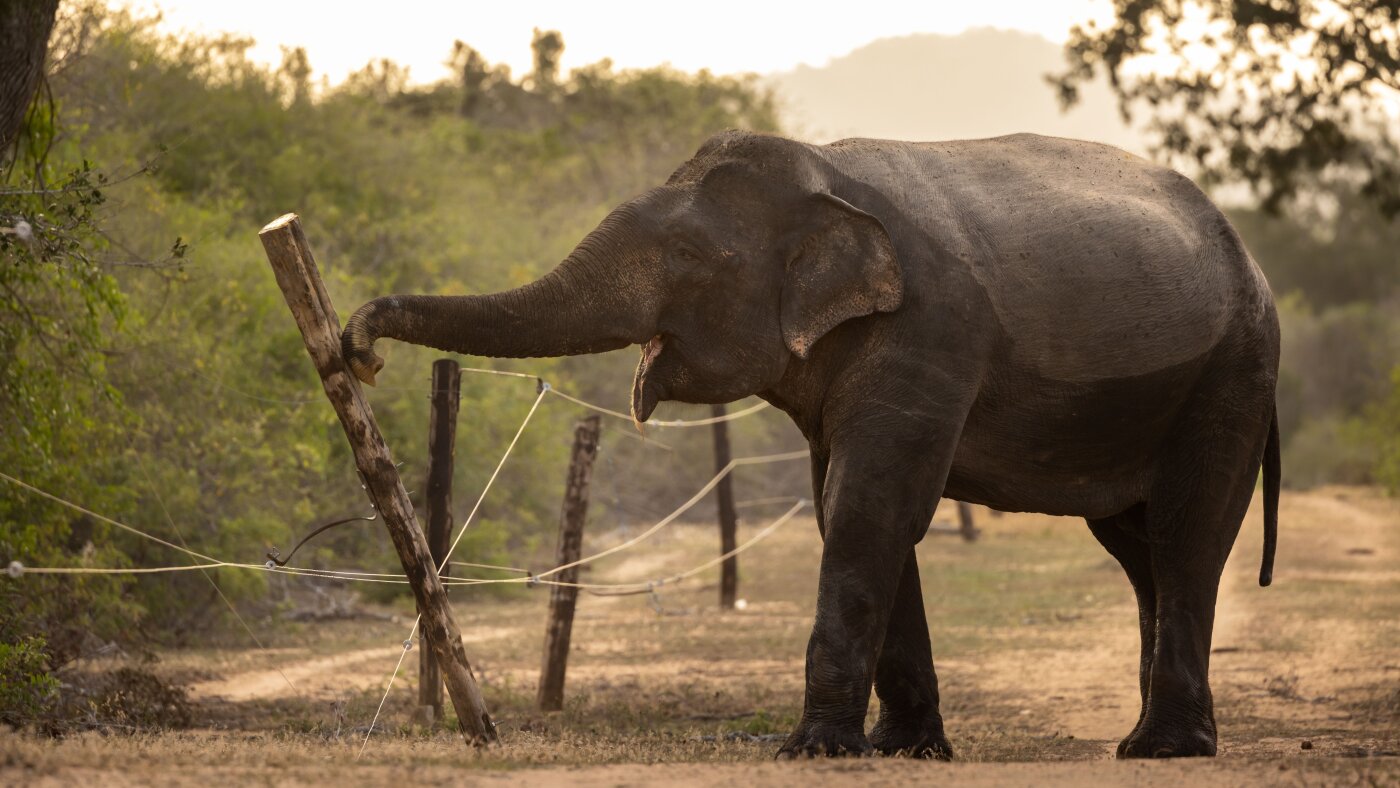
"“Obviously, it's war.” He's referring to increasingly deadly encounters between farmers and pachyderms. Now Kapuga fears that the latest Mideast war will intensify that conflict because the war is pushing up the price of fuel and fertilizer, so farmers are spending more to plant less. And he believes that means farmers will be more vigilant in attacking elephants who raid their fields: “More elephants will die or more farmers will die.”"
"Kapuga nods to men digging mud out of shin-deep water, preparing the paddy fields for planting rice. The other day, an elephant wandered onto this very field. Kapuga points to a young man: “He fearlessly chased the elephant away, he ran after it with a flashing torch and threw firecrackers at it,” he says. “Some elephants turn around and attack. It's a really dangerous task.” Sometimes, those elephants kill farmers."
"Farmers kill elephants by gunshot, electrocution and jaw bombs explosives hidden in food that shatter an elephant's jaws so the animal starves to death. Killing elephants is illegal in Sri Lanka, and yet not only is it happening, but the methods suggest desperation, says Devaka Weerakoon, a zoology professor at Colombo University. “These are very inhumane ways of killing,” he says. But “our farmers are not resilient. Two failed crops means they are completely busted.”"
Farmers in Matale, Sri Lanka describe encounters with elephants raiding rice fields as “war,” with increasing danger and fatalities. Rising fuel and fertilizer costs tied to conflict abroad are forcing farmers to spend more to plant less, increasing desperation and vigilance when elephants enter fields. Farmers sometimes chase elephants away with torches and firecrackers, but some elephants turn and attack, killing people. Farmers also kill elephants using gunshots, electrocution, and explosive jaw bombs hidden in food, despite legal protections against killing elephants. A zoology professor links these methods to lack of resilience, noting that two failed crops can leave farmers “completely busted.”
#human-elephant-conflict #sri-lanka-agriculture #elephant-poachingillegal-killing #rising-input-costs #rural-livelihoods
Read at www.npr.org
Unable to calculate read time
Collection
[
|
...
]