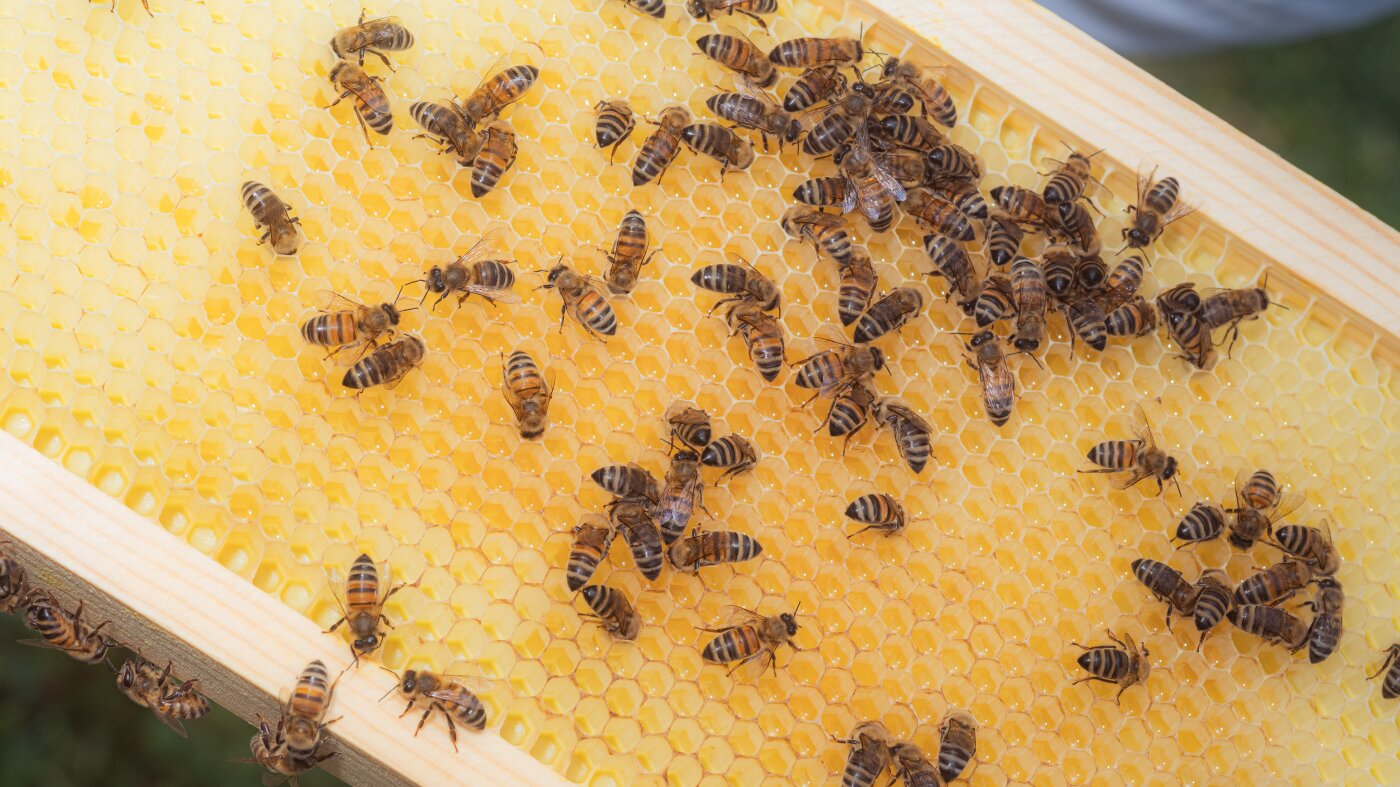
Bees fill honeycombs with pollen and support food production by pollinating hundreds of types of nuts, fruits, and vegetables. World Bee Day, established by the United Nations in 2018, raises awareness about protecting bees. The word “bee” has kept a largely consistent meaning over time and comes from the Old English “beo.” Some historical references used related forms such as “beowulf,” while the precise linguistic origin of “bee” remains unclear. Bees have existed for millions of years and beekeeping has been practiced for over a millennium, making early word origins difficult to determine. One theory links the word to the insect’s buzzing sound.
"Bees do far more than produce that sweet substance: they pollinate crops for hundreds of types of nuts, fruits and vegetables. "Even if you don't like bees themselves, you have bees to thank for the food on your table," she said. This Wednesday is World Bee Day, which was established by the United Nations in 2018 to raise awareness about the need to protect the insects."
"Doug Harper, founder and editor of Etymonline.com, an etymology dictionary, said that unlike many words, the meaning of "bee" has pretty much remained the same over time. "A word like 'bee' has always been 'bee,' as far back as you can trace it," he said. According to Harper, "bee" came from the Old English "beo.""
"The exact origin of "bee" itself remains a linguistic mystery largely because of the insect's long history on the planet, Harper said. Bees have existed for millions of years, and beekeeping has been a practice for over a millennia. "The words that have been here forever, we'll never know probably," Harper said."
"One theory is that it relates to the buzzing sound that the insect makes, he added. Throughout history, other words have been used to refer to the pollinator, like the Latin word "apis" which led to "apiary," or the places where beehives are kept. But "bee" endured like none other."
Read at www.npr.org
Unable to calculate read time
Collection
[
|
...
]