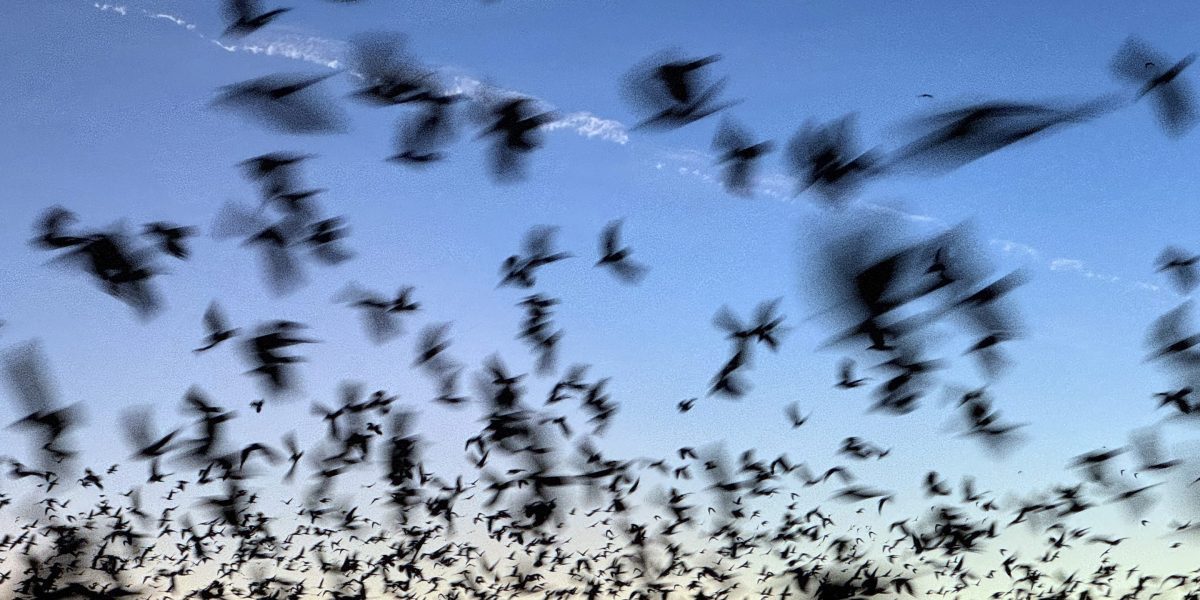
"Most Americans tend to think about bats only around Halloween, but the U.S. economy benefits from these furry flying mammals every day. Bats pollinate plants, including many important food crops, when they stop by flowers to drink nectar. Their guano is mined from caves for fertilizer. And they eat a lot of bugs - the kinds that bother people ( think mosquitoes) and others that destroy crops that humans depend on for food."
"Sadly, bat populations are declining rapidly in North America. A driving force is a fungal disease known as white-nose syndrome, which has spread among bats throughout the United States. When a bat population crashes, fewer bats are around to eat bothersome insects. All those additional insects can do serious damage. So, when bats disappear, farms become less productive, and that has broad implications for the agricultural economy, human health, rural governments and even financial markets."
"A reproductive female big brown bat can eat its body weight in insects every night in the summer, precisely when farmers are growing food. One of those insects is the cucumber beetle, which matures from rootworm - a scourge of U.S. cornfields. Rootworm destroys more than 340 million bushels of corn across the U.S. Midwest and South each year, even as farmers spend US$1 billion annually on pesticides to control outbreaks."
"A colony of 150 big brown bats can consume 600,000 cucumber beetles in a single year. If each female cucumber beetle - assuming half are female - had 110 rootworm larvae, the typical brown bat colony would prevent the production of 33 million rootworms. Farmers experience economic damage when rootworm concentrations exceed about 0.5 per corn plant. Typical planting densities exceed 30,000 corn plants per acre in the Midwest."
Bats provide continuous economic and ecological benefits by pollinating plants, including food crops, and by consuming large numbers of insects that harm people and agriculture. Their guano is mined from caves and used as fertilizer. Bat populations in North America are declining rapidly due to white-nose syndrome, a fungal disease that has spread across the United States. When bat numbers crash, fewer insects are eaten, allowing pest populations to increase and cause serious damage. Reduced pest control lowers farm productivity, affecting agricultural output, human health, rural governments, and financial markets. A single female big brown bat can consume its body weight in insects nightly during summer, and colonies can prevent large numbers of crop-damaging pests such as cucumber beetles and rootworms.
Read at Fortune
Unable to calculate read time
Collection
[
|
...
]