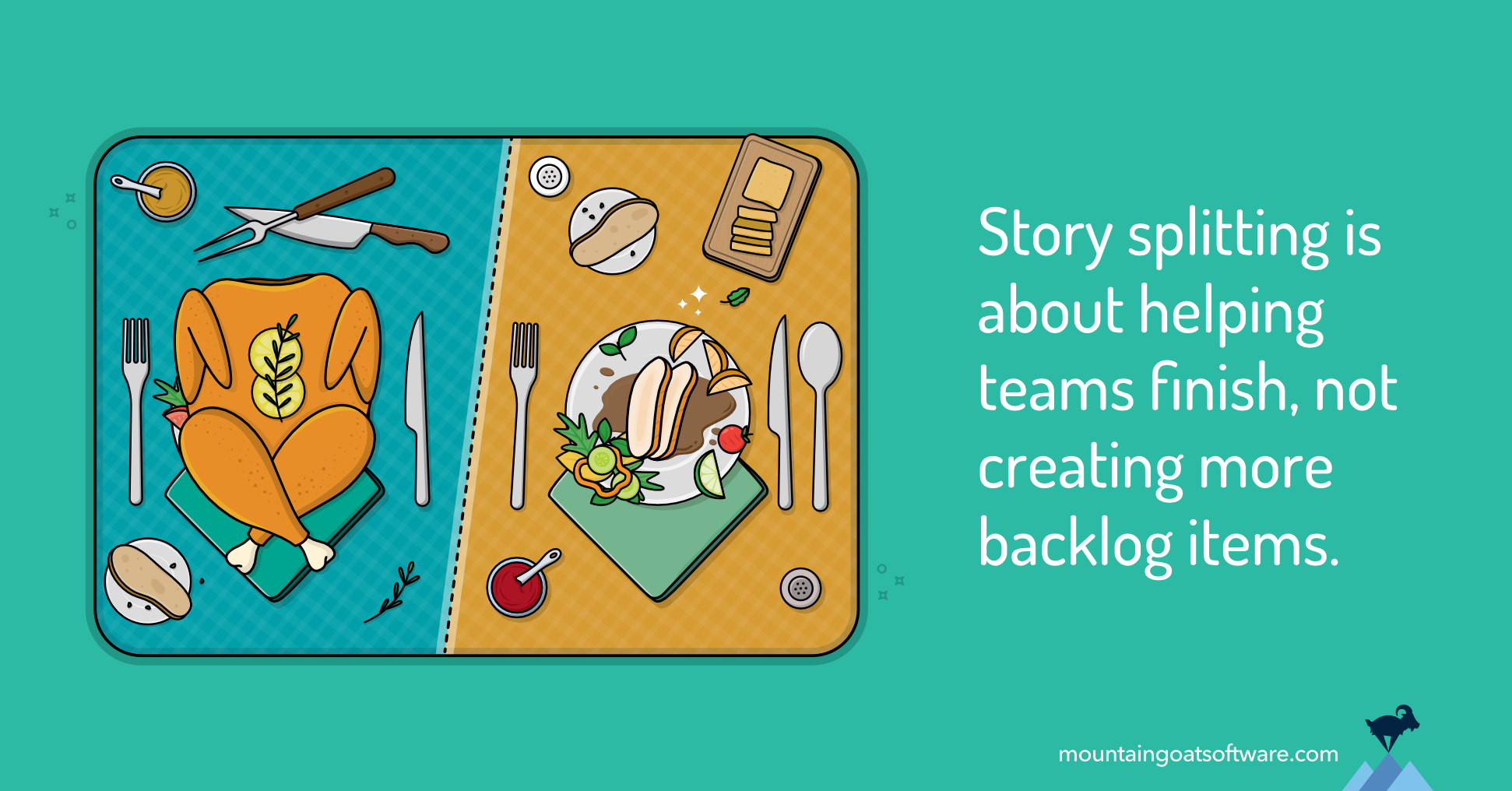
"Story splitting is different from breaking work into tasks. Tasks describe activities: design this, code that, test this other thing. Stories describe outcomes. A good split preserves that distinction. A story that says, "Build the payment backend," is really a task masquerading as a story. A story that says, "A customer can pay by credit card using the happy path," is a better split. It narrows the capability while still delivering something that works end to end."
Teams can complete backend work yet still lack a connected UI, untested edge cases, and confidence to call a feature done. When this pattern repeats, story size is a key factor because big stories are difficult to finish and remain in progress for days or entire sprints. This creates busy activity without delivering enough completed work by sprint end. Splitting stories breaks large user stories into smaller user stories that still represent meaningful progress toward an outcome. The outcome can be visible to users, valuable to the business, risk reduction, or learning. Splitting differs from task breakdown because stories describe outcomes while tasks describe activities. A good split narrows capability while delivering end-to-end functionality.
Read at Mountaingoatsoftware
Unable to calculate read time
Collection
[
|
...
]