#software-architecture
#software-architecture
[ follow ]
#microservices #distributed-systems #software-development #socio-technical-systems #systems-thinking


Software development
fromInfoQ
3 weeks agoStartup Software Architecture - You Never Really Throw It Away: A Conversation with David Gudeman
David Gudeman built scalable, cloud-native systems across healthcare, education, and enterprise, then founded VelocityAI to provide real-time AI assistants that improve sales call performance.
fromInfoQ
4 weeks agoArticle Series - AI Assisted Development: Real World Patterns, Pitfalls, and Production Readiness
AI is no longer a research experiment or a novelty in the IDE: it is part of the software delivery pipeline. Teams are learning that integrating AI into production is less about model performance and more about architecture, process, and accountability. In this article series, we examine what happens after the proof of concept and how AI changes the way we build, test, and operate systems.
Artificial intelligence

fromMedium
2 years agoBuild Cities not Buildings: Holistic Approach to System Design
Software development is more than writing code. It's about constructing robust ecosystems. Similar to how a city comprises more than its buildings, software is more than its codebase. It's a complex integration of functionalities, user experiences, and adaptability. This perspective ensures that developers aren't merely coding but are architecting the environments that support diverse user needs, fostering growth and adaptation.
Software development
Software development
fromInfoQ
2 months agoInfoQ Announces January Online Architect Cohort Focused on Socio-Technical Leadership
A five-week online Certified Architect Program beginning January 19, 2026 trains senior engineers in socio-technical skills to align technical design with organizational influence.


fromOrizens
2 months agoEffective AI Engineering: Prompts That Double as Tests - Oren Farhi
When you think about it, the moment you start describing what you want the AI to build - the behavior, the constraints, the flows, the edge cases - you're already writing specs. And if those specs are clear enough, the AI can turn them into code, and even into tests. Call it ai-Driven Development ( aiDD). Or vibe coding. But the pattern is the same: The better the spec you write, the better the code you get.
Artificial intelligence
fromEfficient Coder
2 months agoIs AI Taking Your Dev Job? Here's The Fix (Plus a 100% Free Python Course) | EfficientCoder
Artificial Intelligence isn't just a buzzword anymore. It's sitting right there in your IDE. You might be asking: Is my job safe? Here is the honest answer. If your day-to-day work involves taking a clear set of instructions and turning them into code, your role is shaky. We have tools now that generate boilerplate, write solid SQL, and slap together UI components faster than any human.
Web development
fromadropincalm.com
3 months agoThoughts on Architecting LARGE software projects, the Front End perspective
Large front-end projects must optimize dependability, extendability, team scalability, and development velocity while mitigating risks from packages, runtimes, and browser fragmentation.
fromMedium
3 months agoAPI-First or AI-First? The New Strategic Dilemma
The technology landscape has shifted beneath our feet. For the past decade, "API-first" was the mantra that guided architectural decisions across the industry. Build robust APIs, enable integrations, create ecosystems, this was the playbook. But in 2025, as AI capabilities become increasingly sophisticated and accessible, CTOs and technology leaders face a new question: should we be AI-first instead? This isn't just a technical question. It's a strategic one that will define competitive positioning, development velocity, and product differentiation for years to come
Artificial intelligence
Software development
fromInfoQ
3 months agoTransforming Primary Care: A Case Study in Evolving From Start-Up To Scale-Up
Applying domain-driven principles and deliberate architectural boundaries restores control and prevents organic technical decay that turns clean systems into tangled dependency webs during product evolution.







fromHackernoon
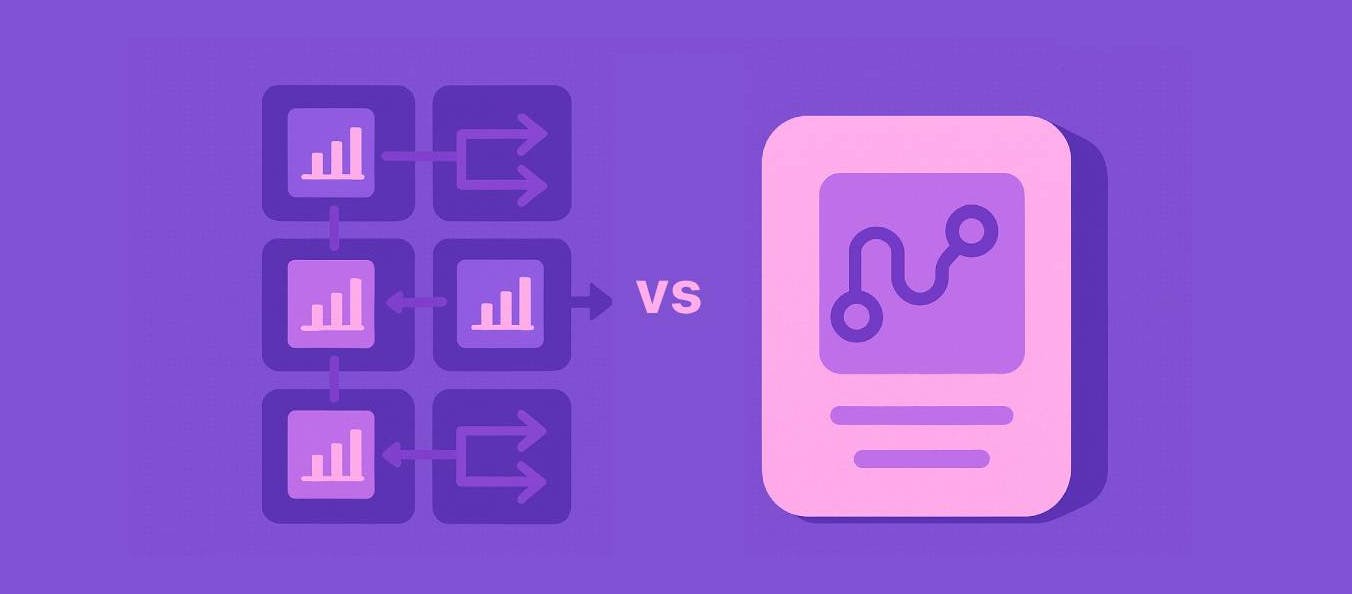
7 years agoMonolith vs Microservices vs Modulith: The Evolution of Software Architecture | HackerNoon
Monolithic applications have proven difficult to manage over time, prompting a shift towards Microservices, which introduced their own complexities, leading to the embrace of Modulith architecture.
Software development


Growth hacking
fromInfoQ
8 months agoThe MVP Dilemma: Scale Now or Scale Later?
Scaling systems requires careful planning to balance cost and performance.
Implicit scalability requirements are often overlooked in business cases.
Addressing bottlenecks is key to achieving effective scalability.
Architectural experimentation helps prevent overbuilding for scalability.
fromDevOps.com
9 months agoDeveloping Software That Solves Real-World Problems - A Technologist's View - DevOps.com
Software architecture is critical across sectors, from finance to healthcare, in crafting systems that genuinely solve problems rather than just creating technology for its own sake.
Software development
Scala
fromScalac - Software Development Company - Akka, Kafka, Spark, ZIO
10 months agoBuilding with Akka: Customer Registry App (part 2 - Domain Model and Entity)
Modeling customer data involves creating domain classes, defining events for state changes, and implementing commands for lifecycle management.
[ Load more ]