Clearly, AI will play a larger role in Linux and open source next year, but that's true of pretty much all technology. However, while AI will be used to help develop the Linux kernel, no one is predicting, a la Windows, that AI will be used to rewrite the entire codebase by 2030. That said, open source will remain at the heart of AI.
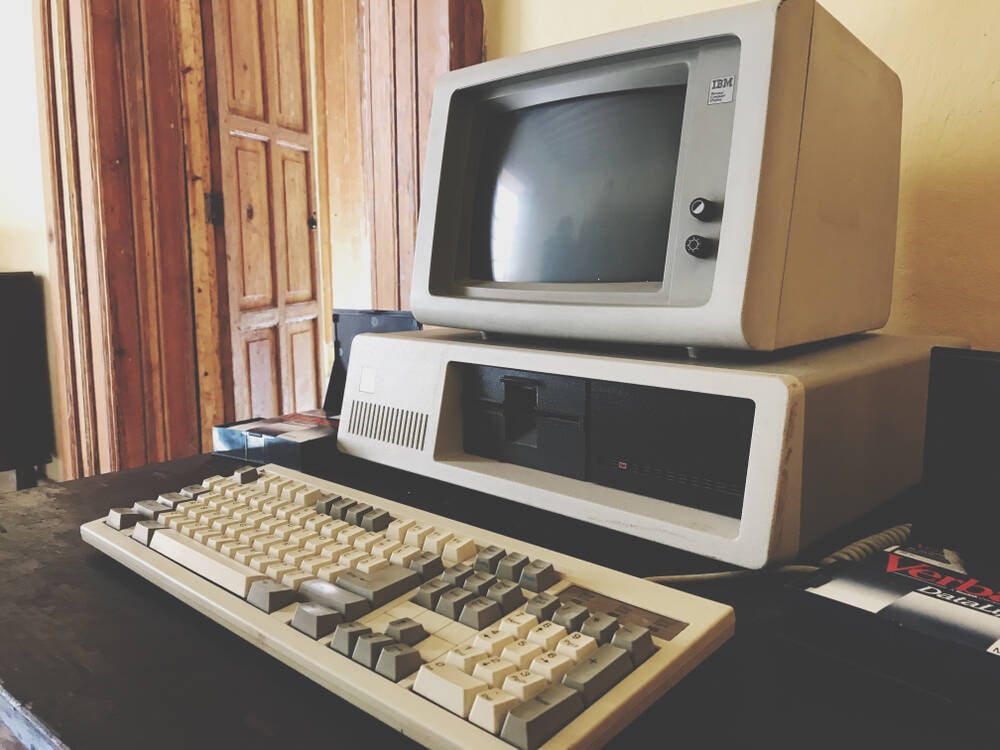
As modern technologies such as artificial intelligence grab today's headlines, it's worth remembering that their foundations were being laid more than half a century ago by computer scientists, philosophers, psychologists, developers, entrepreneurs, and more. These pioneers and those who followed tackled issues and solved problems that future generations may never know existed - but without their seminal work, we wouldn't be where we are today.
According to the latest commit in the public GitHub repository, no new features, enhancements, or pull requests will be accepted in the MinIO community edition, and critical security fixes will be evaluated on a case-by-case basis. Existing issues and pull requests will not be actively reviewed, with community support continuing on Slack on a best-effort basis, and the company encouraging users to migrate to MinIO Enterprise.
The backlash against AI invading almost every aspect of the computing experience is growing by the day. Particularly as an onslaught of lazy AI slop subsuming news feeds, the tech is starting to feel like a massive distraction - and huge parts of the internet are disillusioned or even fuming in anger.
Cloudflare has open-sourced tokio-quiche, an asynchronous QUIC and HTTP/3 Rust library that wraps its battle-tested quiche implementation with the Tokio runtime to simplify the development of high-performance QUIC applications. The library was used internally to back the edge services, the Oxy HTTP proxies, or MASQUE-based tunnels, replacing Wireguard-based tunnels in the WARP client. Tokio-quiche is now available as an open-source crate on crates.io, with its source hosted in the quiche repository.
Nowadays, everyone uses cross-platform hybrid desktop apps written in JavaScript, ignoring excessive CPU and RAM usage. You most likely use a hybrid, native-like, cross-platform code editor for day-to-day programming activities. It may work fine on your computer because you've upgraded your hardware, since it may have worked slowly before. If you check the resource usage of your favorite code editor, you'll see not megabytes of RAM, but gigabytes of RAM;
Pebble just announced the Index 01, a smart ring for recording thoughts. It's a little ring with a built-in microphone and that's about it. The Index 01 is almost anti-tech in its simplicity. There's no needless AI component shoehorned in, aside from speech-to-text. It's a ring with a microphone that you whisper ideas into and I want one. Here's how it works. You get an idea while walking down the street, so you quietly whisper it into the ring.
Mistral AI has released a suite of open source models under the Mistral 3 banner, aiming to scale from a mobile device or drone up to multi-GPU datacenter beasts. While the French company does not share its training data, the decision to open source the models under the Apache 2.0 license is notable. "Open sourcing our models is about empowering the developer community and really putting AI in people's hands, allowing them to own their AI future," Mistral said.
Since I started my journey with Linux in 1997, I've maybe paid for a handful of applications. I've grown so accustomed to open-source software that when I'm on MacOS and find that I have to pay for something, it takes me aback. What? I have to pay for software? Also: 10 open-source Windows apps I can't live without - and they're all free At the same time, there are certain open-source applications I would pay for, GPL or not. Some of these software titles are just that good, while others I simply depend on.
The Allen Institute for Artificial Intelligence has launched Olmo 3, an open-source language model family that offers researchers and developers comprehensive access to the entire model development process. Unlike earlier releases that provided only final weights, Olmo 3 includes checkpoints, training datasets, and tools for every stage of development, encompassing pretraining and post-training for reasoning, instruction following, and reinforcement learning.
Servo 0.0.2 is the second numbered release from the project. There is an accompanying post in the Servo project blog, " October in Servo," with the loaded subtitle "Better for the web, better for embedders, better for you." Quite big claims, but the post behind them is an entirely technical summary of the recent work on the engine. Servo is not a standalone app. It's a browser rendering engine, the core around which apps may one day be built.
Joe Kiniry, a security expert specializing in elections, was attending an annual conference on voting technology in Washington, DC, when a woman approached him with an unusual offer. She said she represented a wealthy client interested in funding voting systems that would encourage bigger turnouts. Did he have any ideas? "I told her you should stay away from internet voting, because it's really, really hard," he says.
The economics of the software development business have always been kind of weird. Some things with software scale spectacularly, and some things scale very poorly. Pricing is always a challenge; it's hard to know when it is right. Even what, exactly, is being sold has always puzzled the best thinkers in the software business. And of course, open-source software throws a monkey wrench into the whole works.
For the past months I've been working on Wave - an open source, AI-native terminal that knows your context (we know, the hook still needs work). In this time, we've gone from zero daily active users (DAU) and zero GitHub stars at launch in November 2023 to approximately 3000 DAU and 12k GitHub stars today. My biggest lesson: The tried and trusted SaaS go-to-market (GTM) playbook doesn't apply for AI-native products. We're consciously breaking all my cardinal rules, such as:
Voices, an open-source text-to-speech project, was designed for applications running on Java 17 or newer. The library requires no external APIs or manually installed software. Audio files can be generated for various languages based on dictionaries or OpenVoice. Henry Coles, creator of Voices and Pitest and head of mutation testing at Arcmutate, introduced Voices on Bluesky in September 2025 and the latest version, released in late October 2025, is 0.0.8.
Diptyx's form factor is instantly familiar and comforting. Two 5.83-inch e-ink screens open like a hardcover book, displaying two pages at once and closing to protect the displays without requiring a separate case. The device is slim, lightweight at 300 grams, and portable, making it perfect for reading on trains, planes, or curling up at home. The modular case, visible screws, and user-replaceable SD card and batteries make repairs and upgrades easy for anyone comfortable with basic tools.
Decentralized communications network Matrix is hoping to be the beneficiary as European public and private sector organizations ponder alternatives to the messaging status quo. During Matrix's recent Strasbourg conference, more than two dozen public sector entities were noted to have tried (or were currently using) the technology. The vast majority were European, highlighting worries on the continent about dependency on closed and potentially insecure messaging platforms.
"We are well north now of the financial minimums needed for an IPO," he tells The Register during the Ubuntu 25.10 Summit at Canonical's headquarters. However, the open source veteran emphasizes the real barrier is operational readiness rather than revenue, product, or technical milestones. "I am very calmly of the view that we should be a public company, but also very calmly of the view that there's no need to do it when we're not mature enough."
"Bringing DevOps Principles to Controls and Audits", not the most exciting title in the world, but I'm actually going to be talking about a revolution. What I'm talking about is an open-source project that me and my colleagues at Container Solutions are working on. My goal is that by the end of it, you'll be interested enough to check it out, perhaps give feedback, maybe even get involved.
LangChain raised $125 million at a $1.25 billion valuation, the company announced on Monday. TechCrunch reported in July that the provider of a popular open source framework for building AI agents was raising fresh funds at a valuation of at least $1 billion. The deal was led by IVP, as we previously reported. New investors CapitalG and Sapphire Ventures joined in, as did existing investors Sequoia, Benchmark, and Amplify.
Cisco has presented a new open-source project designed to help make AI-generated code more secure. The initiative, called Project CodeGuard, provides a framework that allows development teams to integrate security rules directly into the workflow of AI coding tools. Examples include GitHub Copilot, Cursor, and Windsurf. AI coding agents are increasingly being used worldwide to accelerate software development and increase productivity. At the same time, the security of the generated code is often inadequate.
Beskar is a Rails engine that fills that gap with layered protection: WAF that detects vulnerability scanning patterns (WordPress, config files, path traversal) Impossible travel detection using geolocation and Haversine calculations Smart rate limiting that identifies attack patterns (brute force, credential stuffing, distributed attacks) Risk-based account locking with automatic responses Persistent IP banning with escalating durations Installation is deliberately simple - drop it in your Gemfile, run the installer, add one line to your User model. Runs in monitor-only mode by default so you can tune thresholds before blocking real traffic.
The combined company aims to deliver an open data infrastructure - unifying data movement, transformation, metadata and activation - while preserving freedom of choice for analytic compute and AI, according to the announcement. The company's vision for an open data infrastructure will reduce engineering complexity by automating data management end-to-end, and work across any compute engine, catalog, BI tool or AI model.
There are many reasons to be wary of generative AI these days, from the unsettling way people use it to duplicate the likenesses of dead celebrities to the lawsuits connecting AI chatbots to the deaths of multiple people. Even as some AI boosters advocate for new uses for the technology, skeptics debate the jobs AI is unlikely to attempt. You might think, for instance, that tasting food or beverages is something that requires a human palate. And you'd probably be correct - a recent controversy over a craft beer competition notwithstanding.
Mission accomplished. From the State Chancellery and ministries to the judiciary, police, and other state authorities, our roughly 30,000 employees have embarked on a new path together. We want to become independent of large tech corporations and ensure digital sovereignty. Now we can also say: mission accomplished when it comes to email communication.
React, a popular open source JavaScript library for web and native user interfaces, will be transferred from Meta to the React Foundation, a new organization being formed under the Linux Foundation. The new foundation will be the home for React, React Native, and supporting projects. With the React Foundation, React's move to a neutral home helps ensure that React and React Native remain open, innovative, and community-led, said Jim Zemlin, executive director of the Linux Foundation, in a statement.