#nutria
#nutria
[ follow ]
#wildlife-conservation #invasive-species #endangered-species #wildlife-management #bronx-zoo #wildlife-rescue
fromSFGATE
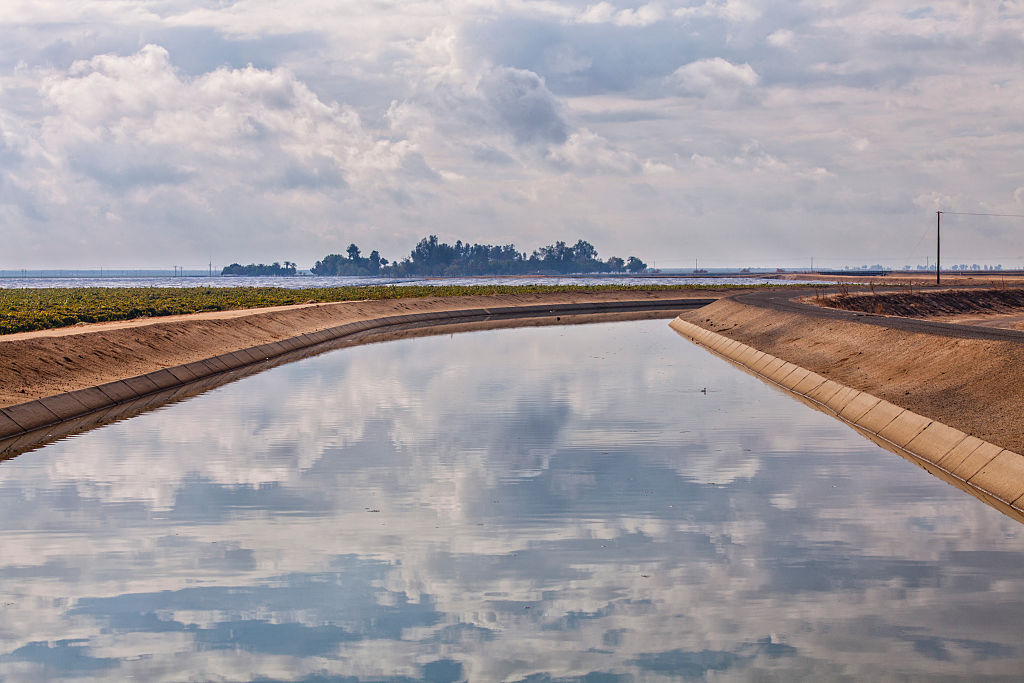
3 days agoSomeone may have deliberately caused Calif.'s multimillion-dollar nutria problem
Genetic sequencing has revealed that the state's nutria populations are most genetically similar to populations in Oregon, suggesting that California's current nutria invasion was the result of intentional reintroduction.
Agriculture
#endangered-species-act
SF politics
fromFortune
1 week agoWashington's 'God Squad' assembles to debate the fate of a rare endangered whale and drilling in the Gulf of Mexico | Fortune
A U.S. panel is considering exempting Gulf oil drilling from the Endangered Species Act, raising concerns for marine life and a rare whale species.

Arts
fromThe Art Newspaper - International art news and events
1 month agoMiami's ancient Indigenous sites face an uncertain future
A 3,500-year-old Tequesta burial settlement was discovered during luxury apartment construction in Miami's Brickell neighborhood, revealing ancient human remains and artifacts despite the site's eligibility for historic designation.
Chicago Bears
fromCalifornia Post
1 month agoDeadly apex predator being mulled for release in California after 100-year absence
California lawmakers are considering reintroducing grizzly bears through Senate Bill 1305, which would require a scientific assessment and consultation with Native American tribes about restoring the species extinct in the state for over a century.
Miami food
fromSun Sentinel
1 month agoNew records show Florida officials burned more than $1.2 million per day on 'Alligator Alcatraz'
Florida's DeSantis administration planned to spend $1.49 billion on an Everglades immigration detention facility, spending over $1 million daily with minimal public oversight or legislative scrutiny.
fromHigh Country News
1 month agoCoyotes and cougars and rats, oh my! - High Country News
An unnamed tourist saw it and told Aidan Moore, who works for Alcatraz City Cruises. Moore told SFGATE that he was initially skeptical, but the guest's iPhone footage left little room for doubt. The video shows, not a sea lion or an otter, but an actual Canis latrans, doggedly dogpaddling, then clambering out of the water, noticeably shaky and struggling to settle tired paws on the craggy rocks.
California
Chicago Bears
fromHigh Country News
1 month agoCan Alaska save caribou by killing bears? - High Country News
Alaska's Mulchatna caribou herd has collapsed from 200,000 animals in the 1990s to 12,000 in 2022, devastating Indigenous subsistence hunting and prompting controversial wildlife management interventions including hunting bans and aerial predator culling.
Pets
fromwww.scientificamerican.com
4 weeks agoWhat would happen if snakes disappeared like in Zootopia 2? An investigation
Zootopia 2 defends snakes as misunderstood creatures while highlighting their critical ecological importance as mesopredators that control rodent populations and sustain food chains.
Environment
fromwww.scientificamerican.com
3 weeks agoCrabs are cannibalizing one another with surprising rapacity in parts of the Chesapeake Bay
Blue crabs in Chesapeake Bay cannibalize each other at such high rates that they are their own primary predatory force, accounting for 97 percent of crab deaths and injuries over a 36-year study.
fromUSA TODAY
1 month agoRed fox lands at Bronx Zoo after days at sea. Here's how he's doing.
Discovered on a ship arriving at the Port of New York & New Jersey from Southampton, England, the red fox was placed in the care of the Bronx Zoo on Feb. 19, one day after it was "safely secured" by U.S. Customs and Border Protection.
Pets
fromenglish.elpais.com
1 month agoAn oil spill in the Gulf of Mexico is met with two weeks of evasive responses
Beaches, mangroves, fish, turtles and manatees. Little by little, oil has coated them all. About two weeks have been enough for the sticky black residue to permeate everything in its path. Its advance has been met with an outcry. Since the first fishermen in the Gulf of Mexico reported the discovery of chapapote (petroleum residue) in their nets on March 2, the progression has been documented by the affected communities.
Environment
fromTravel + Leisure
1 month agoThis Remote 180-mile Highway Is an Underrated Scenic Drive With Wildlife Loops, 26 Miles of Wild Gulf Beaches, and Marshes
The Creole Nature Trail is a 180-mile scenic byway that cuts through Louisiana's Cajun Country, also known as Acadiana. The area, which is often called "Louisiana's Outback," is different from the Louisiana you thought you knew; instead of bayous, this part of the state is home to vast marshes, coastal prairies, waterways, and undeveloped Gulf beaches. And it's all accessible off of the Creole Nature Trail.
Travel
Public health
fromTravel + Leisure
2 months agoThis Is the Most Mosquito-infested City in the U.S.-and No, It's Not in Florida or Texas
Los Angeles, California has the highest mosquito infestation among U.S. cities, driven by invasive Aedes aegypti and climate change, increasing dengue and other health risks.
fromTruthout
2 months agoThe Rio Grande Has Transformed From Environmental Haven to Militarized Border
As a child, Michelle Serrano would take trips to Boca Chica with her grandmother. From her home in Brownsville, the drive ran east through Texas wetlands and countryside before landing on miles of beach, stretching far down the Gulf Coast just above the U.S.-Mexico border. They'd spend the day there, swimming, laying out - which didn't cost anything, unlike at South Padre Island to the north. For them, it was the peoples' beach.
US politics
fromwww.scientificamerican.com
2 months agoHow zoos are preparing animals for this weekend's massive winter storm
In Texas, the Houston Zoo has prepared its buildings and barns with heaters designed to withstand extreme conditions, the zoo said in a blog post on Friday. Animals will have access to extra hay and bedding, and food was stocked in advance. Across the Zoo, sensitive plants are being protected with coverings, and generators are positioned to provide backup power if needed, the blog post said.
US news
fromTravel + Leisure
2 months agoThis U.S. State Has More Lakes Than Anywhere Else-With Over 3 Million to Explore
Whenever I'm asked about my recent trip to Alaska-a journey to visit Katmai National Park & Preserve and Kenai Fjords National Park-I nearly always mention the scale. The scale of the glaciers, the mountains, the sunsets, and the utter wilderness; every aspect of the landscape was just so much larger and more grand than anything I'd ever experienced. Magnitude is a continuous theme all across Alaska.
Travel
fromTravel + Leisure
1 month agoAmerica's Largest Blackwater Swamp Is Home to Roughly 15,000 Alligators-and It Could Become a UNESCO World Heritage Site
The Okefenokee Swamp is not only one of America's most important ecosystems, but also the largest blackwater swamp in North America. Its vast stretches are home to several endangered species, like the indigo snake and the wood stork.
Environment
fromwww.theguardian.com
1 month agoDisbelief as crocodile captured in Newcastle creek thousands of kilometres from natural habitat
I get there, I look and here's this little crocodile swimming around in the water. The sighting occurred at Federal Park in Wallsend, close to a local pool and primary school. Kirsop said she was met with initial disbelief when she contacted the wildlife rescue group Wires, and the Australian Reptile Park.
Pets
fromHigh Country News
1 month agoThe Colorado River rift abides - High Country News
Western water law is based on the prior appropriation doctrine, which gives the first entity to make "beneficial use" of water the right to keep on using that amount, even if that means that upstream "junior" users' spigots will get shut off. By the early 1900s, a rapidly growing California was enthusiastically diverting the Colorado River, with huge irrigation districts gobbling up the senior water rights.
Environment
Environment
fromTravel + Leisure
1 month agoThis May Be the Most Snake-infested National Park in the U.S., According to Experts
Big Bend National Park in Texas hosts close to half of all U.S. snake species, making it the snakiest national park in North America, with venomous species concentrated in southwestern desert regions.
fromHigh Country News
1 month agoIt's time to rethink how we care for our public lands and waters - High Country News
Wildlife populations are in decline. Recreation sites are crowded and often underfunded. Wildfires are larger, more destructive and harder to control. Climate change is reshaping natural systems, from ocean fisheries to mountain snowpacks, faster than institutions can respond. At the same time, communities are being asked to host new energy projects, transmission lines and mineral development - often without clear processes, adequate resources or trust that decisions are being made in the public interest.
Environment
fromSun Sentinel
1 month ago'We got lucky': How Florida wildlife died - or survived - in the brutal February freeze
The record-breaking arctic blast that hit Florida earlier this month may have sent humans scurrying for winter coats, but it sent wildlife scurrying, swimming and slithering for their lives. Some of those animals were native, some were invasive. Some survived. Thousands of others did not. The benchmark for cold snaps in Florida is the 2010 freeze, which killed manatees, crocodiles, iguanas, thousands of snook and goliath grouper, and caused 50% to 90% of invasive pythons to die in some areas.
Environment


fromFast Company
1 month agoThese digital tools are stepping up the global fight against wildlife trafficking
In late 2025, Interpol coordinated a global operation across 134 nations, seizing roughly 30,000 live animals, confiscating illegal plant and timber products, and identifying about 1,100 suspected wildlife traffickers for national police to investigate. Wildlife trafficking is one of the most lucrative illicit industries worldwide. It nets between US$7 billion and $23 billion per year, according to the Global Environment Facility, a group of nearly 200 nations as well as businesses and nonprofits that fund environmental improvement and protection projects.
Environment
Environment
fromwww.theguardian.com
2 months agoAfrica's great elephant divide: countries struggle with too many elephants or too few
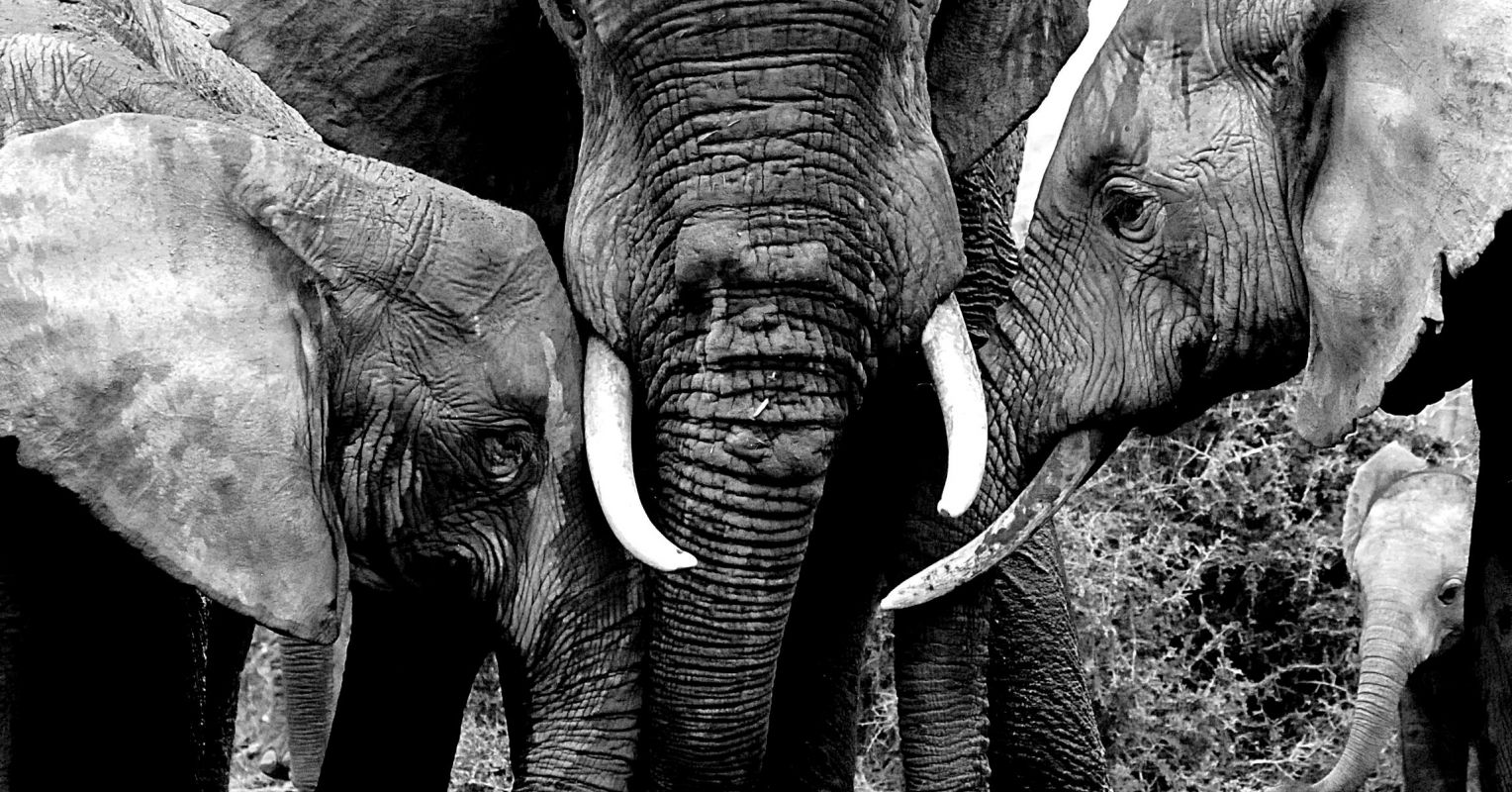
Elephant numbers contrast sharply: catastrophic declines in South Sudan, with a lone collared bull in Badingilo, versus overabundance and human conflict in parts of Kaza.

fromLos Angeles Times
2 months agoHeated debate over California water plan as environmentalists warn of 'ecosystem collapse'
The question of how to protect fish and the ecological health of rivers that feed California's largest estuary is generating heated debate in a series of hearings in Sacramento, as state officials try to gain support for a plan that has been years in the making. "I am passionate that this is the pathway to recover fish," said state Natural Resources Secretary Wade Crowfoot. "This is the paradigm we need: collaborative, adaptive management versus conflict and litigation."
Environment
fromMiami Herald
8 months agoTroopers, wildlife officers save alligator crawling on busy Florida Turnpike
An alligator waddling on the emergency shoulder of the Florida Turnpike on Friday morning backed up traffic during rush hour as authorities worked to rescue it. Around 8:30 a.m., concerned commuters alerted authorities of the alligator on the shoulder near the Northwest 74th Street exit of the Florida Turnpike, Florida Highway Patrol said. Troopers and Florida Fish and Wildlife Commission officers rolled out to rescue the gator, moving it to a canal that runs parallel to the turnpike.
Environment
fromFortune
1 month agoAnimal behavioralists saved a rhino with bleeding eyes by giving it eye drops, in a "ridiculous idea" gone right | Fortune
Voluntary training allowed caretakers to safely administer eyedrops to an endangered white rhino in Zimbabwe, preserving vision and protecting a community reintroduction program.
[ Load more ]