#exile
#exile
[ follow ]
#human-rights #bangladesh #identity #dalai-lama #hong-kong #press-freedom #resilience #sheikh-hasina #displacement
World news
fromwww.npr.org
3 weeks ago'More relevant every day' in the U.S.: A filmmaker documented Russia's journalists
Russian 'foreign agent' designations suppressed independent journalism, forcing journalists into exile, criminalizing dissent, and transforming reporting into a precarious, persistent act of resistance.


fromwww.dw.com
1 month agoAlbania: What role does the MEK play in the Iran protests?
The MEK is an Islamic political opposition group with socialist tendencies. Founded in Iran in 1965, it took up arms against the ruling Pahlavi dynasty, waging bombing campaigns against the Shah's government and US targets in the 1970s and supporting Ayatollah Khomeini in the 1978/1979 Islamic Revolution. Shortly after the revolution, however, the MEK fell out with the new rulers in Tehran and was banned in the country. It then went into exile, continuing its opposition activities from abroad.
World news
Europe news
fromThe Art Newspaper - International art news and events
1 month ago'Repressionist' artist Pavel Krisevich forced to flee Russia
Young Russian political artists like Pavel Krisevich are being forced into exile after repeated arrests, intimidation by security services, and designation as foreign agents.
fromwww.theguardian.com
3 months agoSlow Poison by Mahmood Mamdani review can you really rehabilitate Idi Amin?
The anomaly is best explained by the politics of his father, Mahmood Mamdani. The apple, it seems, did not roll especially far down the postcolonial hillside. Mahmood, professor of government and anthropology at Columbia University, has long styled himself as the left's answer to VS Naipaul. Where the Nobel-winning curmudgeon surveyed postcolonial Africa with disdain, revelling in the wreckage of independence, Mamdani presents a more forgiving view: pathos instead of pity, paradox instead of despair.
World news
fromenglish.elpais.com
3 months agoElena Kostyuchenko: I'm not afraid. If I wasn't afraid of Putin, I won't be afraid of Trump'
When Elena Kostyuchenko (Yaroslavl, Russia, 38 years old) arrived in Berlin after covering the beginning of the war in Ukraine and learning that she could never return to Russia because a price had been put on her head, she thought she was safe. However, a few months later, she was poisoned in Germany with an unknown substance that continues to wreak havoc on her body even today.
World news
fromwww.dw.com
4 months agoPussy Riot's Alyokhina chronicles activism in new memoir DW 10/30/2025
She sits on stage dressed in black, smoking an e-cigarette, her blond, curly hair flowing down from her thick knit cap. The unrelenting Maria Alyokhina, a 37-year-old activist and performance artist best-known as a member of Pussy Riot, is presenting her new book "Political Girl: Life and Fate in Russia" in Cologne as part of the literary festival lit.COLOGNE. Maria Alyokhina is one of several women who staged a protest the evening before Vladimir Putin was reelected president of Russia
Europe news
fromwww.aljazeera.com
4 months agoTwo Palestinian prisoners: One went home, the other was exiled by Israel
Ibtisam and her brother Raed Imran had come to Ramallah two days ago, after they got a call from Muhammad from the Israeli prison where he was held, telling them that he would be among the prisoners to be released to the West Bank. But when they arrived at the cultural centre on Monday, they were told that Muhammad was on the list, yes, but that he was among the more than 100 prisoners whom Israel had decided to exile from Palestine.
World politics

fromwww.theguardian.com
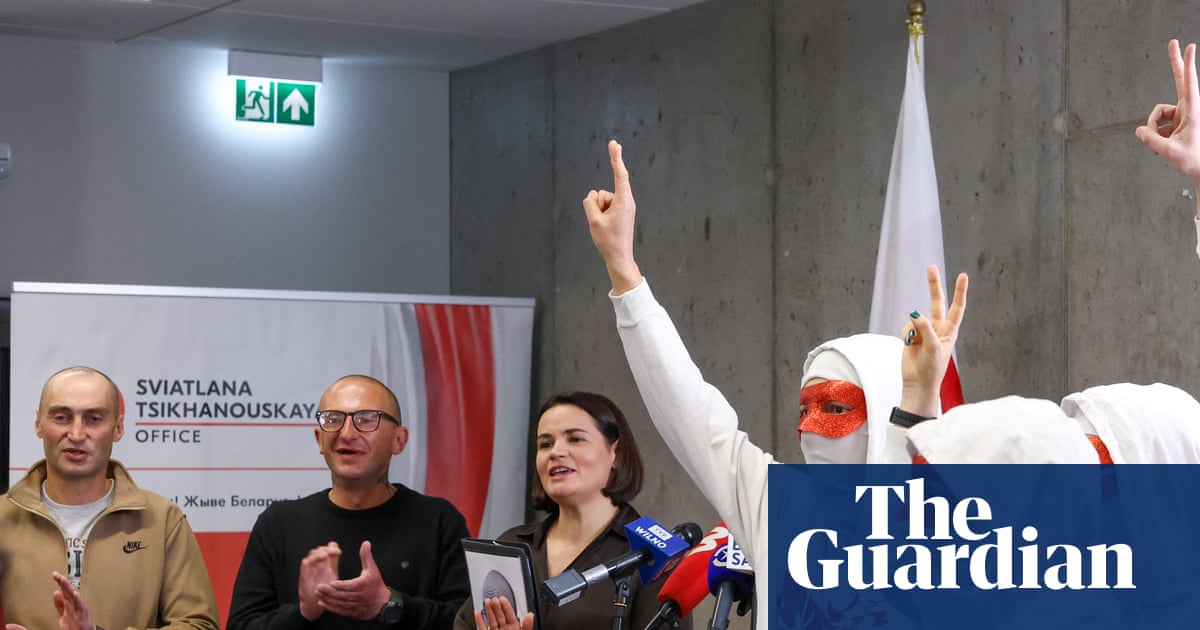
7 months agoTop human rights group leaves El Salvador after threats made by country's president
Cristosal, El Salvador's prominent human rights organization, has vacated the country due to increasing harassment and legal threats from President Nayib Bukele's government.
Social justice
Artificial intelligence
fromstupidDOPE | Est. 2008
7 months agoRaqib Shaw's 'Paradise Lost' Transforms Exile Into a Monumental Work of Art | stupidDOPE | Est. 2008
Raqib Shaw's 'Paradise Lost' is a 100-foot-wide painting exploring themes of exile, memory, and identity through intricate visual storytelling.

US news
fromMiami Herald
8 months agoVenezuelans in U.S. face heartbreak after travel ban shuts door on family reunification
Venezuelans in the U.S. face despair as new travel restrictions complicate efforts to reunite with family members left behind.
The recent travel restrictions have deepened the already difficult experiences of Venezuelan exiles.

[ Load more ]