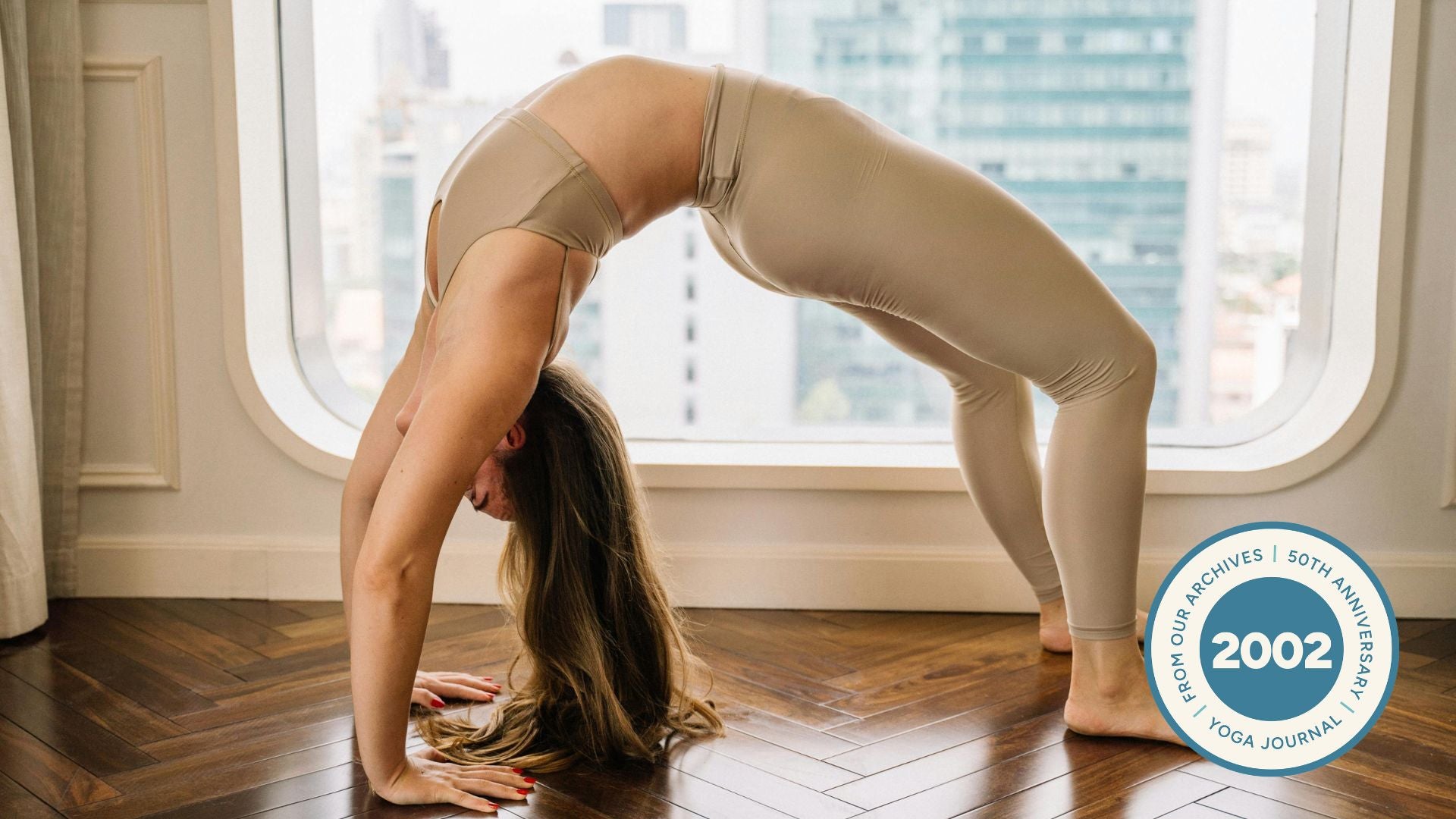
"Many students measure their progress in backbending by how extreme they can make the curves in their backs, forcing themselves into backbends before their spines are ready. Rather than finding length and openness and developing an even, healthy curve, they jam their backs, strain their sacroiliac joints and the rest of the sacral area, and wind up with long-term or irreparable damage."
"A yoga student working with backbends is much like a carpenter working to create a curve in a fine piece of wood. Just as wood constantly overstressed in one place will eventually break, a spine overstressed in one place will eventually suffer. And just as a piece of wood breaks if we try to shape it into a curve before it is ready, we can harm the back if we try to bend it before warming it up and making it supple."
Safe backbends develop an even spinal curve without sharp angles. Pushing for extreme curvature concentrates stress in one spinal point, risking sacroiliac and sacral damage and long-term injury. Warm-up, gradual progression, and developing length, openness, strength, and mobility across the entire spine reduce vulnerability. Overbending a single spinal segment creates instability, analogous to overstressing one point in wood until it breaks. Individual spines vary in flexibility; practice should maximize the utility of each unique body and work with its structural tendencies rather than forcing uniform extremes. Proper technique emphasizes even distribution of movement and readiness before attempting deep backbends.
Read at Yoga Journal
Unable to calculate read time
Collection
[
|
...
]