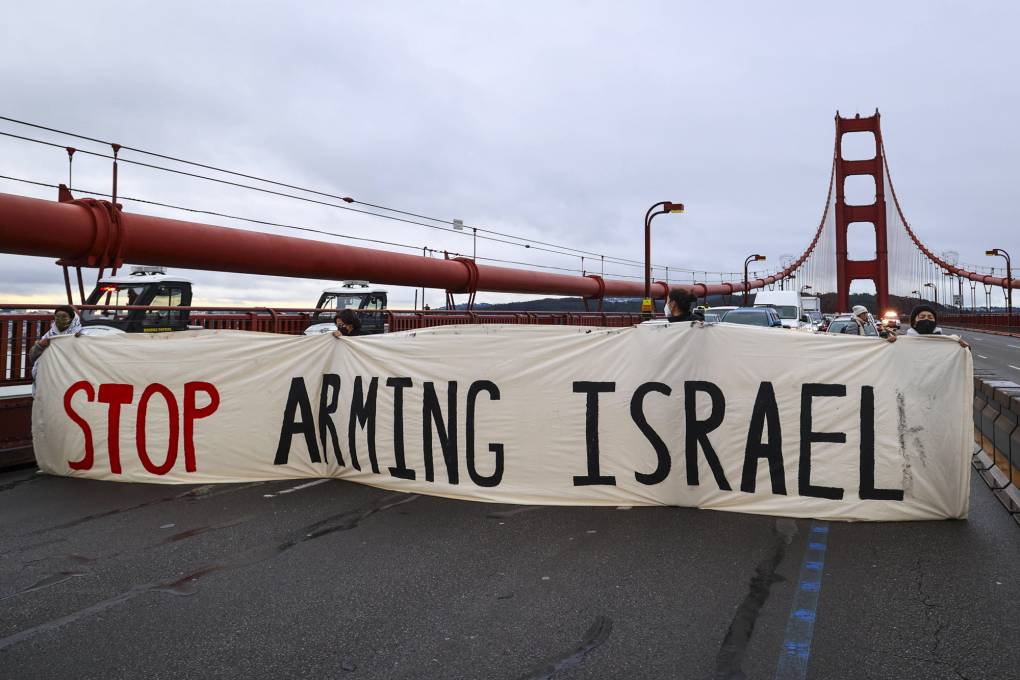
"Moeel filed a motion to suppress that evidence in court ahead of trial, where defendants face maximum sentences of 14 or 15 years in prison for charges including felony conspiracy, false imprisonment and trespassing to interfere with a business."
"Some of the requested information, such as content from accounts the defendants allegedly interacted with, has no relevance to the question of whether the protesters conspired to block traffic, Moeel argued in the motion."
"Historically, San Francisco has had other protests where they've blocked bridges for environmental justice or to raise awareness regarding disparities in providing AIDS treatment."
"The district attorney here in this case took the unprecedented step of charging felony conspiracy, to commit misdemeanor crimes."
Seven pro-Palestinian activists are preparing for a felony trial for blocking the Golden Gate Bridge, facing charges including felony conspiracy and false imprisonment. Their attorneys argue that the search warrant for social media activity raises First Amendment issues, as much of the requested evidence is irrelevant to the case. The defendants sought to have their charges downgraded to misdemeanors, but judges ruled against them. Historical context includes previous protests on the bridge for environmental justice and health disparities, highlighting a pattern of civil disobedience in San Francisco.
Read at Kqed
Unable to calculate read time
Collection
[
|
...
]