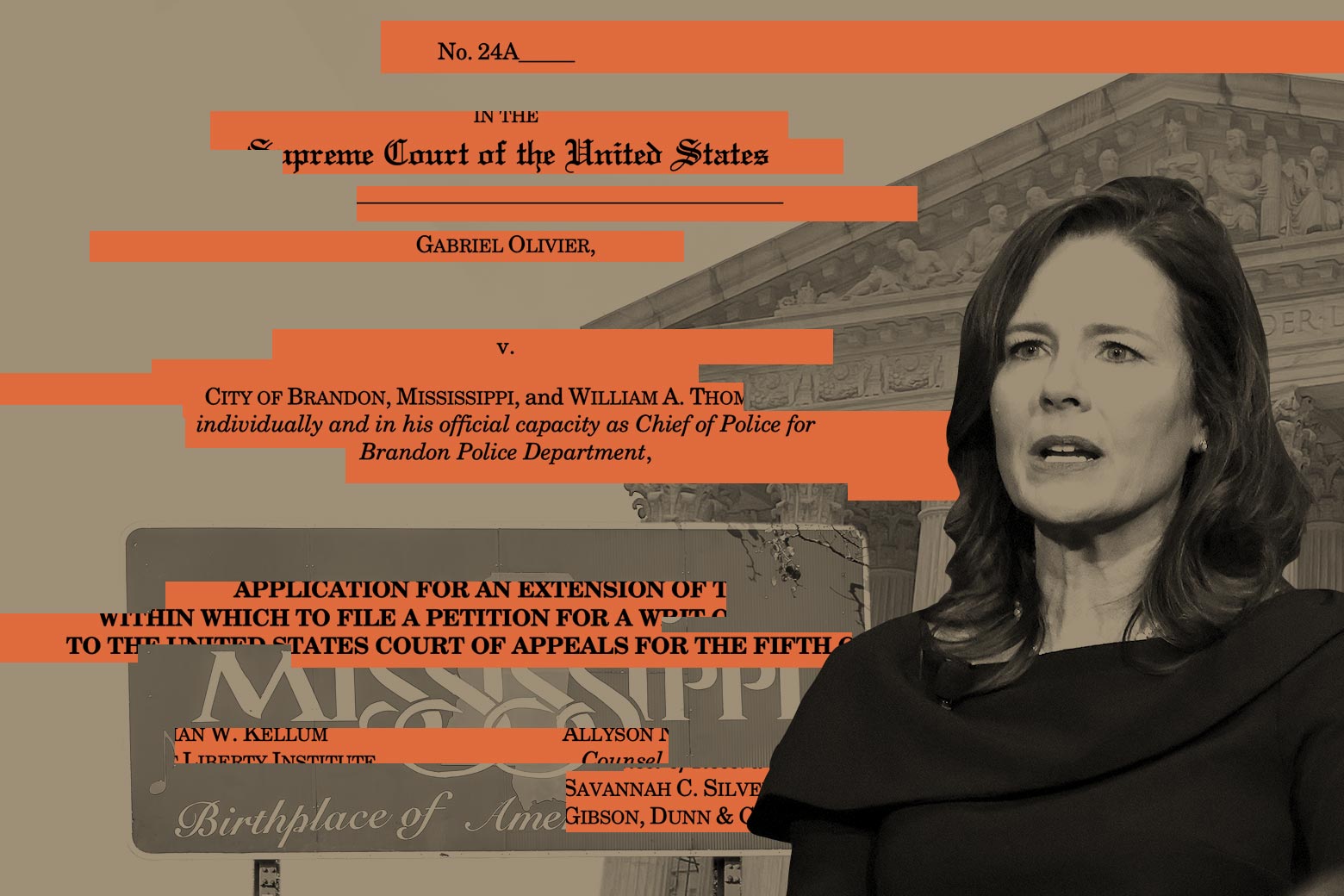
"But inside the courtroom, the argument barely touched speech or religion. Instead, the justices together gravitated toward something else entirely: a problem about time, causation, and whether constitutional authority can be temporally partitioned. Does the Constitution operate only forward? Can a law be unconstitutional tomorrow yet legally untouchable yesterday? And can a single conviction permanently close the courthouse doors to the people most harmed by an unconstitutional rule?"
"The case turns on Heck v. Humphrey, a 1994 decision holding that civil rights lawsuits cannot be used to undermine the validity of a still-standing criminal conviction. The idea is straightforward. If you want to challenge the legality of your conviction or confinement, you must proceed through habeas, not through a damages suit. But Olivier is not asking to undo his past conviction. He is asking the court to prevent the city from enforcing the ordinance against him in the future."
An evangelical preacher was cited and fined after a police chief restricted where and how he could speak outside a public amphitheater under a Brandon, Mississippi ordinance confining protestors to a designated zone. The preacher sued to prevent future enforcement of the ordinance. The Supreme Court focused on whether constitutional authority can be temporally partitioned and whether a conviction can exhaust constitutional rights. The case centers on Heck v. Humphrey, which bars civil rights suits that would invalidate a standing criminal conviction and requires habeas remedies for such challenges. The question is whether Heck also prevents forward-looking relief against continued enforcement.
Read at Slate Magazine
Unable to calculate read time
Collection
[
|
...
]