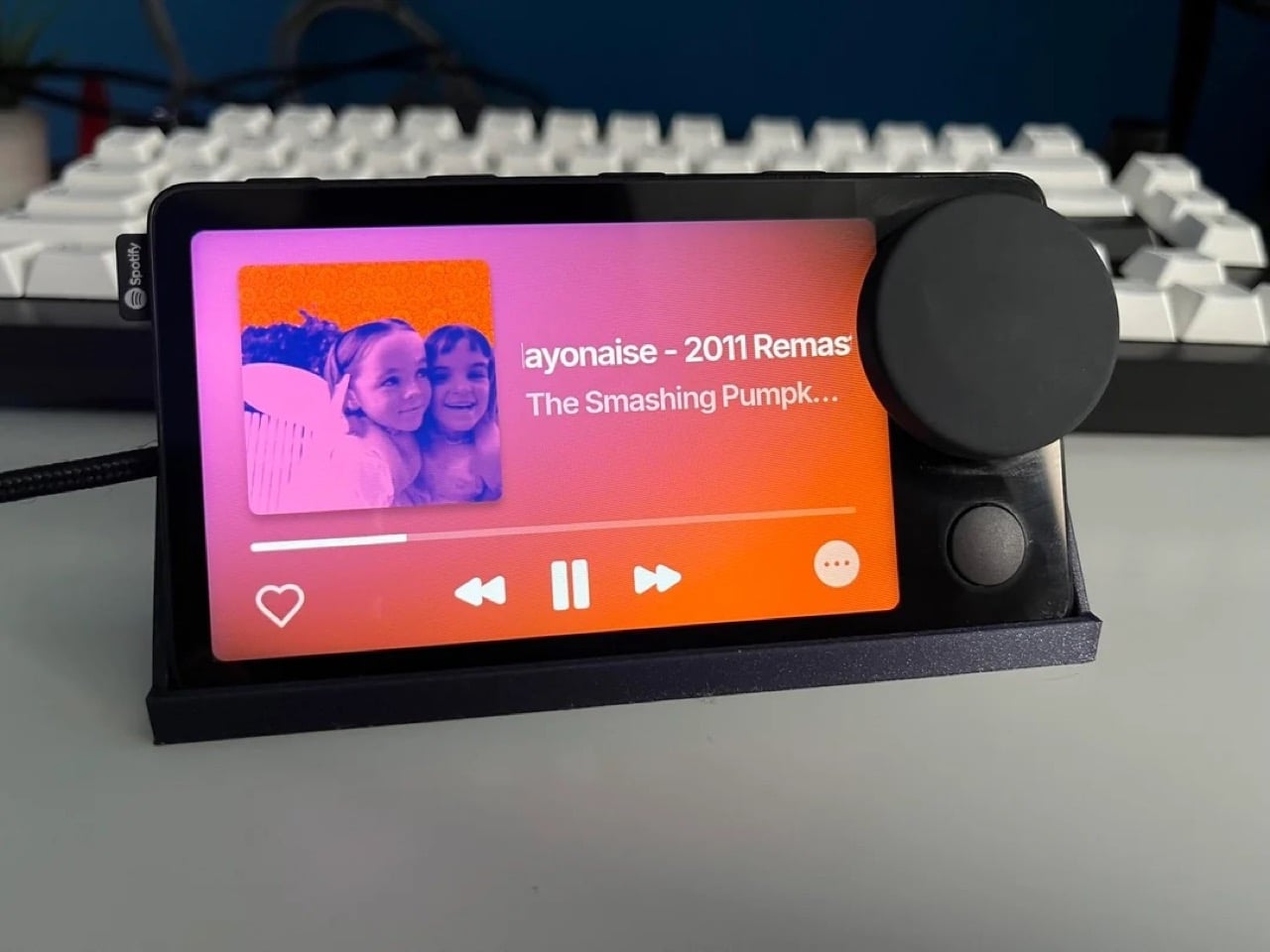
"The Spotify Car Thing joined that lineage in December 2024 when Spotify killed server-side authentication and turned every unit into an expensive knob with a screen attached. Nocturne picked up where Spotify dropped off. The project launched in October 2024, anticipating the shutdown, and has shipped four major versions since. V4.0.0, currently in beta with a public release imminent, finally delivers true Bluetooth connectivity without phone tethering, a companion app, and a feature set that makes the original Spotify firmware look like a rough draft."
"The Car Thing runs a 512MB RAM, 4GB storage Amlogic S905D2 SoC, which is a polite way of saying it has the processing power of a mid-range router from 2015. Early versions of Nocturne required a Raspberry Pi as a co-processor just to get the thing online, which was a heroic workaround but not exactly mainstream-friendly. V3 replaced that with Bluetooth tethering through your phone's hotspot. V4 cuts the tether entirely, pairing directly via Bluetooth through the new Nocturne Companion app, which requires a Nocturne+ subscription to fund the team's continued development."
"What the photos make immediately clear is how clean the UI actually looks in practice. The now-playing screen pulls album art and renders it as a full bleed gradient background, the same visual logic Spotify used but executed with noticeably more polish in edge cases. The typography is large and glanceable. The playlist browser view is dense but organized, using album thumbnails and track titles in a layout that naviga"
The Spotify Car Thing lost server-side authentication in December 2024, turning the device into an expensive screen without working connectivity. Nocturne launched in October 2024 to continue operation after the shutdown and has released multiple major versions, with V4.0.0 in beta and a public release imminent. The project targets direct Bluetooth connectivity without phone tethering by pairing through the Nocturne Companion app, which requires a Nocturne+ subscription. The device uses a 512MB RAM, 4GB storage Amlogic S905D2 SoC, and earlier versions relied on a Raspberry Pi or phone hotspot. The interface renders album art as full-bleed gradient backgrounds, uses large readable typography, and organizes playlist browsing with thumbnails and track titles.
Read at Yanko Design - Modern Industrial Design News
Unable to calculate read time
Collection
[
|
...
]