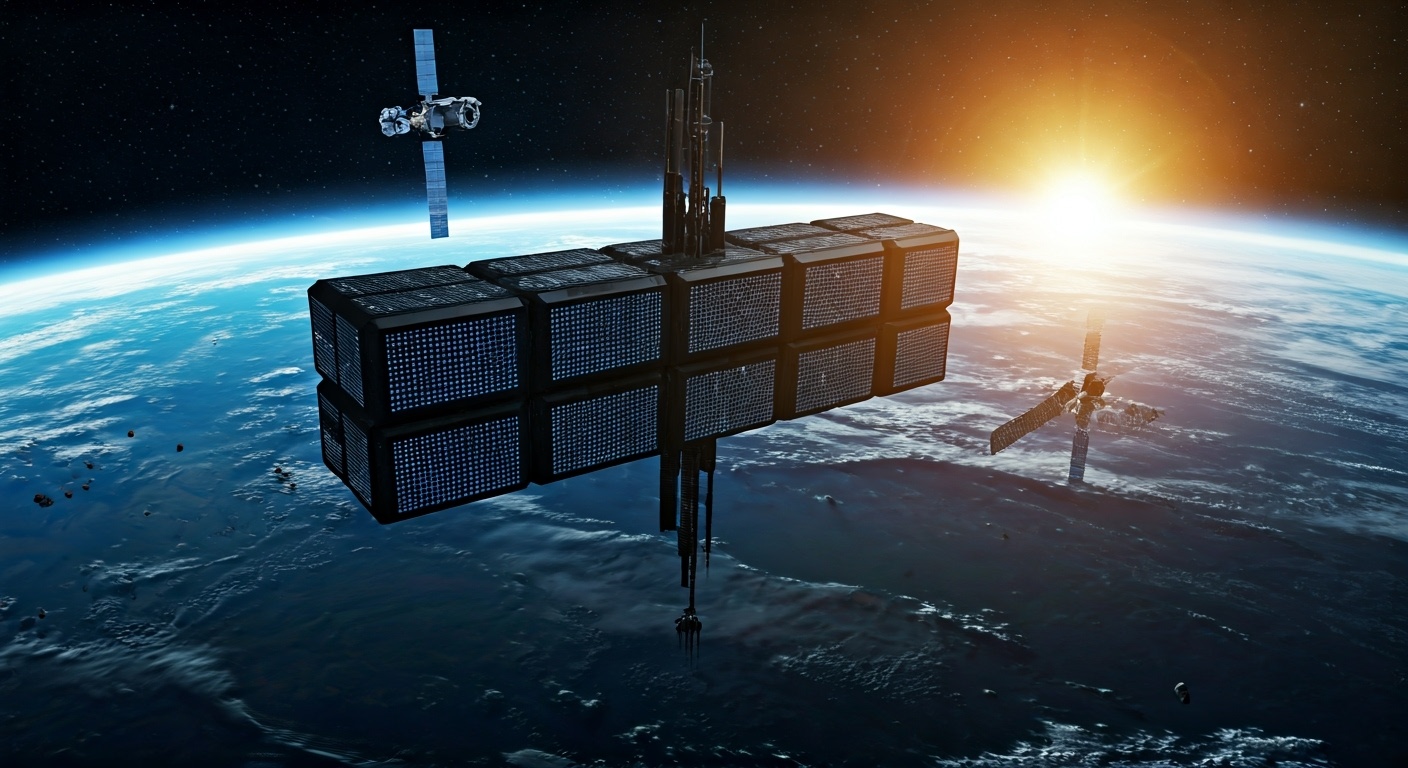
"Could IT infrastructure, and even the rise of AI, eventually migrate beyond the atmosphere? Amazon founder Jeff Bezos predicted in October that gigawatt-scale, solar-powered data centers would be a reality within 10 to 20 years. At the World Economic Forum in Davos this week, Elon Musk was even more ambitious: AI data centers in the "final frontier" could be viable within two to three years. Google also plans to deploy its TPU chips in orbit via Project Suncatcher."
"The conceptual leap required to put server racks in space is smaller than it appears. There is already the precedent of the International Space Station (ISS). Since 2021, the HPE Spaceborne Computer (SBC-2) has operated on the station, processing data and effectively uploading results to Earth. Other control mechanisms still largely run on legacy Intel Pentium or 386 systems, proving that chips can withstand decades of radiation. Furthermore, the Starlink constellation demonstrates that high-speed internet connectivity can translate reliably to the vacuum of space."
Societal limits, grid congestion, and scarce land are constraining terrestrial data center growth, motivating exploration of orbital infrastructure. Tech leaders predict varied timelines for space data centers, from near-term AI sites to decade-scale gigawatt solar farms, while Google and startups pursue orbital TPUs and space computing ventures. Practical precedents exist: the HPE Spaceborne Computer has processed data on the ISS and Starlink shows reliable high-speed connectivity in orbit. Projected declines in launch cost improve economics, but radiation tolerance, power, thermal management, launch logistics, and other engineering hurdles remain significant, making aggressive near-term schedules unlikely yet supporting long-term development.
Read at Techzine Global
Unable to calculate read time
Collection
[
|
...
]