#legendary-musicians
#legendary-musicians
[ follow ]
#music #jazz #rolling-stones #music-history #jimmie-herrod #oregon-symphony #classical #simplification


fromwww.nytimes.com
6 days agoA Timeline of Classical Music's Evolution
The medieval era was very much about church music, partially because that's where a lot of the creativity was happening, and partially because the church was the primary institution, along with universities, dedicated to writing things down.
Berlin music
fromConsequence
1 week agoJoe Bonamassa and George Benson on B.B. King's Blues Summit 100, Blues vs Jazz, and Life on the Road: Podcast
Bonamassa explains the origin of the sprawling tribute, saying, 'It was brought to my attention... that B.B. King would be turning 100... and nobody was planning on doing much. I said we need to do something.'
Music production
Parenting
fromOpen Culture
2 months agoHerbie Hancock Explains the Big Lesson He Learned From Miles Davis: Every Mistake in Music, as in Life, Is an Opportunity
Mistakes should be framed as valuable, creative learning opportunities rather than binary failures, especially when guiding perfectionist children.
Arts
fromSilicon Canals
2 months ago8 signs you appreciate art, music, and culture on a deeper level than most people - Silicon Canals
Some people experience art deeply, reacting emotionally and perceiving subtle artistic cues that reveal heightened sensitivity and meaningful connections to creative expression.
London music
fromwww.bbc.com
1 month ago'Godmother of rock and roll' inspires young pianist
Sister Rosetta Tharpe, a pioneering gospel and blues guitarist, profoundly influenced rock and roll legends but remains largely unknown to the public, with her story now being told through a West End play starring Beverley Knight.
from48 hills
2 months agoPhil Manzanera shares his life's sounds, from a Cuban Revolution childhood to Roxy Music - 48 hills
Revolución to Roxy begins long before glam, synthesizers, or LP covers became cultural landmarks. Manzanera's earliest memories are shaped by upheaval: childhood in Cuba during the revolution, displacement, and an upbringing that crossed Venezuela, Colombia, England, and beyond. That instability, he says, produced something lasting-understanding. "If you grow up speaking two languages, you are scientifically proven to be more compassionate," Manzanera says. "You have this kind of duality, and one of those is the power to be empathetic. For a musician, that is such a helpful tool."
Music
Music
fromSlate Magazine
1 month agoPaul McCartney Is One of the Most Important Artists in Rock History. He Was Also One of the Most Controversial.
Paul McCartney transformed from a polarizing, widely-hated figure in the 1970s to achieving near-universal approval in his mid-80s, with Morgan Neville's documentary examining this tumultuous decade of personal and musical growth.

fromConsequence
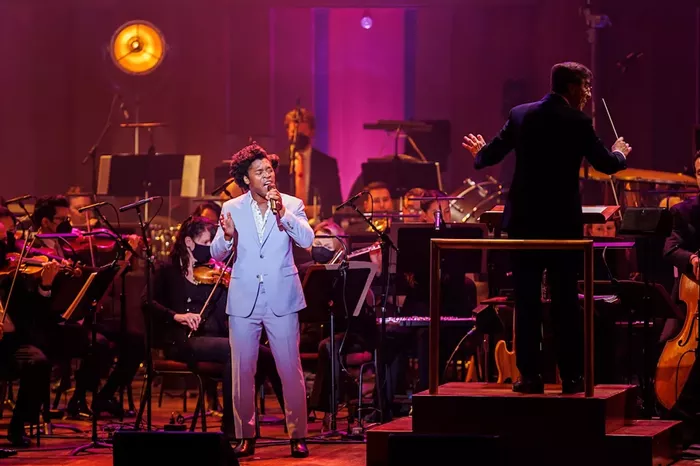
1 month agoTori Amos Covers Rolling Stones and Bob Dylan for BBC Radio 2's Piano Room
Amos, backed by the BBC Concert Orchestra, began with a rousing debut performance of 'Stronger Together,' where you really feel that track's depth and resonance. From there, Amos busted out a classic track with 'Cornflake Girl' followed by covers of The Rolling Stones' 'Beast of Burden' and Bob Dylan's 'The Times They Are A-Changin.' As if the live debut wasn't already enough, Amos' covers were that perfect blend of poignant and stirring.
Music
fromVulture
2 months agoWhen Is a Band Not the Same Band Anymore?
"When I read the fine print, it was 'an experience with REO Speedwagon's music.' It's none of the original members," Fletcher recalls. "I don't want to promote the show unless it's the real thing. I don't know why you would want to see that. It's just a cover band. To me, that's a little bit strange." He adds, with a sigh, "If there are no original members, who cares?"
Music
[ Load more ]