#infrastructure-relocation
#infrastructure-relocation
[ follow ]
#new-york-city #infrastructure #urban-planning #transportation #sustainability #public-transit #linden-boulevard

fromIrish Independent
5 hours agoDublin City Council sets aside 10m for work on existing offices despite plans to demolish Wood Quay complex
€10.3 million has been earmarked for renovations, energy-efficiency improvements, security upgrades and more for the existing civic offices on Wood Quay, despite plans to demolish the complex.
London politics





fromBleacher Nation
1 day agoBears Take New Step Toward Building Stadium in Arlington Heights
The bill spearheaded by state Rep. Kam Buckner of Chicago, who has led House Democrats' stadium negotiations, passed 78-32. Only a few Democrats opposed the measure, while some Republicans voted for the plan.
Chicago Bears
fromArchDaily
2 days agoReclaiming the Street: Alejandra Ferrera on Architecture and Urban Life in Honduras
Alejandra Ferrera emphasizes that the security-driven design, while functional at the time, has led to a fragmented urban experience where streets serve only as transit voids, lacking social engagement.
Madrid food
Business intelligence
fromLondon Business News | Londonlovesbusiness.com
2 days agoHow contact centre outsourcing drives faster deliveries in logistics - London Business News | Londonlovesbusiness.com
Call center outsourcing is now a core strategy for logistics companies to enhance delivery performance and operational efficiency.

SF politics
fromStreetsblog California
3 days agoBill to Exempt L.A. from Housing Density Near-Transit Bill Heads to the Senate Housing Committee Tomorrow - Streetsblog California
Senate Bill 1361 aims to exempt L.A. Metro from state density mandates near transit stops, amid local opposition to previous legislation.
fromFast Company
1 day agoWe made flying nearly collision-proof decades ago. Why are intersections still so dangerous?
The real problem is infrastructure, not vehicle safety. Roadways are open systems with infinite variables—weather, pedestrians, distracted drivers, and aging infrastructure. Communication between vehicles is minimal, and infrastructure is largely silent—and in that gap lies the potential for deadly collisions.
Alternative transportation
fromwww.cbc.ca
13 hours agoOntario is one step closer to taking over Toronto's island airport with new bill | CBC News
The bill allows the province to assume the City of Toronto's spot in a tripartite agreement that governs the land, an agreement that is currently between the city, the federal government and the Toronto Port Authority.
Canada news
fromArchDaily
1 day agoPodium-Tower Urbanism in Southeast Asia: Density, Management, and the Disappearing Street
The podium-tower is a hybrid structure consisting of a high-coverage, low-rise podium supporting one or more slender vertical towers, maximizing urban density while maintaining a 'human-scaled' street wall.
Design
New York City
fromStreetsblog New York City
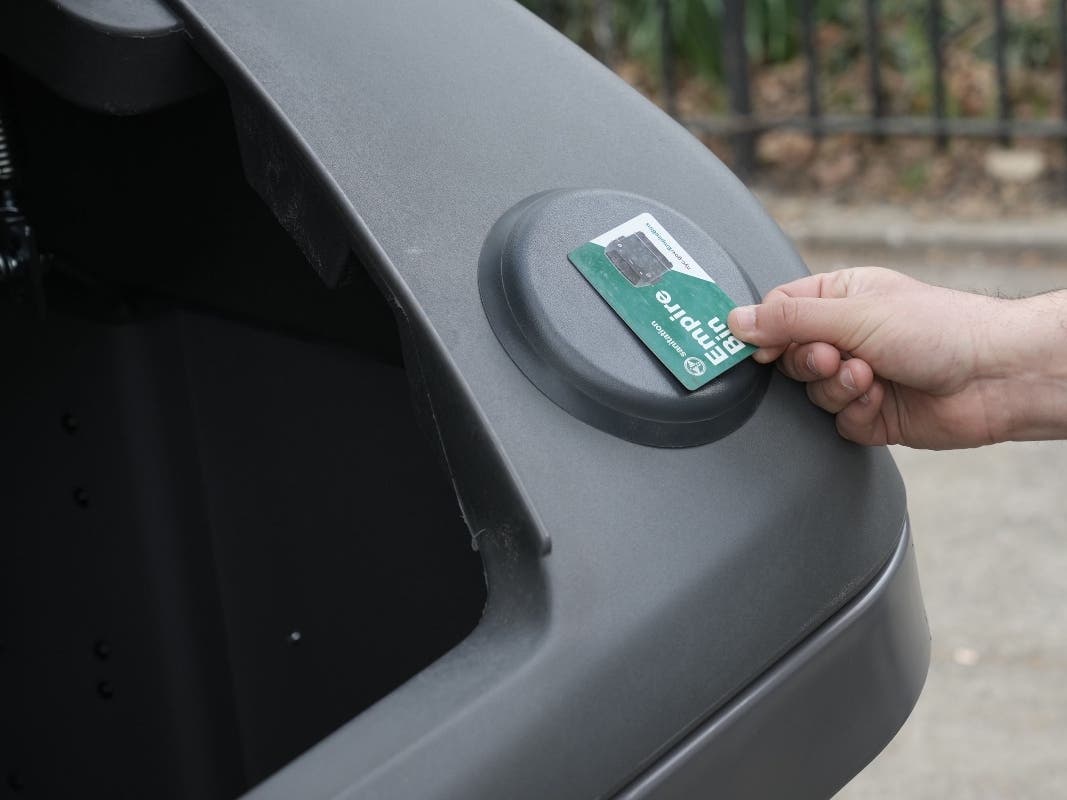
1 day agoTwo Little Too Late: Mamdani Shifts Private Carting Reforms Toward Safety for Last Two Contracts - Streetsblog New York City
Mayor Mamdani will prioritize safety and mileage in awarding commercial waste zone contracts, shifting focus from price to safety records.
Alternative transportation
fromLondon Business News | Londonlovesbusiness.com
1 day agoPowering the future with precision: Richard Sajiun on preparing NYC's aging electrical systems for the EV charging revolution - London Business News | Londonlovesbusiness.com
New York City is advancing electrification, but faces challenges due to outdated electrical infrastructure.
fromianVisits
3 days agoSeven shades of green: the DLR's quietly complicated network
The DLR first opened in 1987, it had two lines: Red - Stratford to Island Gardens and Green - Tower Gateway to Island Gardens. Within just a few years, as the DLR extended out to Beckton and later Lewisham, they turned the whole map green.
London
Alternative transportation
fromLondon Business News | Londonlovesbusiness.com
2 days agoTruck industry urges technology-open transition as ZEV uptake stalls - London Business News | Londonlovesbusiness.com
The government must ensure HGV operators access technologies to cut carbon emissions amid declining zero-emission vehicle adoption.
Alternative transportation
fromStreetsblog USA
3 days ago'Best Bikeshare in America': An Unexpected Community Launches Free, All-Electric Micromobility For Residents - Streetsblog USA
Heartland Bikeshare in Omaha offers free unlimited 60-minute rides for residents, promoting biking and challenging other communities to enhance their micromobility initiatives.
Real estate
fromInc
1 month agoWhy Connectivity Is the New 'Location' in Commercial Real Estate
Digital infrastructure and connectivity now rival or surpass traditional location as the primary factor determining real estate value for business properties, with 96% of U.S. business leaders willing to pay premium prices for reliable connectivity.
fromArchDaily
2 months agoMoving Capitals Across Global Contexts: From Strategic Planning to Environmental Necessity
Across history, the relocation of capital cities has often been associated with moments of political rupture, regime change, or symbolic nation-building. From Brasília to Islamabad, new capitals were frequently conceived as instruments of centralized power, territorial control, or ideological projection. In recent decades, however, a different set of drivers has begun to shape these decisions. Rather than security or representation alone, contemporary capital relocations are increasingly tied to structural pressures such as demographic concentration, infrastructural saturation, environmental risk, and long-term resource management.
World news
Alternative transportation
fromFast Company
1 month agoThe 'time is money' mantra is a terrible starting point for planning and designing infrastructure
Using productivity and time-as-money frameworks to justify transportation planning decisions is economically flawed and oversimplifies the complex nature of traffic congestion and urban mobility.
[ Load more ]