#indo-pacific
#indo-pacific
[ follow ]
#china #military #taiwan #nsa #us-cyber-command #australia #defense #geopolitics #defense-strategy #josh-rudd
US politics
fromNextgov.com
5 days agoExperts see NSA nominee's Pacific experience as a boost to US cyber posture on China
Lieutenant General Joshua Rudd was nominated to lead the NSA and U.S. Cyber Command, bringing Indo-Pacific operational experience and China-focused insight despite limited cyber background.
fromBusiness Insider
3 months agoUS Army soldiers put drones to the test in the Pacific. They struggled in the heat.
At the Army's annual gathering in Washington, DC, this week, Command Sgt. Maj. Shaun Curry of the 25th Infantry Division said that some drone models tested elsewhere struggled soon after arriving in Hawaii. "When that equipment came to Hawaii, it was 100 degrees outside," with a lot of salt water in the air, Curry said. "Those drones did not last in those heat environments."
Gadgets
fromThe Cipher Brief
4 months agoBeyond Defense: Building a Strategic U.S.-Japan Cyber Partnership
As the U.S.-Japan alliance confronts an era where digital threats increasingly target economic stability and national security, integrating cyber strategy into the relationship is essential. The longstanding pillars of military, trade, and diplomacy have supported peace and prosperity. Still, the rise of cyberspace as a borderless, high-stakes domain demands that both nations make cybersecurity a foundational element of their partnership in the Indo-Pacific and beyond.
World politics
US news
fromBusiness Insider
4 months agoA US Navy destroyer ran through the kind of critical at-sea weapons reload it would need in a Pacific missile fight
The US Navy is practicing at-sea missile reloading to sustain prolonged Indo-Pacific combat and avoid leaving battle areas to replenish missile stockpiles.
fromBusiness Insider
4 months agoThe US Air Force just underwent a massive stress test of how it would fight a high-end war in the Pacific
This big monthlong exercise brought together several major training events and involved US forces across the services, along with allies and partners. The drills focused on core objectives such as flying and sustaining a high number of missions, moving cargo under threat, using space-based technologies across air, land, sea, and cyber operations, and practicing large-scale Agile Combat Employment tactics, which are about making US forces more flexible and harder to target.
World news

#china


fromwww.dw.com
7 months agoUS politics
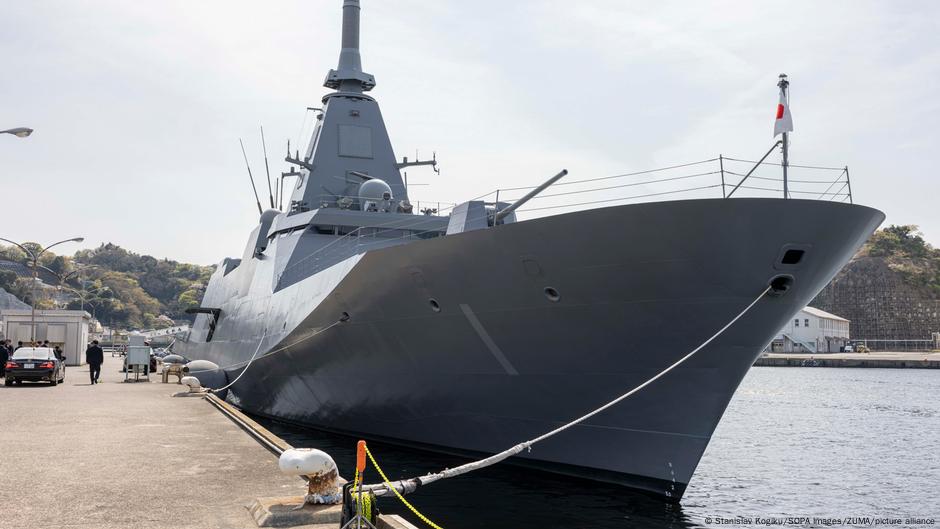
US Defense Secretary warns of 'imminent' China threat DW 05/31/2025
China is preparing for potential military action to change the power balance in the Indo-Pacific region.
Asian allies are encouraged to enhance defense spending against the backdrop of Chinese military threats.
US politics
fromwww.dw.com
7 months agoUS Defense Secretary warns of 'imminent' China threat DW 05/31/2025
China is preparing for potential military action to change the power balance in the Indo-Pacific region.
Asian allies are encouraged to enhance defense spending against the backdrop of Chinese military threats.
[ Load more ]